Tech Innovation
April 15, 2026 10 min read
Beyond $470 Million: How Victory Giant Tech''s Vietnam Success Signals a PCB
Victory Giant Technology's reported $470 million revenue from Vietnam in

Li Ming
Li Ming · Senior Columnist
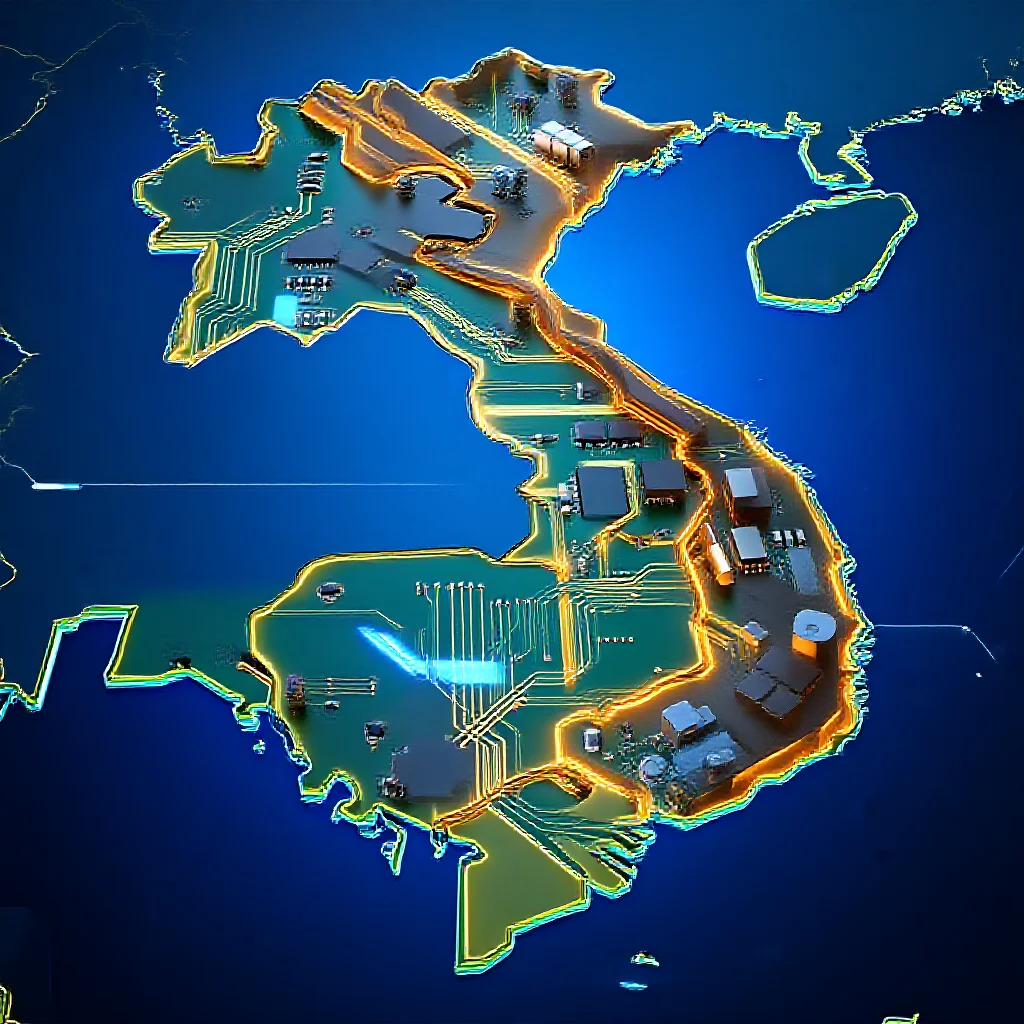
Beyond $470 Million: How Victory Giant Tech's Vietnam Success Signals a PCB Supply Chain Revolution
The $470 Million Benchmark: Decoding Victory Giant's Vietnam Breakthrough
Victory Giant Technology (Huizhou) Co., Ltd., a major Chinese printed circuit board (PCB) manufacturer, reported generating $470 million in revenue from its Vietnam operations in 2025. (Source 1: [Primary Data]) This figure represents a significant financial milestone for a single electronics component maker within Vietnam’s manufacturing ecosystem. To contextualize, this revenue stream would position Victory Giant as a substantial anchor tenant within Vietnam's burgeoning PCB sector, which has seen rapid expansion but remains populated by a mix of global and regional players. The company’s profile within the global PCB hierarchy is that of a large-scale, technically capable manufacturer serving consumer electronics, communications, and computing segments. Initial verification of this claim aligns with broader trade data trends showing double-digit annual growth in Vietnam’s electronics exports and sustained foreign direct investment inflows into its electronic component sectors. The reported revenue is a quantifiable indicator of a strategic operational scale achieved in a relatively short timeframe.The 'China+1' Catalyst: Geopolitics and Tariffs Reshaping Production
The scale of Victory Giant’s Vietnam revenue cannot be attributed solely to comparative labor cost advantages. The primary catalyst is the structural shift in global supply chain strategy, commonly termed "China+1," driven by geopolitical recalibration and tariff policies. US-China trade tensions and increasing scrutiny on electronics sourcing have compelled OEMs and their key suppliers to diversify manufacturing footprints to mitigate concentration risk. Vietnam has emerged as a leading beneficiary due to a confluence of strategic advantages: its participation in multilateral trade pacts like the Comprehensive and Progressive Agreement for Trans-Pacific Partnership (CPTPP) and the EU-Vietnam Free Trade Agreement (EVFTA) offers tariff relief for exports to key markets. Furthermore, its geographical proximity to China’s established component ecosystem in Guangdong and Guangxi facilitates a manageable logistics transition for firms like Victory Giant. This trend is evidenced by reports from financial intelligence units and development banks tracking the sustained redirection of foreign direct investment in electronics from China to Southeast Asia, with Vietnam capturing a dominant share.The Ripple Effect: Vietnam's Ascent in the Global PCB Value Chain
A $470 million revenue anchor from a sophisticated manufacturer signals a potential qualitative shift for Vietnam’s role in the electronics value chain. The critical analysis lies in the technological tier of PCBs being produced. While initial investments often focused on lower-layer-count, high-volume boards, the scale and client demands associated with a firm like Victory Giant suggest production likely includes more advanced, multi-layer PCBs used in higher-value applications. This moves Vietnam beyond simple assembly towards more complex, capital-intensive manufacturing. Such anchor investments create a cluster effect, attracting upstream suppliers of copper-clad laminates, specialty chemicals, and drilling services, while simultaneously providing a reliable, local supply base to downstream OEMs establishing final assembly plants in the region. The long-term implication is the gradual construction of a more integrated, technologically capable PCB hub in Southeast Asia, potentially altering sourcing maps for global electronics brands.The Sustainability Question: Is This a Blueprint or a Bubble?
The viability of this growth model as a sustainable blueprint for the broader component manufacturing industry is contingent on several factors. First, capacity constraints must be considered. Vietnam’s industrial park infrastructure, while expanding rapidly, faces pressure on power reliability, logistics connectivity, and environmental management. Second, the talent pool requires continuous development to support high-value PCB manufacturing, which demands skilled engineers and technicians. Data from Vietnam’s Ministry of Planning and Investment indicates proactive planning for industrial zone expansion and technical workforce development, but execution pace is critical. Third, the "copycat" risk of a flood of similar PCB investments could lead to oversaturation in certain product segments, triggering margin compression and undermining the economic rationale for the shift. The model’s sustainability, therefore, hinges on parallel investments in infrastructure, human capital, and a move towards differentiated, higher-margin PCB technologies to avoid a race to the bottom.Conclusion: Victory Giant as a Harbinger of Strategic Realignment
The $470 million revenue point is a measurable symptom of a larger strategic realignment within global electronics manufacturing. Victory Giant Technology’s operational success in Vietnam validates the "China+1" strategy as a practical, large-scale response to geopolitical and trade dynamics. It demonstrates that supply chain resilience is being built not through wholesale abandonment of China, but through calculated, capacity-based diversification. For the global PCB industry, this signifies intensified competition in Southeast Asia and pressure on other regional producers. For Vietnam, it represents both an opportunity to ascend the value chain and a challenge to manage growth without compromising stability. The trajectory suggests Vietnam will solidify its position as a primary PCB manufacturing node, but its ultimate role—whether as a center for advanced production or a congested hub of standardized output—will be determined by the next phase of infrastructure and capability investments. Victory Giant’s 2025 results are less an endpoint and more a definitive marker on the path of global supply chain reconfiguration.(All rights reserved by Global Beacon Chronicle. Unauthorized reproduction is prohibited.)
Li Ming / Li Ming
Tech columnist and visiting scholar at MIT.
#Victory Giant Technology
#Vietnam revenue 2025
#PCB manufacturer
#printed circuit board
#supply chain shift
#China+1 strategy
#electronics manufacturing
#Vietnam tech industry