Beyond Payments: How ShopBack & Eats365''s Partnership Redefines F&B Digitization
Announced on April 14, 2026, the strategic partnership between payment platform

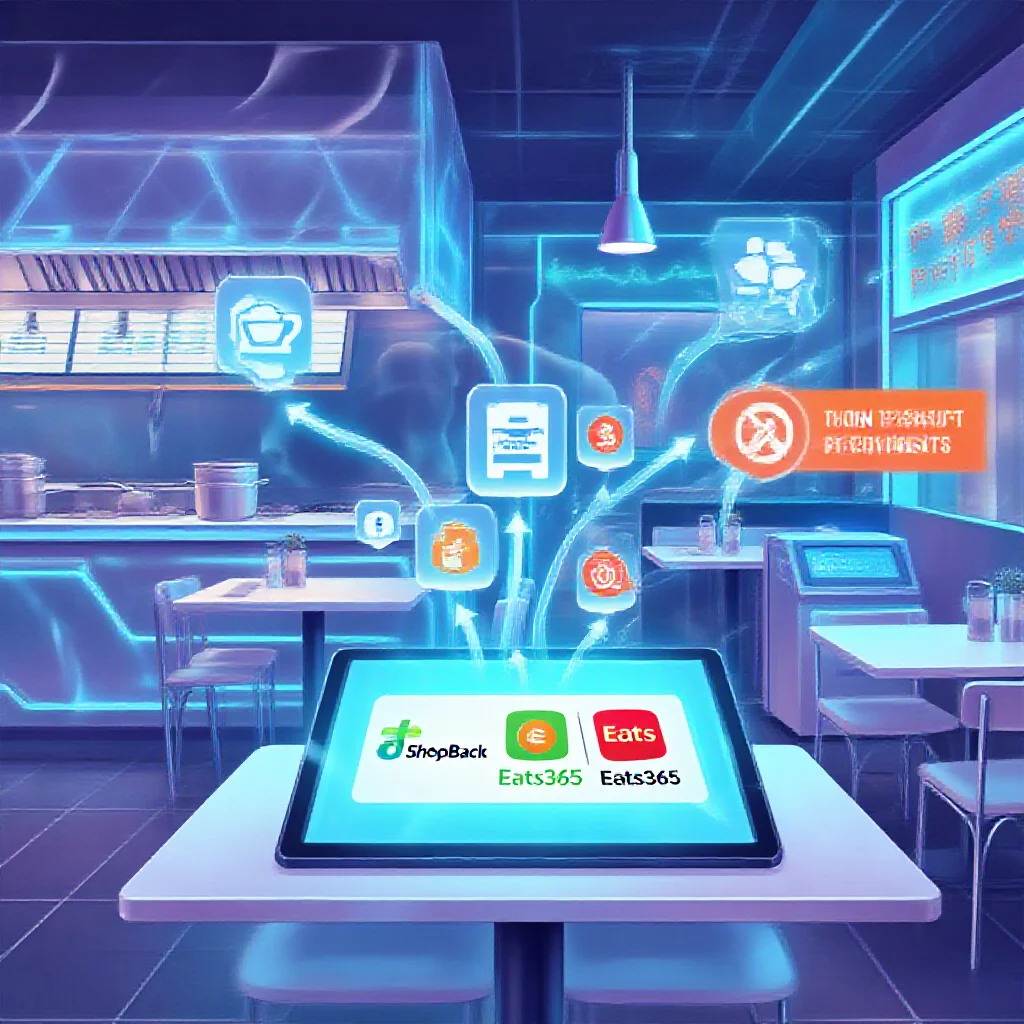
Beyond Payments: How ShopBack & Eats365's Partnership Redefines F&B Digitization in Hong Kong
Introduction: The Announcement and Its Surface-Level Promise
On April 14, 2026, payment platform ShopBack and restaurant technology provider Eats365 announced a strategic partnership. (Source 1: [Primary Data]) The stated objective is to provide integrated payment and technology solutions for Hong Kong's food and beverage sector, aiming to digitize operations and enhance customer engagement. (Source 1: [Primary Data]) Superficially, this collaboration represents another integration between a payment processor and a point-of-sale system. The underlying strategic move, however, signals a critical consolidation phase in the region's restaurant technology landscape. This partnership is not merely about facilitating transactions; it is a calculated effort to move beyond isolated point solutions and construct a unified digital infrastructure for a historically fragmented industry.
The Hidden Logic: Solving Hong Kong F&B's Digital Fragmentation
The core value proposition of the ShopBack-Eats365 partnership addresses a fundamental operational inefficiency. Many Hong Kong restaurants operate with a patchwork of disconnected systems: one for payments, another for POS, a separate platform for customer relationship management, and various integrations for delivery aggregators. This fragmentation creates data silos, impedes operational visibility, and complicates customer engagement strategies.
The partnership’s deeper logic lies in creating a unified data pipeline. By integrating ShopBack's payment solutions directly into Eats365's core POS and management systems, the collaboration seeks to merge the financial transaction with the operational context. (Source 1: [Primary Data]) The real product being offered extends beyond payment convenience. It is the generation of actionable business intelligence derived from consolidated data streams. When a payment event is intrinsically linked to menu item sales, inventory levels, table turnover rates, and customer identifiers in a single system, the data transforms from a record into a strategic asset.
From Transaction to Transformation: The Shift in Digitization Goals
The evolution of digitization in Hong Kong's F&B sector is entering a new phase. The initial wave focused on transactional digitization, exemplified by the widespread adoption of QR code payments and online ordering portals. These were point solutions that digitized a single function without necessarily improving overall business intelligence.
The ShopBack-Eats365 model represents a shift toward holistic operational digitization. The integration enables a closed-loop analytics system. For instance, payment data can be analyzed to identify not just popular dishes, but the customer segments ordering them, the peak times for specific items, and the correlation between promotional campaigns and actual sales velocity. This allows for dynamic operational adjustments, such as predictive inventory management, hyper-localized marketing, and optimized staffing. The partnership is a market bet that this level of integrated, data-driven decision-making will become a primary competitive advantage for restaurants, moving beyond cost-saving to revenue-generating intelligence.
Market Implications and the Race for the 'Operating System' of Restaurants
This partnership is not an isolated event but part of a broader trend of vertical integration within the Asia-Pacific restaurant technology sector. The strategic objective is to become the de facto "operating system" for restaurants—a central, indispensable platform that manages the core functions of commerce and operations.
The long-term market implication is increased pressure on other payment providers and standalone software vendors. To remain competitive, they will be compelled to seek similar deep integrations or develop comparable unified platforms. This trend presents a clear dichotomy of risk and opportunity for F&B businesses. The opportunity lies in significant gains in operational efficiency, customer insight, and reduced administrative overhead from managing fewer vendor relationships. The concomitant risk is potential vendor lock-in to a specific technological stack, which could reduce flexibility and increase switching costs as a business becomes more deeply integrated into a single ecosystem.
Verification and Future Trajectory
The announced integration requires technical and commercial validation. Success will be measured by adoption rates among Hong Kong's diverse F&B businesses and the tangible efficiency gains reported by early adopters. The partnership's ability to deliver on the promise of seamless data unification will be its ultimate test.
The logical future trajectory points toward an expansion of this integrated model. Subsequent development phases will likely incorporate advanced features such as supply chain automation, integrated loyalty programs across merchant networks, and sophisticated AI-driven business forecasting tools. For Hong Kong's restaurant sector, this partnership accelerates the inevitable transition to a fully digital, data-centric operational model. The competitive landscape will increasingly favor establishments that can leverage unified data for strategic agility, making holistic digitization not a luxury, but a commercial imperative in the post-cash economy.
(All rights reserved by Global Beacon Chronicle. Unauthorized reproduction is prohibited.)
Li Ming / Li Ming
Tech columnist and visiting scholar at MIT.