Beyond the Bin: How Satair''s AutoStore Investment Reveals Aerospace''s New
Satair's implementation of a Swisslog AutoStore system in Singapore is more

Beyond the Bin: How Satair's AutoStore Investment Reveals Aerospace's New Supply Chain Calculus
The Surface Fact: A Warehouse System in Singapore
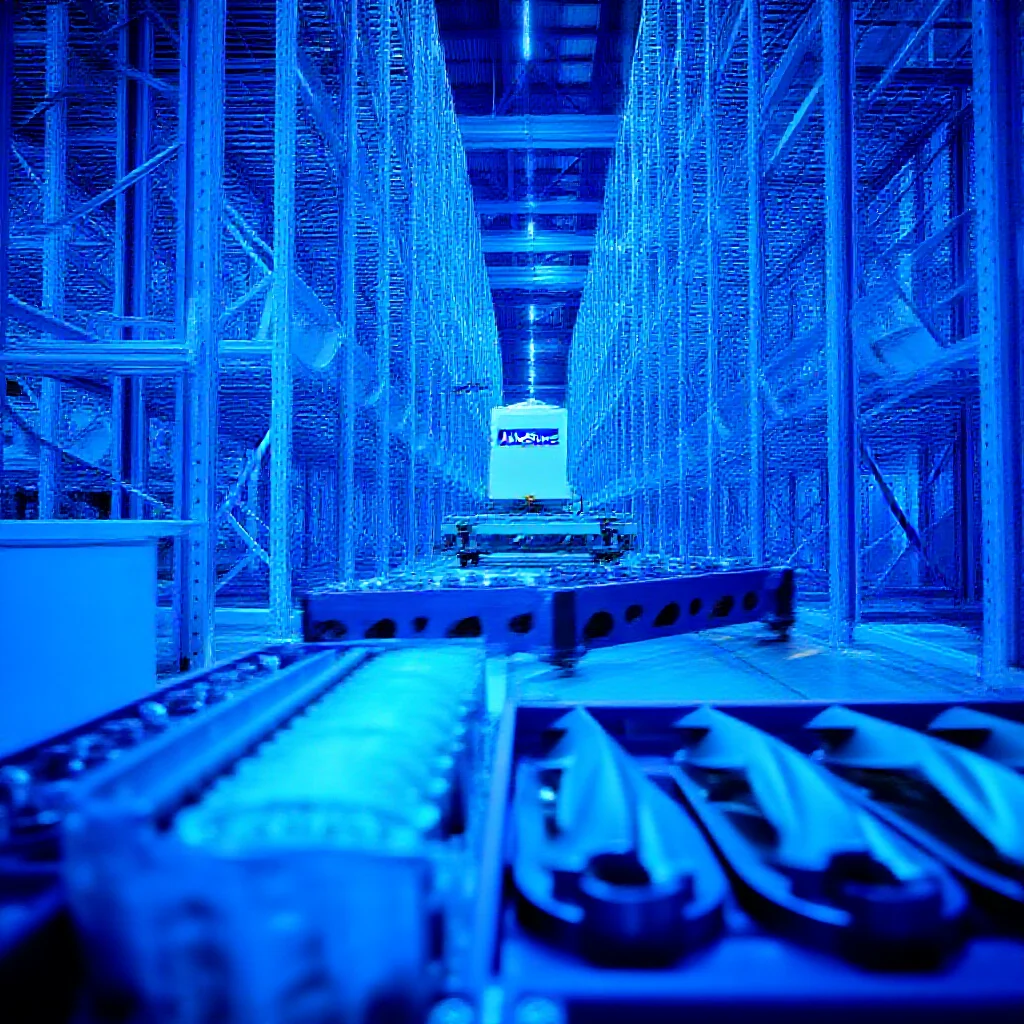
Satair, a provider of aftermarket services for the aerospace industry and an Airbus company, has deployed a Swisslog AutoStore robotic goods-to-person system at its Singapore facility. The implementation is designed to handle a high volume of small aerospace parts, with stated objectives of improving order fulfillment speed and accuracy. This action strengthens the company’s regional logistics capabilities for part distribution. The AutoStore system functions as a high-density storage grid where robots retrieve standardized bins, bringing items directly to human pickers or packing stations, minimizing manual travel and search time within the warehouse.

The Hidden Calculus: Why Small Parts Are Now a Big Battlefield
The strategic significance of automating small parts logistics extends beyond operational efficiency. The aerospace aftermarket’s critical vulnerability often lies not in major components like engines or airframes, but in the millions of fasteners, seals, brackets, and consumables. A single missing or incorrectly shipped low-cost part can ground a high-value aircraft, creating disproportionate operational and financial risk for airlines. Post-pandemic supply chain shocks exposed the fragility of lean, just-in-time inventory models for Maintenance, Repair, and Overhaul (MRO) operations. Satair’s investment represents a pivot towards a resilient “just-in-case” model, enabled by hyper-efficient, high-availability micro-fulfillment at key logistics nodes.
This transition is not merely an efficiency play but a fundamental risk monetization strategy. The capability to guarantee rapid, accurate availability of a vast catalog of small parts transforms a distributor’s value proposition. It allows companies like Satair to evolve from transactional parts sellers into strategic reliability partners for airlines and MRO providers. The economic logic values inventory velocity and guaranteed access over the sheer volume of stock, turning logistics precision into a premium, billable service.
The Strategic Ripple: Reshaping Asia-Pacific's Aerospace Hub Dynamics
The location of this automation investment is strategically consequential. Singapore is a major global and Asia-Pacific hub for MRO and aerospace logistics, consistently holding a significant share of the region’s MRO market. Automating the “last inch” of logistics—the final retrieval, picking, and packing process—within this hub creates a competitive moat. It enables dramatically faster turnaround times for airline customers across Southeast Asia and beyond, potentially allowing for revised, more aggressive service-level agreements that can shift customer loyalty.
This move by a key Airbus services company may trigger a broader automation arms race among independent parts distributors and large MRO providers in the region. The underlying asset being contested is shifting from pure inventory breadth to “time-to-tarmac”—the total elapsed time from an airline’s part request to its availability for installation. Investments in systems like AutoStore directly compress this timeline, setting a new benchmark for service in a region characterized by rapid aviation growth.
Beyond Swisslog: The Broader Trend of 'Dark Warehouses' in Industrial Supply
Satair’s implementation is a specific instance of a macro trend: the rise of lights-out, highly automated fulfillment centers in industrial and B2B supply chains, a domain following the path pioneered by e-commerce. The economic drivers are clear: rising costs of skilled labor and the severe financial impact of shipping errors are being countered by the falling relative costs of robotics, software, and sensing technologies. Furthermore, the high-density nature of systems like AutoStore provides a solution for the high-cost real estate prevalent in global logistics hubs like Singapore, maximizing utility per square meter.
This investment serves as a leading indicator for capital expenditure priorities within industrial distribution. It signals a reallocation of investment from pure inventory carrying costs to advanced physical and digital logistics infrastructure. The strategic goal is to build supply chains that are not only efficient but also predictably resilient, transforming logistics from a cost center into a core competitive differentiator. The focus on automating the handling of small, high-variability items indicates where supply chain fragility is most acutely felt and where technological mitigation offers the highest return.
(All rights reserved by Global Beacon Chronicle. Unauthorized reproduction is prohibited.)
Li Ming / Li Ming
Tech columnist and visiting scholar at MIT.