Beyond Green Marketing: How HKTDC''s Thailand Foray Signals a Strategic Shift
The Hong Kong Trade Development Council's launch of its GreenBiz campaign

Beyond Green Marketing: How HKTDC's Thailand Foray Signals a Strategic Shift in Asia's Sustainable Supply Chains
Opening Summary: On March 19, 2026, the Hong Kong Trade Development Council (HKTDC) initiated its GreenBiz campaign in Thailand. The stated objective is to promote green business and sustainable development. (Source 1: [Primary Data]) This event represents a tangible operational step within a broader, strategic reorientation of Hong Kong’s economic intermediaries.
Decoding the Launch: A Strategic Move, Not Just a Campaign
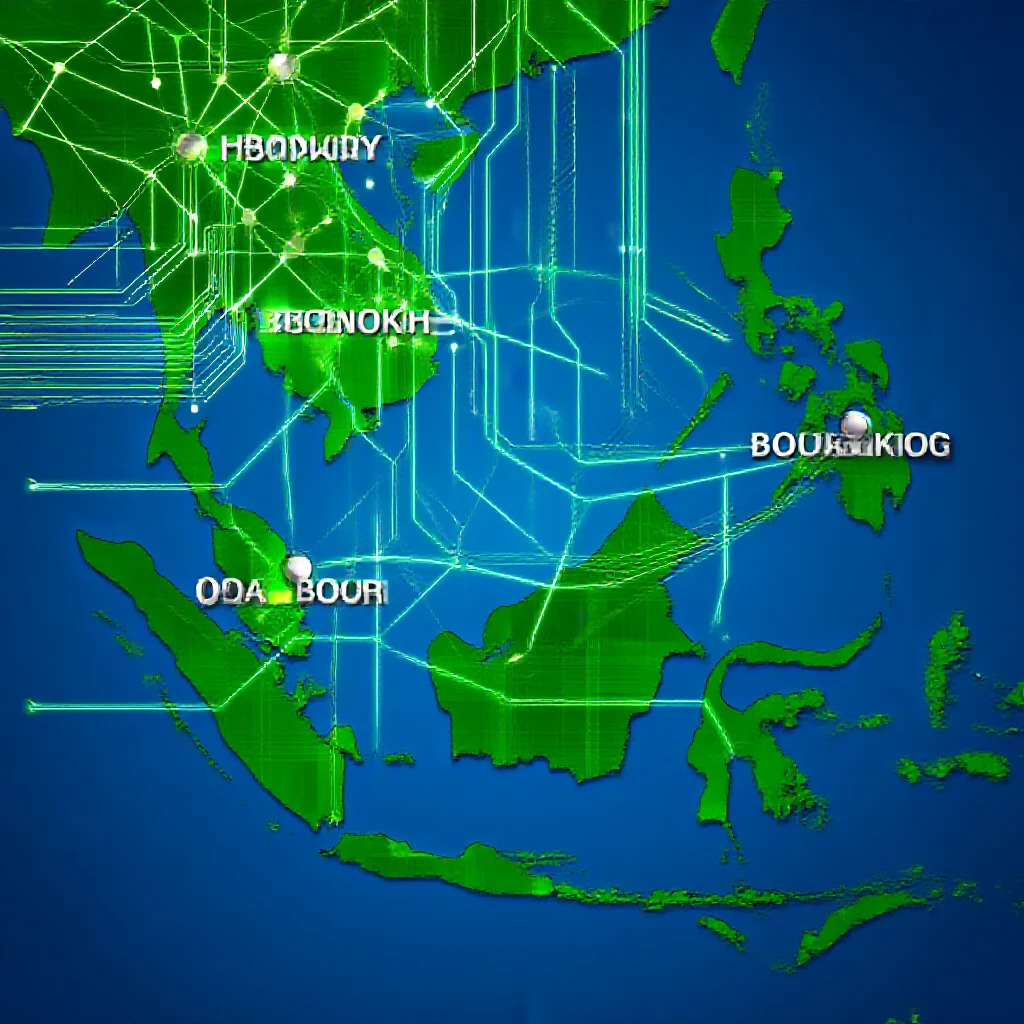
The launch date situates the campaign within Hong Kong’s post-2025 economic diversification imperative, a period characterized by a strategic pivot towards high-value service exports. Thailand’s selection as the inaugural target is analytically significant. The nation functions as a central manufacturing hub within the Association of Southeast Asian Nations (ASEAN) and a critical gateway for regional trade. The campaign, therefore, transcends generic promotion. Its core function is the export of a "green facilitation" service model. In this model, Hong Kong positions itself not as a manufacturer of green technology, but as the indispensable bridge providing the financial structuring, legal frameworks, certification validation, and risk management services required to green Southeast Asia’s industrial base.
The Hidden Economic Logic: Trading in Sustainability Standards
The economic logic underpinning the GreenBiz campaign represents a shift from trading physical commodities to trading intangible standards and the capital flows they dictate. By promoting specific green business paradigms, the HKTDC directly stimulates demand for financial products native to Hong Kong’s markets: green bonds, sustainability-linked loans, and ESG (Environmental, Social, and Governance) derivative instruments. Concurrently, it creates a pipeline for Hong Kong’s professional services sector, including consultancies for ESG reporting, auditors for green certification, and legal firms for sustainable contract frameworks. The long-term strategic play is to influence the baseline ESG compliance requirements for Southeast Asian exports. By embedding Hong Kong-originated or Hong Kong-validated standards into regional supply chains, the campaign cultivates a structurally captive, recurring market for its financial and professional expertise.
Slow Analysis: Reshaping the ASEAN-China Supply Chain Corridor
A deep audit of potential supply chain impacts reveals a fundamental transition from purely cost-centric optimization to value-centric models where "green" attributes carry a premium. The campaign introduces a new variable into supply chain calculus. A scenario analysis suggests that Thai suppliers who successfully adopt and certify under the standards promoted by the campaign could gain preferential access to capital and markets in the European Union and North America. This would, in turn, exert competitive pressure on suppliers in Vietnam, Indonesia, and Malaysia, potentially triggering a "green domino effect" across ASEAN manufacturing. However, this reconfiguration carries inherent risk. It may catalyze a two-tier supply chain system within the region: a top tier with access to green finance and certification channels, and a lower tier locked out due to higher compliance costs and capital constraints, potentially reshaping regional industrial competitiveness.
The Unspoken Entry Point: Geopolitics of Green Infrastructure
From a geopolitical viewpoint, the GreenBiz campaign functions as a soft-power instrument within a quiet competition for influence over Southeast Asia’s sustainable development trajectory. It offers an alternative pathway to green industrialization, distinct from the regulatory-driven model of the European Union’s Carbon Border Adjustment Mechanism (CBAM) or the technology-transfer partnerships often associated with Japanese initiatives. The campaign leverages Hong Kong’s role as a neutral, commercial nexus to advance sustainability standards that are compatible with both mainland Chinese and global market expectations. This positioning addresses a documented gap. Analyses, such as those from the World Bank on ASEAN’s infrastructure financing needs and the Brookings Institution on green geopolitics in Asia, highlight the region’s urgent requirement for trillions in sustainable investment and the strategic vacuum that various actors are seeking to fill. (Source 2: [Secondary Analysis - Institutional Reports])
Neutral Market/Industry Prediction: The HKTDC’s GreenBiz campaign in Thailand is likely to be the first node in a regional network. Its medium-term success will be measurable not in immediate trade volume, but in the flow of green financial instruments from Hong Kong into Thai projects and the adoption rate of Hong Kong-validated ESG reporting frameworks by Thai exporters. Should these metrics prove positive, replication in other ASEAN markets such as Vietnam and Malaysia is a logical progression. The long-term implication is the gradual formalization of Hong Kong as the default arbitration and financing hub for sustainability compliance within the Asia-Pacific trade corridor, thereby altering the fundamental architecture of regional supply chain governance.
(All rights reserved by Global Beacon Chronicle. Unauthorized reproduction is prohibited.)
Li Ming / Li Ming
Tech columnist and visiting scholar at MIT.