Beyond the Hype: How Emerging Technologies Are Reshaping Business Engagement,
The business landscape is being transformed by a wave of emerging technologies—from

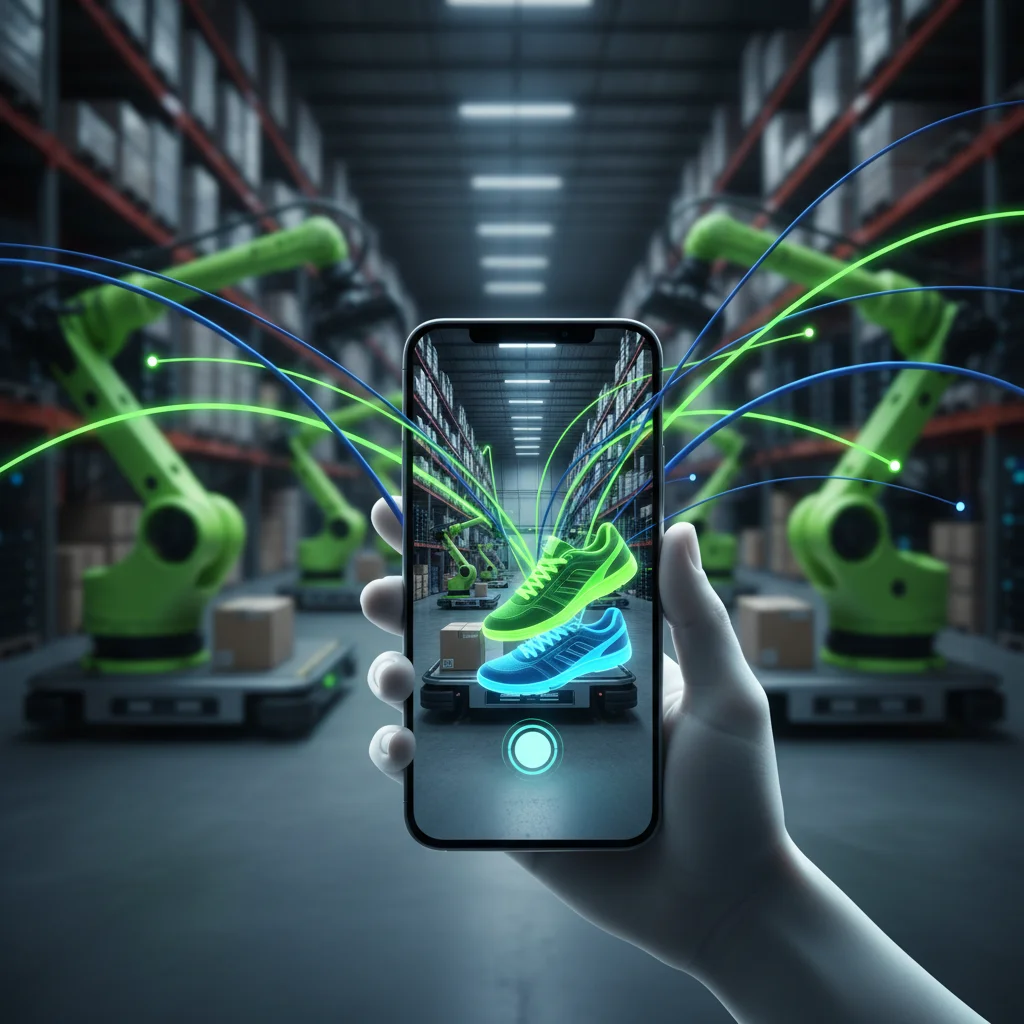
How Emerging Technologies Are Transforming Business Engagement, Supply Chains, and Trust
The business landscape is undergoing a fundamental shift. A convergence of augmented reality (AR), artificial intelligence (AI), the Internet of Things (IoT), blockchain, and next-generation security paradigms is no longer a futuristic promise—it is a present-day reality reshaping how companies engage customers, manage supply chains, and protect data. Behind the headlines of virtual try-ons and warehouse robots lies a hidden economic logic: organizations are moving from siloed digital experiments toward integrated ecosystems that deliver personalized experiences, operational resilience, and verifiable trust. This article examines three core domains—customer engagement, supply chain transformation, and cybersecurity—using real-world deployments, market data, and emerging privacy innovations to reveal the strategic playbook for the next decade.
[IMAGE: An infographic timeline showing key milestones: 2019 (First American Financial data breach), 2020 (AR adoption surge during pandemic), 2021 (Microsoft Exchange Server hack), 2023+ (Zero Trust architecture and blockchain integration become mainstream).]
---
1. Redefining Customer Engagement: AR, VR, and AI in Action
The consumer expectation for seamless, immersive digital experiences has never been higher. Retailers and brands are leveraging augmented reality (AR), virtual reality (VR), and AI-powered chatbots not as novelties, but as proven revenue drivers. The numbers speak for themselves.
Adidas launched a virtual try-on tool that allows customers to preview sneakers using their smartphone camera. The result? A 20% surge in engagement and a 90% increase in conversion rates since 2020. Similarly, Wayfair’s “View in Room” feature uses AR to let shoppers place furniture in their own space before purchasing. Wayfair reported that customers who used the AR tool were 11% more likely to make a purchase and spent 20% more on average. These are not gimmicks; they are tools that reduce purchase hesitation and return rates—two of retail’s most persistent cost drivers.
AI-powered chatbots have moved beyond simple FAQ responses. Lowe’s introduced LoweBot, an autonomous in-store robot that guides customers to products, answers questions, and scans inventory in real time. The bot not only improved customer satisfaction scores but also freed human associates to focus on complex problem-solving. The economic logic is clear: AI reduces operational costs while delivering instant, personalized support at scale.
The most ambitious play comes from Disney. In 2023, the entertainment giant announced a multi-billion-dollar investment in AI and a partnership with Epic Games (creator of Fortnite) to build a “persistent universe” blending physical theme parks with virtual experiences. This signals a broader trend toward gamified, immersive brand ecosystems—where the boundary between digital and physical dissolves. For businesses still debating AR/VR investment, the evidence suggests that early movers are capturing outsized engagement and loyalty.
[IMAGE: Split-screen: left side shows a person using a smartphone AR app to place a virtual sofa in their living room; right side shows a LoweBot robot navigating an aisle in a hardware store.]
---
2. Supply Chain Revolution: IoT, AI, and Robotics in the Back Office
While customer-facing technologies grab headlines, the quiet revolution in supply chain operations is generating equally dramatic returns. The pandemic exposed the fragility of global logistics, and companies are now investing heavily in IoT sensors, AI demand forecasting, and warehouse robotics to build resilience.
IoT sensors deployed across warehouses, shipping containers, and retail shelves provide real-time visibility into inventory levels, equipment health, and environmental conditions (temperature, humidity). This data enables proactive decision-making—for example, rerouting perishable goods before spoilage occurs or scheduling maintenance before a conveyor belt fails. A 2023 McKinsey survey found that 43% of merchants plan to integrate AI and machine learning into their supply chain operations within the next two years, primarily for demand forecasting and inventory optimization.
The impact on last-mile delivery is equally transformative. Autonomous trucks are undergoing pilot programs on U.S. highways, while warehouse robotics—already common in Amazon fulfillment centers—are proliferating among mid-sized e-commerce players. Ocado, the British online grocer, runs fully automated warehouses where hundreds of robots move thousands of orders per hour with near-zero error rates. The economic benefit extends beyond speed: these systems reduce waste by improving just-in-time inventory, cutting overstock, and avoiding stockouts.
The hidden economic logic of supply chain technology is about resilience. During the pandemic-era shortages, companies with IoT-enabled visibility and AI-driven forecasting were able to reroute supplies, adjust production schedules, and maintain service levels while competitors stalled. As geopolitical volatility and climate disruptions increase, the ability to sense and respond in real time becomes a competitive moat—not a luxury.
[IMAGE: A modern warehouse interior with autonomous robots moving parcels on a grid, overlaid with a real-time data dashboard showing inventory levels, predictive analytics, and a heat map of facility activity.]
---
3. Building Trust in a Breached Era: Zero Trust, Blockchain, and Privacy Innovations
As digital engagement and supply chain connectivity expand, the attack surface expands with them. High-profile breaches have become a recurring cost of business: the Microsoft Exchange Server hack in 2021 compromised hundreds of thousands of organizations worldwide, while the First American Financial data leak in 2019 exposed over 885 million sensitive records. These incidents underscore a painful truth: traditional perimeter-based security models are obsolete.
In response, Zero Trust Architecture has moved from a security niche to a boardroom priority. The principle is simple: never trust, always verify. Every user, device, and network request is authenticated and authorized, regardless of whether it originates inside or outside the corporate network. Companies like Google (BeyondCorp) and CrowdStrike have spearheaded this approach, and adoption is accelerating. Gartner predicts that by 2026, 60% of large enterprises will have a Zero Trust initiative in place.
Blockchain offers a complementary layer of verifiable trust. In supply chains, blockchain enables transparent, tamper-proof records of product provenance—from raw material sourcing to final delivery. Walmart and IBM have piloted blockchain for tracking food products, reducing the time needed to trace contaminated goods from weeks to seconds. Beyond supply chains, blockchain-based identity management systems give users control over their personal data, reducing reliance on centralized databases that become honeypots for attackers.
Perhaps the most intriguing development is the rise of privacy-preserving innovations. Synthetic data—artificially generated datasets that mimic real-world statistical patterns without containing actual personal information—is gaining traction in industries from healthcare to finance. JP Morgan uses synthetic data to train fraud-detection models without exposing customer records. Meanwhile, data clean rooms allow companies to share and analyze customer data with partners (e.g., retailers sharing purchase data with advertisers) without revealing individually identifiable information. These technologies enable collaboration and analytics while minimizing breach risk.
The strategic imperative is clear: trust is no longer a compliance checkbox but a competitive differentiator. Organizations that adopt Zero Trust, blockchain, and privacy-preserving technologies position themselves as secure partners in an ecosystem where data sharing and digital interaction are unavoidable.
[IMAGE: A conceptual diagram showing a network with nodes labeled "User," "Device," "App," and "Data," each with a "Verify" checkpoint. A lock icon with "Zero Trust" label sits at the center. At the bottom, a representation of a blockchain ledger with blocks labeled "Supplier Origin," "Transport," "Sale," and "Customer."]
---
Conclusion: The Integrated Ecosystem Imperative
The technologies reshaping business today—AR, AI, IoT, blockchain, Zero Trust, and privacy innovations—are not isolated trends. They form an interconnected ecosystem where customer engagement feeds supply chain data, which in turn requires robust security and trust mechanisms. The companies that will lead the next decade are those that can integrate these tools into a coherent strategy.
Consider the virtuous cycle: AR try-ons generate richer customer data, which AI uses to forecast demand, which IoT sensors validate in real time, which blockchain records for provenance, all secured under a Zero Trust framework. This loop creates a moat that is difficult for competitors to replicate.
The economic logic is simple but profound: seamless experiences drive revenue; resilient supply chains protect margins; and verifiable trust protects brand value. For decision-makers, the question is no longer “should we adopt emerging technologies?” but “how quickly can we integrate them into a unified operating model?” The evidence from early adopters—Adidas, Wayfair, Lowe’s, Disney, Walmart, and others—says that the winners have already started.
(All rights reserved by Global Beacon Chronicle. Unauthorized reproduction is prohibited.)
Li Ming / Li Ming
Tech columnist and visiting scholar at MIT.