Beyond Experimentation: How Capgemini’s Top Tech Trends of 2026 Redefine Enterprise
Capgemini’s ''Top Tech Trends of 2026'' report signals a decisive shift:

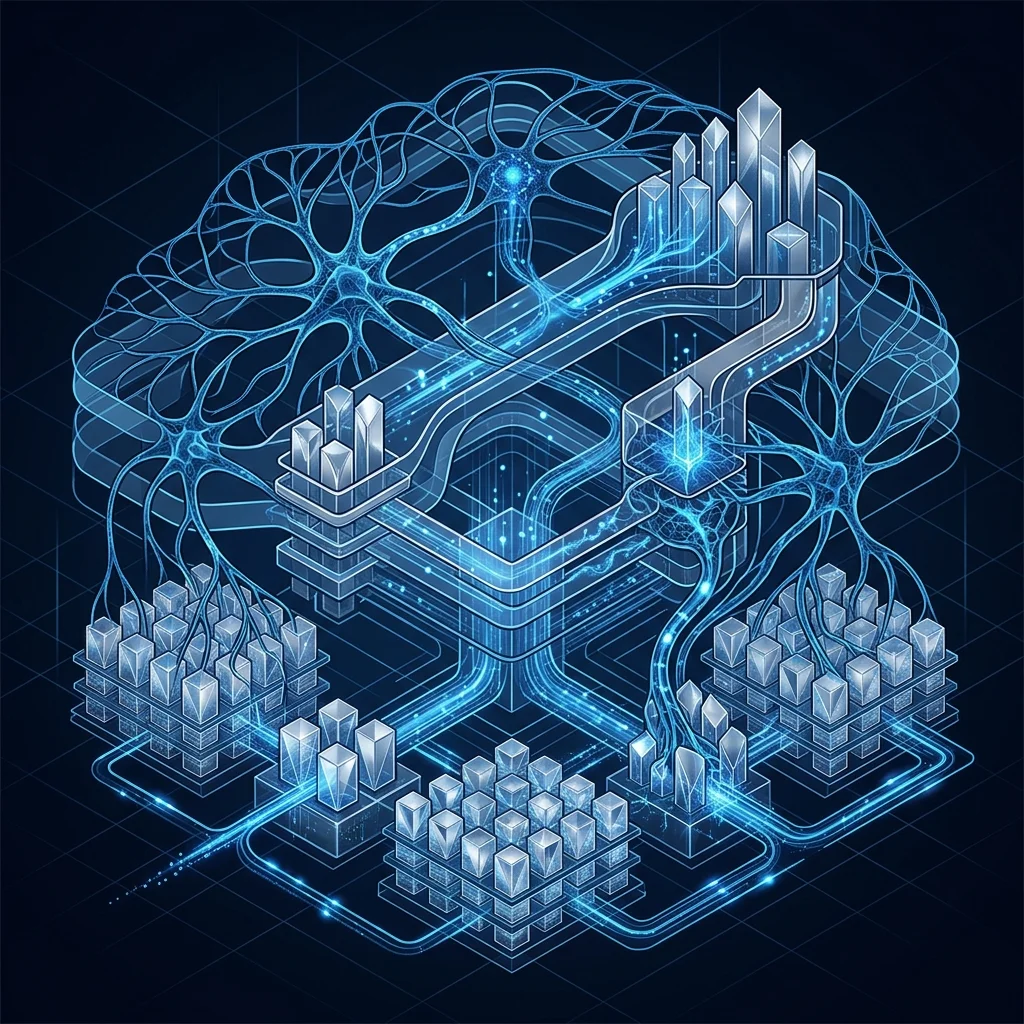
Capgemini’s Top Tech Trends of 2026: Redefining Enterprise Architecture Beyond Experimentation
The era of technology tinkering is over. According to Capgemini’s “Top Tech Trends of 2026” report, the coming year marks a decisive shift from isolated experiments to durable, system-wide foundations—rewiring everything from supply chains to software development.
---
Introduction: The End of Tech Experimentation
For the past decade, enterprises have treated emerging technologies as sandboxes—safe zones for AI pilots, cloud migrations, and low-code trials. But Capgemini’s latest report argues that 2026 will be the year this approach becomes unsustainable. Pascal Brier, Capgemini’s Chief Innovation Officer, frames the moment bluntly: “We are no longer building prototypes. We are constructing future-dependent infrastructure.” The implication is clear—organizations must now architect for permanence, not possibility.
The report identifies five macro-trends: AI maturity, intent-driven development, Cloud 3.0, intelligent operations, and tech sovereignty. But these are not isolated forecasts. They form a single economic logic—a new dependency fabric between systems, suppliers, and sovereign borders. For strategists planning beyond 2026, understanding this logic is not optional; it is survival.
[IMAGE: Infographic showing a timeline from 'experimentation' (scattered nodes) to 'foundation' (interconnected pillars) labeled 2026.]
---
AI’s Year of Truth: From Pilot to Enterprise Backbone
The first and most consequential trend is that artificial intelligence moves from the periphery to the core. “Maturity” in 2026 no longer means launching a chatbot or a recommendation engine. It means embedding AI into the enterprise architecture itself—reducing inference latency, enforcing governance at the data layer, and cutting operational costs by automating entire transaction chains.
Capgemini’s data shows that leading organizations already route core financial transactions, inventory rebalancing, and compliance checks through AI-driven decision loops. This is a radical departure from the experimental era, where AI handled only low-risk, non-critical tasks. Now, supply chain forecasting systems are no longer supervised by humans—they are supervised by other AI agents that monitor drift and alert only when confidence thresholds collapse.
Bernard Marr, a renowned technology strategist, reinforces this shift in a companion analysis: “The scalability of enterprise AI depends on human oversight being redefined—not removed. In 2026, the most resilient systems will be those where humans audit the model’s logic, not its outputs.” This insight is critical for risk management: as AI becomes the backbone of enterprise operations, the cost of a single model failure multiplies exponentially.
[IMAGE: A diagram of an enterprise IT stack with AI woven into every layer (data, apps, security, operations).]
---
AI Is Eating Software: Intent-Driven Development Disrupts the Developer Economy
If AI is the backbone, software is the tissue it feeds on. Capgemini’s report uses a provocative phrase—“AI is eating software.” This signals a paradigm change in how applications are built, maintained, and retired. The traditional developer workflow—write code, test, deploy, debug—is being replaced by intent-driven development: humans express what they want, and AI autonomously generates, validates, and iterates the code.
This is not a futuristic vision. By 2026, low-code and no-code platforms will integrate generative AI to such a degree that a supply chain manager could describe a new logistics rule in natural language, and the system would produce a microservice that handles exception logic—complete with tests and monitoring dashboards. The implication for the developer economy is profound.
Software engineers will no longer be coders in the traditional sense. They will become intent engineers—architects who define the boundaries within which AI operates, and system auditors who validate that generated code meets regulatory and security requirements. The global supply chain for developer skills must adapt: boot camps that teach Python syntax will give way to programs that teach prompt engineering, adversarial testing, and ethical constraint design.
Yet the report also warns of hidden risks. When AI writes the code, who owns the bug? When an intent is misinterpreted, how do we trace the failure back to human judgment? These questions will define the next wave of enterprise architecture standards.
[IMAGE: A metaphor: a developer writing a sentence that morphs into functional code modules, with a human reviewing the output.]
---
Cloud 3.0: The Multi-Sovereign Balancing Act
As AI workloads scale and intent-driven development accelerates the pace of deployment, the underlying cloud infrastructure must evolve. Capgemini’s report introduces Cloud 3.0—a model that moves beyond simple hybrid or multi-cloud strategies. Cloud 3.0 combines private, public, hybrid, and sovereign cloud models into a single, dynamically orchestrated fabric.
The hidden logic here is data residency and latency. AI agents that run core supply chain transactions cannot tolerate the 100-millisecond round-trip to a distant data center. Edge nodes must process in real time. At the same time, regulation—Europe’s GDPR, China’s Data Security Law, India’s DPDP Act—forces organizations to store and process certain data within national borders. Cloud 3.0 is the architectural response: a multi-sovereign balancing act that allocates workloads based on compliance, performance, and cost.
But this creates new vendor lock-in risks. The report notes that “sovereign models” often require specialized infrastructure from local providers or government-certified clouds. Organizations that naively adopt a least-cost multi-cloud strategy may find themselves trapped in a patchwork of incompatible sovereignty zones. The economic trade-off is stark: invest in unified orchestration layers or face fragmented operations that degrade AI performance.
For global supply chains, the impact is immediate. A manufacturer with factories in Germany, Vietnam, and Brazil can no longer treat cloud as a global utility. Each region imposes its own rules. Cloud 3.0, therefore, is not just a technology upgrade—it is a geopolitical adaptation.
[IMAGE: A Venn diagram of four overlapping cloud models (private, public, hybrid, sovereign) with arrows showing data flow and a padlock icon for sovereignty.]
---
Intelligent Operations: Ecosystems That Run Themselves
The fourth trend—intelligent operations—describes a state where IT and business operations are no longer distinct domains. Instead, they become a single, self-optimizing ecosystem. Capgemini’s report defines this as “operations that sense, decide, and act without human intervention for routine tasks, while surfacing only strategic exceptions to human operators.”
Intelligent operations rely on the AI backbone, the intent-driven software, and the Cloud 3.0 fabric working in concert. A concrete example: an e-commerce platform’s demand spiking unexpectedly. The system automatically provisions additional cloud capacity (Cloud 3.0), adjusts inventory algorithms (AI backbone), and deploys a new promotional logic (intent-driven development)—all within seconds. A human manager receives a summary text: “Demand surge detected in Category A. Capacity scaled 300%. Price elasticity model updated. Recommend review of supplier contracts for restock.”
This level of autonomy requires a new approach to resilience. Traditional IT operations teams monitor dashboards; intelligent operations monitors the behavior of monitoring agents. The report warns that “meta-observability”—observing the observers—will become a critical architectural capability. Organizations that fail to implement it risk cascading failures where no human can intervene because no human understood the automation in the first place.
[IMAGE: A circular flowchart showing "Sense → Decide → Act → Monitor → Sense" with AI symbols embedded, and a small human figure at the edge receiving a summary alert.]
---
Tech Sovereignty: Balancing Openness with Resilience
The fifth and arguably most strategic trend is tech sovereignty—the ability of an organization (or nation) to control its own technological destiny. Capgemini’s report frames sovereignty not as isolationism, but as a deliberate balance between openness and resilience.
On one side, global supply chains depend on open standards, shared protocols, and interoperable platforms. On the other, geopolitical tensions, export controls, and data localization laws force organizations to build redundant capabilities. The report notes that by 2026, “most large enterprises will operate at least two independent technology stacks—one for global operations and one for sovereign compliance.”
This dual-stack architecture has significant cost implications. Maintaining parallel systems for AI models, cloud infrastructure, and developer tooling duplicates infrastructure spending. Yet the alternative—complete dependence on a single vendor or jurisdiction—is increasingly unacceptable to boards and regulators.
The economic logic here is subtle. Tech sovereignty is not about building everything in-house. It is about creating optionality—the ability to shift workloads, replace vendors, or adapt to new regulations without rebuilding the entire enterprise architecture. Capgemini’s analysis suggests that the most forward-thinking organizations are already investing in abstraction layers that decouple application logic from infrastructure, allowing them to pivot as sovereignty requirements evolve.
[IMAGE: A scale balancing two globes labeled "Openness" and "Resilience," with interconnected gears representing standards and localized infrastructure below.]
---
Conclusion: The New Dependency Fabric
Together, these five trends reveal a hidden economic logic. In 2026, enterprise architecture is no longer a static blueprint—it is a living, adaptive system that must manage dependencies across AI models, cloud providers, developer talent, regulatory regimes, and operational ecosystems. The era of technology experimentation is ending not because innovation stops, but because the cost of building on shaky foundations becomes too high.
Capgemini’s report, anchored by insights from Pascal Brier and Bernard Marr, offers a clear message for strategists: the organizations that thrive will be those that treat architecture as a strategic asset, not a technical afterthought. They will invest in AI maturity that handles core transactions, embrace intent-driven development while redefining developer roles, navigate Cloud 3.0’s multi-sovereign complexity, build intelligent operations that run themselves, and adopt technology innovation trends with sovereignty in mind.
The year 2026 is not about the next shiny tool. It is about constructing the durable foundations that will carry organizations through the next decade. Those who begin today will own the future.
---
Keywords: technology innovation trends, AI maturity 2026, Cloud 3.0, tech sovereignty, intelligent operations, intent-driven development, Capgemini report
(All rights reserved by Global Beacon Chronicle. Unauthorized reproduction is prohibited.)
Li Ming / Li Ming
Tech columnist and visiting scholar at MIT.