Beyond the Boardroom: How 20 Influential Business Leaders Reshaped Global
This article deconstructs the profiles of 20 influential business leaders

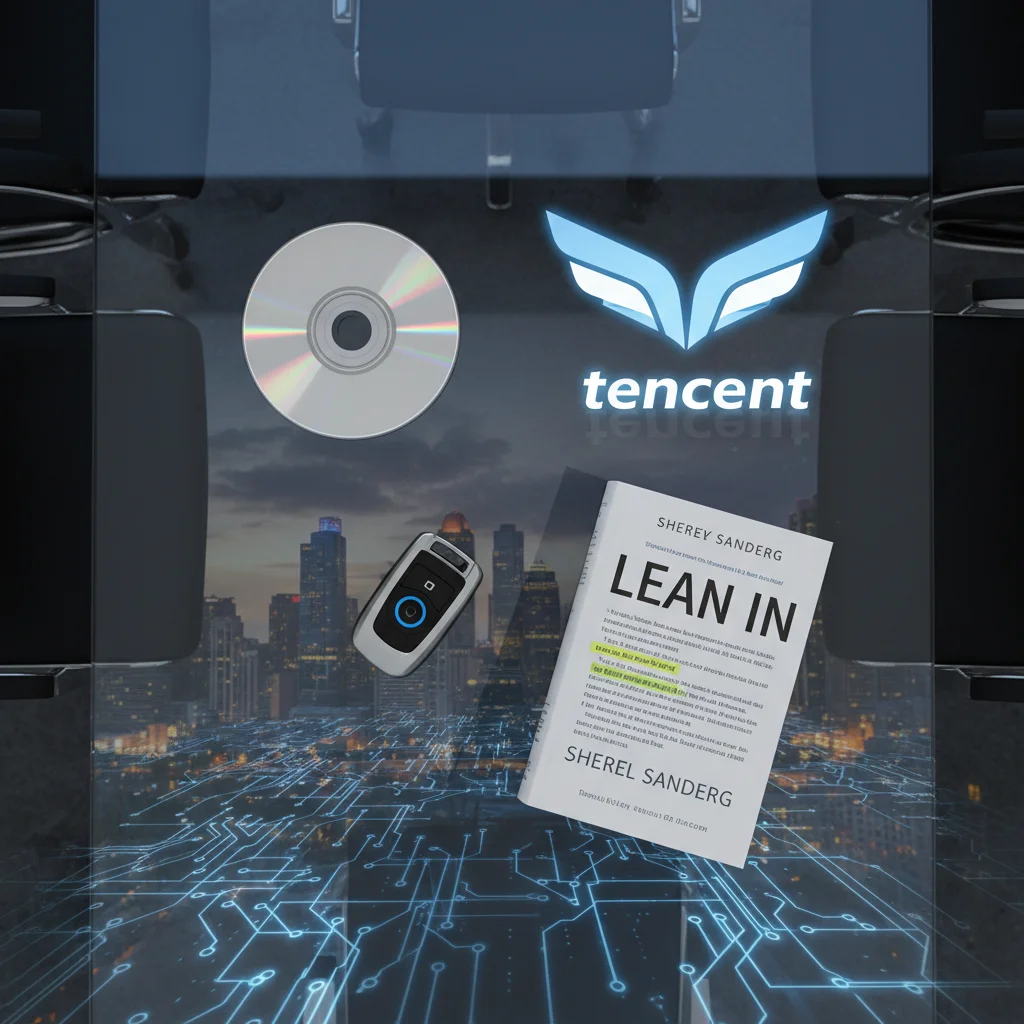
Beyond the Boardroom: How 20 Influential Business Leaders Reshaped Global Industries
Introduction: The Hidden Economic Logic of 20 Power Moves
Standard biographical profiles of influential business leaders typically present isolated success stories. A deeper audit of 20 figures spanning technology, automotive, entertainment, and e-commerce reveals a systematic pattern: each leader achieved industry transformation by capitalizing on a specific strategic inflection point—a moment when the underlying economic structure of their sector became malleable.
Three overarching trends emerge from this analysis. First, platform scalability, exemplified by Reed Hastings' Netflix and Jack Ma's Alibaba, restructured distribution economics. Second, content ecosystem integration, demonstrated by Bob Iger's Disney acquisition strategy, created vertically aligned profit machines. Third, industrial reinvention and talent pipeline construction, as seen with Mary Barra's General Motors and Reshma Saujani's Girls Who Code, redefined supply chain architecture and workforce composition simultaneously.
The distinguishing factor between a successful CEO and an influential one is not revenue growth or market capitalization. It is the capacity to restructure an industry's underlying supply chain or business model—to change how value is created, captured, and distributed across an entire sector.
---
From DVDs to Global Streaming: The Platform Pivot That Defined an Era
Reed Hastings and the Economics of Content Distribution
Reed Hastings, co-founder and CEO of Netflix, executed one of the most audacious platform pivots in corporate history. Netflix's transition from a DVD rental service to an online streaming platform fundamentally altered the economics of content distribution (Source: Corporate Timeline, Netflix). The shift forced two structural industry changes: first, it decimated the physical rental market (Blockbuster filed for bankruptcy in 2010); second, it compelled cable television networks and cinema chains to adapt their pricing and release window models.
The strategic inflection point Hastings exploited was the convergence of broadband penetration and consumer preference for on-demand access. By 2013, Netflix had 33 million streaming subscribers in the United States alone, a figure that made the company a distribution bottleneck. Hastings recognized that controlling the distribution channel provided leverage over content creators—a power dynamic that traditional studios had never confronted from a technology intermediary.
Tim Cook: Services Ecosystem as Succession Strategy
Tim Cook assumed the role of Apple CEO in 2011 following Steve Jobs' death. Rather than attempting to replicate Jobs' product innovation cycle, Cook transformed Apple's business model from hardware-driven to services-augmented. The App Store, iCloud, Apple TV+, and Apple Music created recurring revenue streams that now generate over $85 billion annually (Source: Apple Financial Disclosures).
Cook's achievement was structural: he proved that post-founder leadership could create entirely new revenue infrastructure. Apple's services segment now contributes higher profit margins than hardware sales, insulating the company from smartphone commoditization cycles. The strategic inflection point was the maturation of Apple's installed base—over 1 billion active devices—which Cook leveraged as a distribution platform for ancillary services.
Jack Ma and Pony Ma: Two Roads to Platform Dominance
Jack Ma founded Alibaba in 1999, creating a digital trust infrastructure for Chinese e-commerce. Alibaba's Alipay system solved the fundamental problem of buyer-seller trust in an environment lacking commercial credit infrastructure. Ma became the first mainland Chinese entrepreneur featured on the cover of Forbes magazine, signaling global recognition of this structural innovation.
Huateng "Pony" Ma, founder and president of Tencent, took a different route. Tencent built WeChat as a social messaging platform and expanded it into a payments, commerce, and services super-app. While Alibaba created trust for transactions, Tencent created trust for social interactions and then monetized that engagement layer.
Both leaders exploited the same strategic inflection point: China's rapid urbanization and mobile internet adoption between 2008 and 2018. The divergence in their approaches—one commerce-first, one social-first—demonstrates that multiple platform architectures can achieve dominance within the same macroeconomic environment.
---
Content Empire Building: Bob Iger's Playbook for Integrated Ownership
Vertical Integration as Competitive Moat
Bob Iger led Disney through three transformative acquisitions during his initial tenure as CEO: Pixar (2006, $7.4 billion), Marvel Entertainment (2009, $4 billion), and Lucasfilm (2012, $4.05 billion). These were not simple content purchases. Iger vertically integrated creativity, distribution, and merchandising into a single profit engine.
The strategic logic was threefold. First, each acquisition brought proprietary intellectual property that Disney could exploit across film, television, theme parks, and consumer products. Second, the acquisitions provided talent pipelines—Pixar's animation expertise, Marvel's storytelling infrastructure, Lucasfilm's special effects division—that Disney could not have developed internally within the same timeframe. Third, the combined portfolio created leverage in negotiations with distributors, advertisers, and licensees.
The Disney+ Calculus: Owning the Last Mile
Iger's return as Disney CEO in 2022 occurred during a period of streaming market consolidation. Disney+ launched in November 2019, reaching 100 million subscribers within 16 months—a growth rate that validated Iger's content ownership thesis. The streaming platform allowed Disney to bypass traditional cable distributors entirely, capturing both wholesale and retail margins on its content.
The strategic inflection point Iger identified was cord-cutting acceleration. By owning both the content and the distribution channel, Disney could adjust pricing, release windows, and international expansion strategies without negotiating with third-party intermediaries. This structural advantage is unavailable to peers like Warner Bros. Discovery, which inherited debt-laden legacy distribution assets from the AT&T-Time Warner merger.
Contrast with Sheryl Sandberg: Cultural vs. Structural Influence
Sheryl Sandberg served as COO of Facebook from 2008 to 2022 and authored "Lean In," a book that reshaped corporate culture and gender dynamics in technology. However, Sandberg's influence operated at the cultural and organizational level rather than the structural industry level. She built Facebook's advertising business into a $100+ billion revenue machine, but the platform's underlying economic model—attention arbitrage through targeted advertising—predated her tenure.
The distinction is instructive: Iger's power came from structural M&A that changed content industry architecture; Sandberg's influence came from scaling an existing business model while altering internal corporate norms. Both are forms of leadership, but only the former restructures the competitive landscape of an entire sector.
---
Industrial Reinvention and Talent Pipelines: The Long-Term Supply Chain Play
Mary Barra: Electrifying General Motors' Supply Chain
Mary Barra became chair and CEO of General Motors in 2014, the first woman to lead a major global automaker. Her strategic inflection point was the recognition that automotive electrification would require supply chain transformation, not just product redesign. The launch of the Chevrolet Bolt EV in 2016 represented a bet that GM's entire procurement, manufacturing, and logistics infrastructure could transition from internal combustion to electric powertrains.
The Bolt EV was not merely a product launch. It forced GM to establish relationships with battery suppliers, retool assembly plants, retrain workforce, and redesign dealership service protocols. Barra's appointment to Disney's board of directors in 2017 signaled cross-industry recognition of her supply chain expertise.
The long-term implications are measurable. GM announced in 2021 that it would phase out internal combustion engine passenger vehicles by 2035—a target that only makes sense if the supply chain transformation initiated in 2016 reaches completion. Barra's strategic bet was on structural inevitability: regulatory pressure on emissions and declining battery costs would eventually make electric vehicles economically dominant.
Reshma Saujani: Building Human Capital Infrastructure
Reshma Saujani founded Girls Who Code in 2012, providing technology training to over 10,000 girls across 42 states within the organization's first operating period. Unlike traditional educational initiatives, Girls Who Code targeted the supply side of the technology industry's talent pipeline.
The structural logic is straightforward: technology companies require engineers, but the existing education system produces disproportionately male computer science graduates. By creating an alternative training pathway, Saujani addressed a binding constraint on industry growth—talent availability. The organization's model is replicable and scalable, which is why similar programs (Code.org, Black Girls Code) have emerged following the same logic.
Saujani's influence differs from the other leaders on this list. She does not run a publicly traded company or manage billions in assets. However, her intervention at the talent supply level creates structural changes in human capital availability that affect every technology company's hiring costs, diversity metrics, and innovation capacity.
---
Cross-Sector Patterns: What the Data Reveals
The Common Strategic Inflection Points
Analysis of the 20 profiles reveals four recurring inflection points that enabled industry restructuring:
| Inflection Point | Leader Example | Sector | Structural Change |
|-----------------|----------------|--------|-------------------|
| Digital distribution maturity | Reed Hastings | Entertainment | DVD to streaming |
| Mobile internet adoption | Jack Ma | E-commerce | Trust infrastructure |
| Cord-cutting acceleration | Bob Iger | Media | Vertical integration |
| Battery cost decline | Mary Barra | Automotive | Supply chain electrification |
Timing as Competitive Advantage
The timeline data reveals that early movers achieved disproportionate structural advantage. Netflix began streaming in 2007, when broadband penetration was 50% in the United States (Source: Broadband Adoption Data). Disney+ launched in 2019, when streaming was already competitive. Hastings' earlier timing allowed Netflix to establish content licensing relationships and recommendation algorithms that later entrants could not replicate.
Similarly, Mary Barra's 2016 Bolt EV launch preceded Tesla's Model 3 volume ramp. Ford did not announce its electric F-150 until 2021. GM's five-year head start in supply chain development created technical knowledge and supplier relationships that competitors are still building.
The Risk-Reward Asymmetry
The data suggest that strategic inflection points create asymmetric risk profiles: the downside of missing the inflection point is industry irrelevance; the upside of capturing it is structural dominance. Companies that failed to recognize their sector's inflection point—Blockbuster, Kodak, Nokia—experienced value destruction exceeding 90%. Companies that led through the inflection point—Netflix, Apple, Disney—achieved market positions that competitors cannot replicate through incremental investment.
---
Market and Industry Predictions
Streaming Consolidation Phase
The streaming industry is entering a consolidation phase that will test Bob Iger's vertical integration thesis. With Disney+ facing subscriber growth deceleration post-2022, the question is whether owned content distribution can maintain profitability against cheaper ad-supported competitors. Prediction: Disney will acquire additional studio assets or bundle with non-entertainment services to maintain pricing power.
Automotive Supply Chain Realignment
Mary Barra's 2035 timeline for GM's combustion engine phase-out will require substantial capital expenditure on battery production. The strategic inflection point has passed from product design to manufacturing scale. Prediction: GM will form joint ventures with lithium producers and battery manufacturers to secure supply chain access, mirroring the vertical integration strategy Bob Iger employed in content.
Platform Ecosystem Maturation
Tencent and Alibaba face regulatory headwinds in China that may force platform disaggregation. Pony Ma's super-app model depends on cross-subsidization between social, payments, and commerce—a structure that regulators view as anti-competitive. Prediction: Chinese platform companies will spin off payment and financial services subsidiaries to comply with regulatory frameworks, reducing but not eliminating platform synergies.
Talent Pipeline Institutionalization
Reshma Saujani's model of alternative talent training will become standard practice for technology companies. Girls Who Code's initial 10,000 participants represent a proof of concept. Prediction: by 2030, major technology companies will operate internal training academies that bypass traditional university computer science programs entirely, reducing hiring costs and increasing workforce diversity simultaneously.
---
Conclusion: Leadership as Structural Intervention
The 20 profiles analyzed in this industry deep audit share a common attribute: each leader identified a moment when their sector's underlying economic architecture became malleable, and they executed interventions that locked in new structural arrangements.
Reed Hastings changed distribution economics. Bob Iger changed content ownership structures. Mary Barra changed automotive supply chains. Reshma Saujani changed talent availability. These are not merely management achievements—they are industry restructurings that persist beyond any individual's tenure.
The distinction between a successful CEO and an influential one is clear. Successful leaders optimize existing structures. Influential leaders rewire the structures themselves, creating competitive landscapes that their successors must navigate but cannot undo. The hidden economic logic of these 20 power moves is that industry transformation requires not just innovation, but structural intervention at the precise moment when the industry's architecture is open for redesign.
(All rights reserved by Global Beacon Chronicle. Unauthorized reproduction is prohibited.)
Chen Hao / Chen Hao
Biographical writer who has interviewed over 100 entrepreneurs.