Stalled at the Quay: How Nigeria''s Port Concession Delays Undermine Investment
The expiration of Nigeria's landmark 2006 port terminal concessions in 2021/2022

Stalled at the Quay: How Nigeria's Port Concession Delays Undermine Investment and Supply Chain Resilience
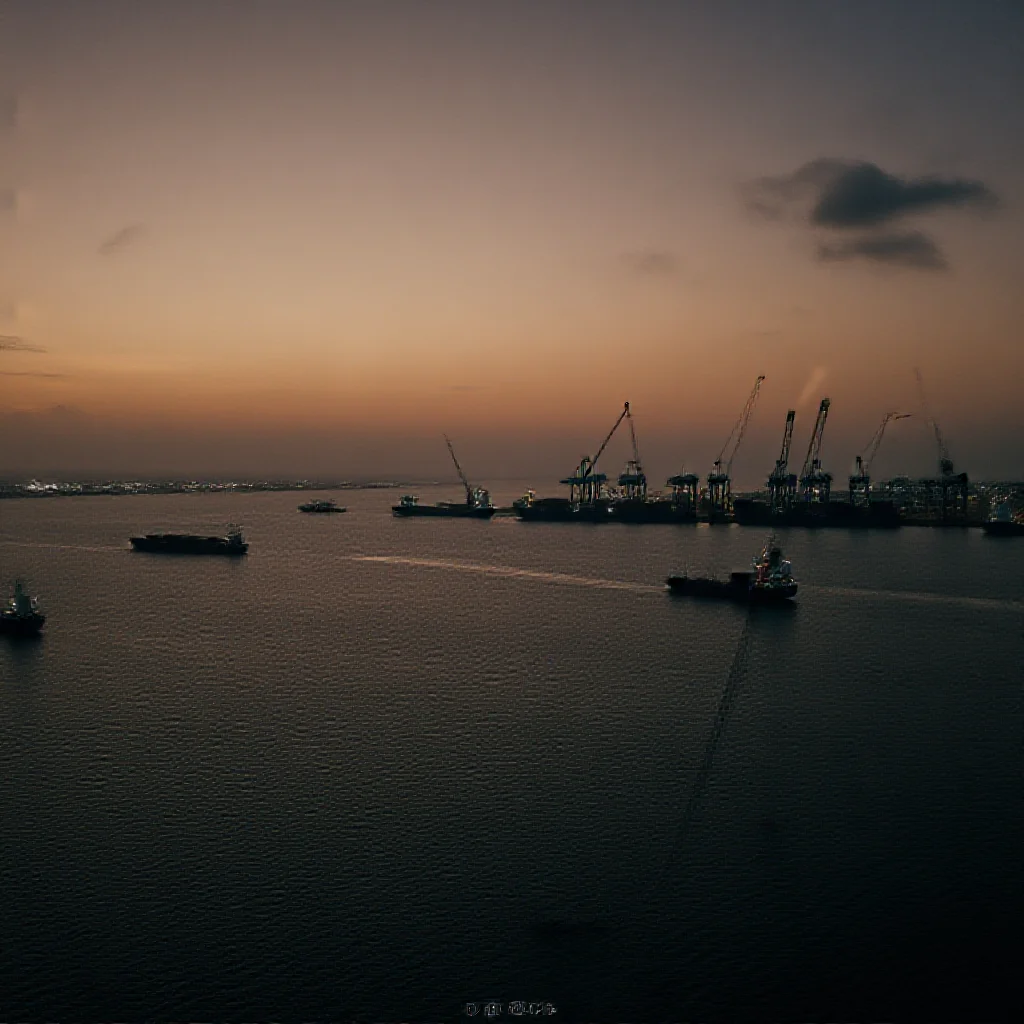
An aerial view of Apapa port, Lagos. The expiration of terminal concessions has cast a shadow over future operations. (Image: Illustration)
Introduction: The Expiry of a Landmark Deal and the Dawn of Uncertainty
The 2006 port terminal concessions represented a pivotal reform in Nigeria’s maritime sector, transferring operational control of key terminals from the Nigerian Ports Authority (NPA) to private entities. This move was designed to modernize infrastructure, improve efficiency, and attract foreign direct investment. The concessions, granted for an initial 15-25 year period, are now legally concluded, with expiry dates falling in 2021 and 2022 (Source 1: [Concession Timeline]).
A state of operational and legal limbo has ensued. The renewal process for these critical assets remains unresolved, creating systemic uncertainty. The key stakeholders—the Federal Government of Nigeria as grantor, the NPA as implementing agency, the Bureau of Public Enterprises (BPE), and the Infrastructure Concession Regulatory Commission (ICRC)—are enmeshed in a protracted process with no clear resolution timeline (Source 2: [Stakeholder Entities]).
---
The Anatomy of a Delay: Multi-Agency Gridlock and Governance Gaps
The renewal process is structurally complex, involving multiple federal agencies with overlapping oversight mandates. The NPA, as the grantor’s representative, is the primary implementer. The BPE, as the statutory body for privatization and commercialization, asserts a role in the transaction. Concurrently, the ICRC, established to regulate all public-private partnerships (PPPs), mandates compliance with its procedural frameworks for concession renewal (Source 2: [Stakeholder Entities]).
This multi-agency framework, without a legislatively clear hierarchy or streamlined procedure for renewal, creates bureaucratic inertia. The delay is not an isolated administrative failure but a symptom of a systemic governance gap in managing PPP lifecycles. The institutional architecture excels at launching concessions but lacks a definitive, efficient mechanism for their evaluation, renegotiation, and renewal at maturity. The process reveals a focus on initial transaction over long-term contract management.
Chart: The complex web of agencies involved in the port concession renewal process.
``mermaid``
graph TD
FG[Federal Government
Grantor] --> NPA[Nigerian Ports Authority
Implementing Agency]
FG --> BPE[Bureau of Public Enterprises
Privatization Watchdog]
FG --> ICRC[ICRC
PPP Regulator]
NPA -->|Renewal Proposal| BPE
BPE -->|Review & Advice| ICRC
ICRC -->|Compliance Certification| FG
FG -->|Final Approval| Operators[Terminal Operators]
---
Beyond Investor Jitters: The Ripple Effects on Port Efficiency and National Revenue
The immediate consequence of the renewal delay is the freezing of long-term capital investment. Major terminal operators, including APM Terminals Apapa and ENL Consortium, are logically hesitant to commit significant funds for new cranes, deeper berths, or advanced terminal operating systems without secured tenure (Source 2: [Stakeholder Entities]). Investment decisions with multi-year payback periods cannot be justified under temporary extensions or legal uncertainty.
Operationally, terminals may enter a "wait-and-see" mode, where non-critical maintenance is deferred and incremental efficiency gains plateau. The risk-averse posture prioritizes short-term cash flow over long-term optimization. Quantifiably, this stagnation directly threatens two streams of government revenue: the concession fees paid by operators and the overall productivity of the ports, which impacts associated customs duties and national income. The delay converts potential revenue growth into a tangible fiscal leakage.
---
The Hidden Tax on Trade: Supply Chain Fragility and Regional Competitiveness
The concession limbo functions as a hidden tax on Nigeria’s entire import and export economy. Uncertainty at the terminal level contributes to broader systemic inefficiencies: longer vessel wait times, higher demurrage costs, and reduced scheduling reliability for shipping lines. These added costs are ultimately passed through to consumers and exporters, eroding Nigeria’s economic competitiveness.
The strategic cost is regional. While Nigeria’s key port renewal process stalls, competing regional hubs like Tema (Ghana) and Lomé (Togo) continue to advance with infrastructure expansion and efficiency drives. The delay cedes competitive advantage, incentivizing shipping lines to allocate newer, larger vessels and more frequent services to neighboring ports. Nigeria’s ambition to serve as the maritime gateway for West Africa is undermined not by a lack of potential, but by protracted institutional indecision.
Map: West African shipping routes, highlighting alternative ports gaining competitive edge due to investment certainty.
Neutral Market and Industry Predictions
The trajectory of this situation will dictate Nigeria’s maritime economic position for the next decade. Analysis suggests three potential pathways:
- Accelerated Resolution (Low Probability): A swift, transparent renewal concluded within 12-18 months would unlock pent-up investment. A short-term surge in port efficiency and capacity would be likely, though some lost market share may be permanent.
- Protracted Negotiation (High Probability): The current state of limbo continues for 3-5 years, with operators working on short-term extensions. This scenario forecasts continued under-investment, gradual deterioration of relative efficiency, and a steady diversion of transshipment and regional cargo to neighboring ports.
- Structural Reconfiguration (Medium Probability): The delay forces a fundamental re-evaluation of the concession model itself. Potential outcomes include the consolidation of operators, the introduction of new strategic investors, or a revised regulatory framework that clarifies renewal protocols for future PPP cycles.
The resolution, when it comes, will set a critical precedent for all infrastructure PPPs in Nigeria, signaling to the global investment community the nation’s capacity for managing complex, long-term contractual partnerships. The current impasse at the quay is a test of economic governance with ramifications far beyond the port gates.
(All rights reserved by Global Beacon Chronicle. Unauthorized reproduction is prohibited.)
Zhang Wei / Zhang Wei
Global business observer focusing on multinational enterprise strategy.