Nigeria''s CNG Vehicle Push: A Strategic Shift or a Pipe Dream Amid Fuel Crisis?
As petrol prices in Nigeria soared past N700 per litre in 2023, the government

Nigeria's CNG Vehicle Push: A Strategic Shift or a Pipe Dream Amid Fuel Crisis?
Summary: As petrol prices in Nigeria soared past N700 per litre in 2023, the government launched an ambitious pivot towards Compressed Natural Gas (CNG) vehicles. The Presidential CNG Initiative (PCNGi) targets one million conversions and 1,000 refueling stations by 2027. However, with only about 30 stations operational in early 2024 and conversion costs ranging from N400,000 to N1.2 million, significant barriers remain. This article analyzes the underlying economic logic of this energy transition, examining whether it represents a genuine strategic shift to leverage Nigeria's gas reserves or a reactive policy struggling against infrastructural and financial realities. We explore the critical gaps between ambitious targets and on-ground execution, and what this means for Nigeria's transportation future.
---
The Catalyst: Soaring Fuel Prices and the Rush for Alternatives
The economic driver for Nigeria's energy policy shift is unambiguous. In 2023, the price of petrol increased to over N700 per litre (Source 1: [Primary Data]). This price point represented more than a consumer inconvenience; it constituted a systemic shock to the operational calculus of commercial transport, a sector upon which the vast majority of the population depends for mobility and goods distribution.
This scenario fits a pattern of crisis-driven innovation. When a primary input cost reaches an extreme threshold, it forces market participants and policymakers to seek alternatives, creating a temporary window for competing technologies. The interest in CNG vehicles is a direct function of this price differential, where the potential per-kilometer cost savings of natural gas become a compelling, albeit capital-intensive, proposition. The policy reaction, therefore, is not born from long-term strategic planning in a vacuum but is a direct response to acute fiscal and economic pressure.
The Grand Plan: Decoding the Presidential CNG Initiative (PCNGi)
Launched in 2023, the Presidential Compressed Natural Gas Initiative (PCNGi) established headline targets of one million CNG-enabled vehicles and 1,000 refueling stations by 2027 (Source 2: [Primary Data]). A critical audit of this plan requires examining its structural credibility against baseline conditions.
The role of the Nigerian National Petroleum Company Limited (NNPC Ltd) is pivotal. Its plan to establish 100 CNG stations nationwide (Source 3: [Primary Data]) functions as a foundational, public-sector-led infrastructure push. However, this figure represents only 10% of the PCNGi's 2027 vision. The discrepancy highlights a fundamental question of execution: whether NNPC's investment is a catalyst for private sector proliferation or will reveal itself as a bottleneck if private capital fails to bridge the 900-station gap. The initiative's success is predicated on a synchronized, massive parallel build-out of both vehicles and stations, a coordination challenge of significant magnitude.
The Adoption Chasm: Cost, Infrastructure, and the Chicken-and-Egg Problem
The barriers to widespread CNG adoption are quantifiable and interlinked. The upfront financial hurdle is substantial, with the cost of converting a petrol vehicle to CNG ranging between N400,000 and N1.2 million (Source 4: [Primary Data]). The PCNGi's subsidy of N200,000 for commercial vehicle conversions only partially mitigates this cost. A break-even analysis for a commercial driver must factor in the annual mileage, the price spread between petrol and CNG, and the loan cost for the remaining conversion expense. For many, the payback period may remain prohibitively long.
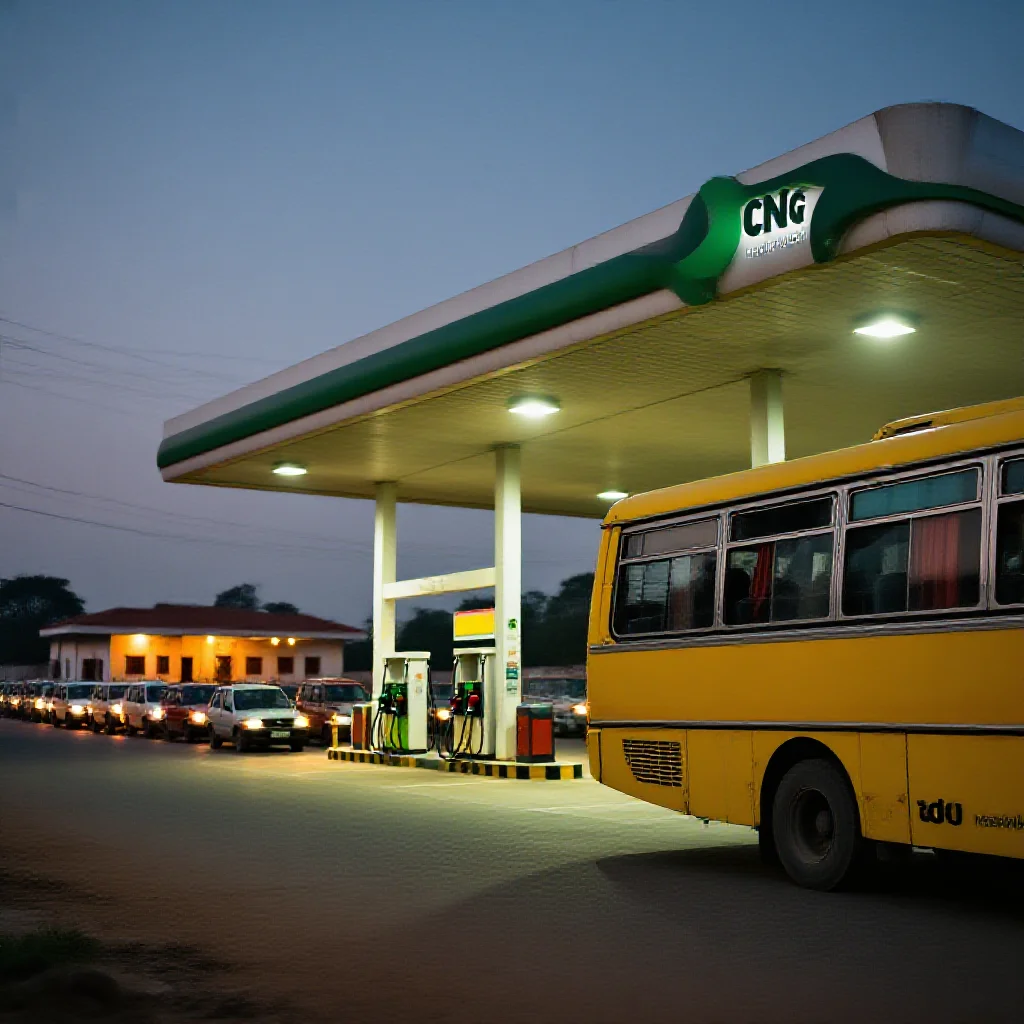
A more critical barrier is the infrastructural deficit. As of early 2024, there are approximately 30 public CNG refueling stations in Nigeria (Source 5: [Primary Data]). This scarcity creates a powerful demand-side constraint known as "refueling anxiety," which stifles consumer confidence more effectively than high conversion costs. The result is a classic chicken-and-egg problem: low station density discourages vehicle conversions, and low vehicle numbers disincentivizes investment in new stations. The PCNGi's 1,000-station target is an attempt to break this cycle, but the starting point is an infrastructural desert.
The Hidden Logic: Gas Flaring Reduction, Energy Security, and Subsidy Transfer
Beneath the surface-level narrative of consumer relief lies a deeper strategic calculus. Nigeria has historically flared significant volumes of associated natural gas, incurring environmental penalties and economic waste. A domestic CNG vehicle program creates a structured, scalable demand channel for this resource, transforming a waste product into a value-added domestic energy source. This aligns the policy with global decarbonization pressures, positioning CNG as a transitional, lower-emission fuel.
From a fiscal perspective, promoting CNG can be analyzed as a mechanism for subsidy transfer and energy security. By shifting a portion of the transportation sector from imported, dollar-denominated petrol to domestically sourced natural gas, the policy aims to reduce foreign exchange pressure. It represents a long-term attempt to reconfigure the nation's energy consumption profile towards a resource where it holds a comparative advantage, potentially insulating the transport sector from global oil price volatility.
Conclusion: A Strategic Vision Confronting Operational Realities
The Nigerian government's CNG push is a hybrid of reactive crisis management and forward-looking strategic intent. The economic logic of utilizing vast gas reserves for domestic transport is sound, offering potential benefits in cost stability, reduced flaring, and fiscal rebalancing.
However, the operational pathway from the current reality of ~30 stations to 1,000 by 2027 is steep. The success of the PCNGi will not be determined by the ambition of its targets but by the sequential resolution of its core constraints: mobilizing capital for mass-scale station deployment beyond the NNPC's 100, making conversion financing accessible and viable for the average commercial operator, and synchronizing vehicle rollout with fueling infrastructure to overcome refueling anxiety.
Market and industry predictions remain cautiously neutral. The initiative has established a clear policy direction and foundational public investment. Its transformation from a strategic vision into a tangible alternative for millions of Nigerians now hinges on execution speed, capital mobilization, and the market's response to the evolving cost-benefit equation. The next 24 months will be critical in revealing whether this represents a genuine energy transition or an ambitious plan ensnared by infrastructural and financial gravity.
(All rights reserved by Global Beacon Chronicle. Unauthorized reproduction is prohibited.)
Zhang Wei / Zhang Wei
Global business observer focusing on multinational enterprise strategy.