Beyond the Headlines: How Middle East Conflict Unmasks Africa''s Structural
The recent decline of five major African currencies—Egyptian pound, Kenyan

Beyond the Headlines: How Middle East Conflict Unmasks Africa's Structural Economic Vulnerabilities
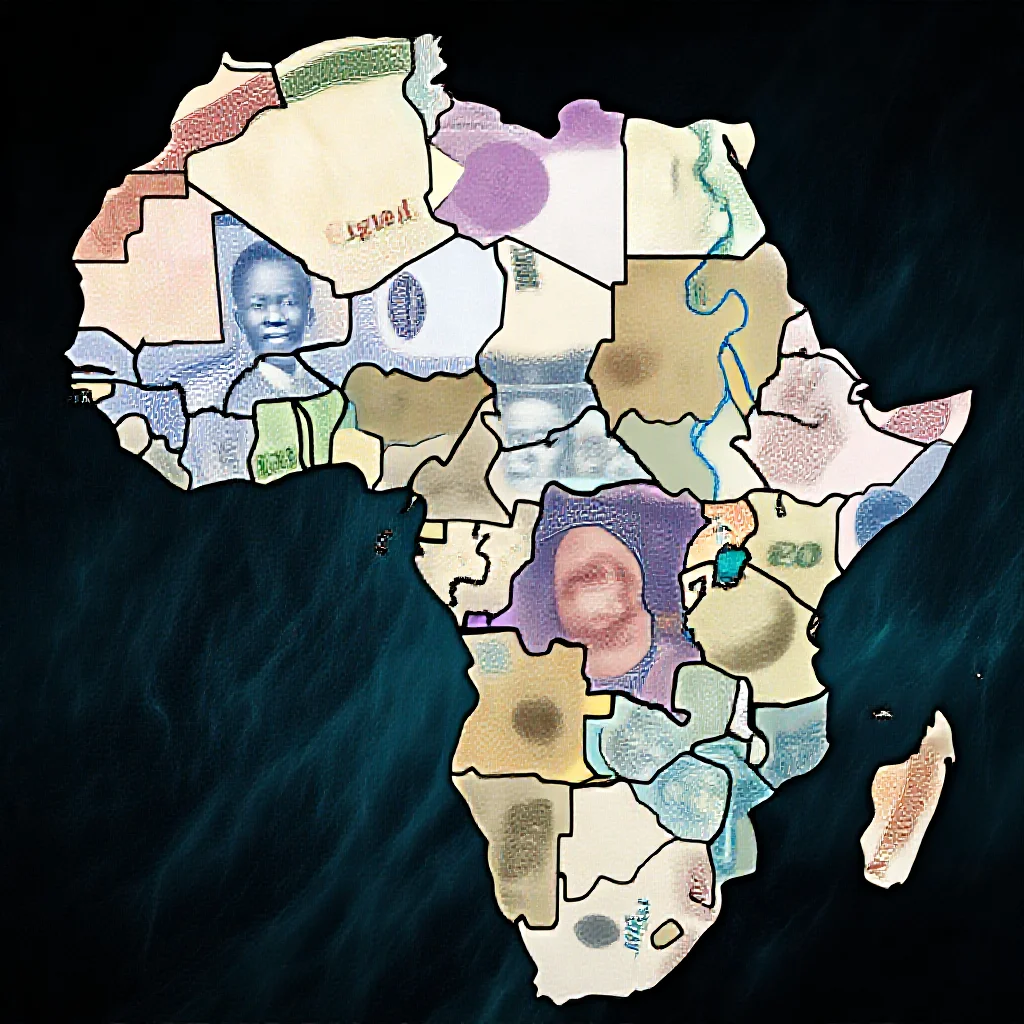
A recent wave of currency depreciation across Africa has provided a stark, real-time diagnostic of systemic economic fragility. The Egyptian pound, Kenyan shilling, Nigerian naira, South African rand, and Ghanaian cedi experienced synchronized declines against the US dollar, with losses ranging from 0.8% to 1.5% (Source 1: [Primary Data]). While the proximate trigger was escalating geopolitical tension in the Middle East, the event functions less as an isolated market anomaly and more as a revealing stress test. It exposes shared, deep-seated structural vulnerabilities that connect diverse African economies, irrespective of their individual monetary policies or growth narratives.
The Shockwave: Five Currencies, One Common Trigger
The currency movements present a clear, quantifiable pattern. The Egyptian pound led the decline, falling 1.5% against the US dollar. It was followed by the Kenyan shilling (-1.2%), the Nigerian naira (-1.1%), the South African rand (-0.9%), and the Ghanaian cedi (-0.8%) (Source 1: [Primary Data]). This synchronicity points to a common external catalyst rather than coincidental domestic events.
The Middle East conflict operates through three primary transmission channels. First, it induces volatility in global oil prices, creating immediate balance-of-payments pressure for both oil-exporting and oil-importing nations. Second, it triggers a "risk-off" sentiment in global capital markets, prompting investors to retreat from perceived riskier emerging market assets. Third, it raises concerns over the stability of critical remittance flows and key trade routes, including the Suez Canal. The significance of this event lies not in the magnitude of a single day's forex move, but in its function as a diagnostic tool. It reveals how external shocks bypass superficial economic indicators to probe foundational weaknesses.
The Hidden Logic: Unmasking Shared Structural Fault Lines
Beneath the uniform market reaction lies a complex web of shared dependencies that constitute Africa's economic fault lines.
The Commodity Conundrum: The vulnerability of commodity-dependent economies was laid bare. For Nigeria, Africa's largest oil producer, currency stability is intrinsically linked to crude prices and the investment sentiment of foreign capital. Similarly, South Africa's rand is heavily influenced by global demand and pricing for its mineral exports. Ghana, reliant on both oil and gold, faces compounded exposure. The conflict-induced uncertainty affects these nations through a dual mechanism: direct swings in export revenue and a secondary wave of investor flight from resource-linked markets. This demonstrates that diversification within the commodity sector does not equate to insulation from global shocks.
The Import Dependency Trap: For nations like Egypt and Kenya, the vulnerability stems from the opposite side of the trade ledger. Both maintain high import bills for essential goods, including fuel, food, and manufactured products. A weaker local currency directly inflates the cost of these dollar-denominated imports, fueling domestic inflation and pressuring foreign reserves. Furthermore, the geographical locus of the conflict raises tangible risks for Egypt regarding Suez Canal toll revenues and for Kenya regarding shipping lane security. This import reliance transforms geopolitical disruptions elsewhere into immediate domestic economic pressure.
The Sentiment Superhighway: The event underscores the disproportionate impact of global risk aversion on emerging markets. When geopolitical instability rises, capital tends to flow toward perceived safe havens, often irrespective of individual emerging market fundamentals. This creates a financial contagion effect, where currencies of nations with starkly different economic models—from Nigeria's oil-based economy to Kenya's more services-oriented one—are sold off in tandem. The "risk-off" mode in global finance acts as a superhighway, rapidly transmitting shocks and often overriding local economic conditions.
Beyond Forex: The Long-Term Ripple Effects on Supply Chains & Policy
The currency depreciation is an initial symptom with longer-term systemic implications.
Supply Chain Reckoning: Persistent currency weakness forces a recalculation of import-dependent economic models. Rising costs for dollar-denominated raw materials, intermediate goods, and equipment directly challenge local manufacturing and production. This economic pressure may accelerate the strategic imperative for regional supply chain development under the African Continental Free Trade Area (AfCFTA). The event validates arguments for reducing extra-continental dependencies and building intra-African production capacity to enhance monetary and trade resilience.
The Monetary Policy Dilemma: Central banks are confronted with a severe tightening of their policy space. Defending the currency typically necessitates hiking interest rates to attract portfolio flows and curb inflation. However, in economies already facing growth headwinds, such tightening risks stifling domestic investment and consumption. This places institutions like the Central Bank of Nigeria or the Central Bank of Kenya in a bind, where tools for external stability directly conflict with objectives for internal growth. This dilemma provides a real-time verification point for the policy conditionality often advocated by international financial institutions.
A New Vulnerability Index? The synchronized decline suggests that traditional metrics of economic health—GDP growth, debt-to-GDP ratios, or single-commodity export volumes—are insufficient gauges of resilience. A more holistic measure of "geopolitical shock absorption capacity" may be required. This would factor in a nation's diversity of trade partners, strategic import inventory levels, depth of local capital markets, and integration into regional versus global supply chains. The event indicates that in an interconnected world, vulnerability is increasingly defined by structural exposure to exogenous shocks, not just by domestic fiscal discipline.
Conclusion
The decline of five major African currencies amid Middle East tensions is a symptomatic event of high diagnostic value. It demonstrates that diverse economic structures across the continent are underpinned by common vulnerabilities: dependency on volatile commodity markets, reliance on imported essentials, and sensitivity to the flightiness of global investor sentiment. The long-term implication is a shifting definition of economic security. Resilience will increasingly be measured not by growth during stable periods, but by the structural capacity to withstand and adapt to external geopolitical shocks. This will likely drive policy focus toward strategic import substitution, regional supply chain integration, and the development of deeper local financial markets to mitigate the contagion effects of global risk aversion.
(All rights reserved by Global Beacon Chronicle. Unauthorized reproduction is prohibited.)
Zhang Wei / Zhang Wei
Global business observer focusing on multinational enterprise strategy.