Beyond English: The Untapped Market of Local Language Interfaces in Nigerian
While Nigerian fintech has driven financial inclusion, a critical barrier

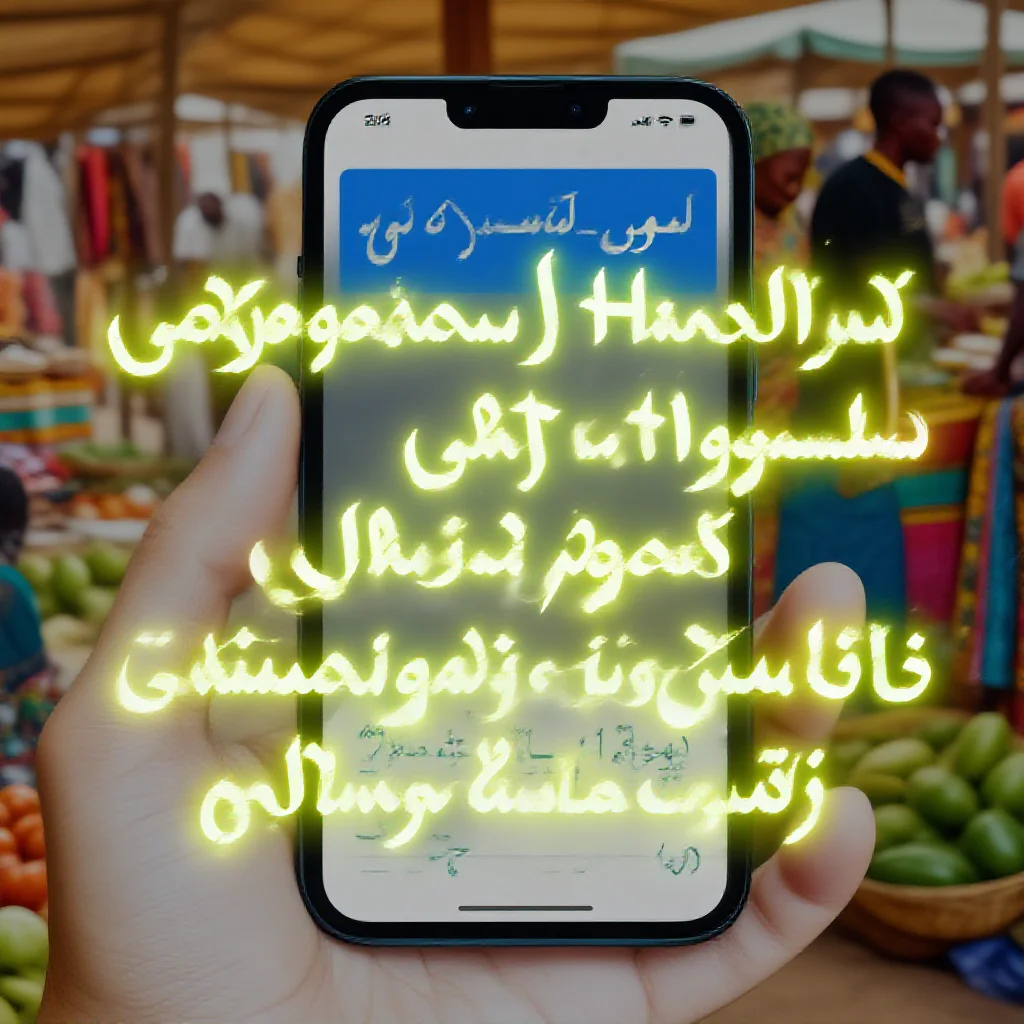
Beyond English: The Untapped Market of Local Language Interfaces in Nigerian Fintech
The Inclusion Paradox: Fintech's Growth and Its Linguistic Blind Spot
The Nigerian fintech sector is recognized for its rapid expansion and role in advancing financial inclusion. Digital banking platforms, payment solutions, and USSD services have extended formal financial access to millions. However, this growth trajectory encounters a fundamental barrier: linguistic exclusion. The operational dominance of English in application interfaces and USSD menus systematically overlooks a substantial demographic reality.
Nigeria's linguistic landscape comprises over 500 languages, with Hausa, Yoruba, and Igbo representing major first languages for a large portion of the population (Source 1: [Demographic Data]). English serves as the official language but is not the primary language of daily communication for a significant segment, particularly in non-urban and older demographics. Data indicates widespread limited English proficiency beyond basic comprehension. The current design paradigm in fintech treats this multilingual reality as a niche concern rather than a core market characteristic. This oversight constitutes a market failure, representing a significant, untapped economic opportunity for the next phase of sectoral growth.
Decoding the Gap: Market Patterns and Hidden Economic Logic
The initial prioritization of English-only interfaces followed a rational, if short-term, market logic. Early fintech strategies targeted tech-savvy, urban early adopters who were more likely to be proficient in English. This approach minimized initial development complexity, accelerated time-to-market, and streamlined customer support. The perceived cost and technical challenge of multi-language support were deferred.
This "English-first" strategy, however, creates a false economy. It artificially caps the Total Addressable Market (TAM) by excluding users whose financial needs are acute but whose language proficiency is a barrier. The growth ceiling becomes evident as user acquisition among the primary English-proficient demographic saturates. Furthermore, this design choice reinforces a network effect of exclusion. Within households and communities, the inability of non-English speakers to navigate financial tools independently perpetuates reliance on intermediaries, deepening digital and financial divides rather than bridging them. The economic logic shifts when considering customer lifetime value (CLV) forfeited from an entire demographic locked out of direct digital engagement.
More Than Translation: The Deep-Tech and Cultural Entry Point
Addressing this gap requires moving beyond simple lexical translation. A functional local language interface is a deep-tech and cultural challenge. Direct word-for-word translation often fails to convey nuanced financial concepts, potentially leading to user error or mistrust. Effective design requires context-aware localization, where financial terminology, instructions, and error messages are adapted to local idioms and conceptual frameworks.
The USSD channel, critical for low-bandwidth environments, presents a specific opportunity and challenge. Designing intuitive, hierarchical menu structures for users with varying literacy levels in their first language is a specialized task. It necessitates a reduction of complexity and potentially the integration of symbolic or numeric shortcuts alongside text. The core imperative is trust. An interface delivered in a user's first language reduces cognitive load and builds deeper confidence for conducting sensitive financial transactions. This trust factor directly impacts error rates, dispute volumes, and ultimately, long-term customer retention and CLV.
The Ripple Effect: Long-Term Impact on Ecosystem and Supply Chain
The integration of robust local language interfaces would generate secondary effects across the financial ecosystem. Agent banking networks, a crucial last-mile touchpoint, would require retraining and support materials in multiple languages, enhancing their effectiveness and reach. This localization would likely increase transaction volumes and service complexity at the agent level, altering their business model and required skill sets.
The impact would ripple into adjacent sectors. E-commerce, agricultural technology, and insurance—sectors reliant on digital payment and verification—would experience lowered adoption barriers in non-urban centers, catalyzing broader digital economy growth. Furthermore, solving this challenge creates a new niche for homegrown innovation. It would stimulate demand for Nigerian UX/UI designers, software developers, and linguists specializing in fintech localization, fostering a specialized knowledge economy within the tech sector.
Building the Multilingual Future: Pathways for Stakeholders
The pathway forward involves coordinated action. For fintech firms, the strategy must evolve from viewing localization as a compliance or CSR activity to recognizing it as a core market expansion and risk mitigation strategy. A phased implementation, starting with major languages on key transaction pathways, can manage cost and complexity. Regulatory bodies can incentivize this shift by incorporating linguistic accessibility into financial inclusion metrics and sandbox frameworks.
Technological partnerships will be critical. Collaboration with academic institutions in linguistics and cultural studies, as well as investment in Natural Language Processing (NLP) models trained on Nigerian languages and financial corpora, is necessary. The long-term market prediction is bifurcation: platforms that master the multilingual, context-aware interface will unlock sustainable growth in previously excluded segments, while those that remain monolingual will face a saturated core market and eroding competitive relevance. The integration of local languages is not a peripheral feature but a fundamental redesign for true market depth.
(All rights reserved by Global Beacon Chronicle. Unauthorized reproduction is prohibited.)
Zhang Wei / Zhang Wei
Global business observer focusing on multinational enterprise strategy.