Livestock as Currency: How Bandit Extortion in Katsina Reveals a Rural Economic
A demand by bandits for 700 cattle and 1,000 sheep from communities in Katsina

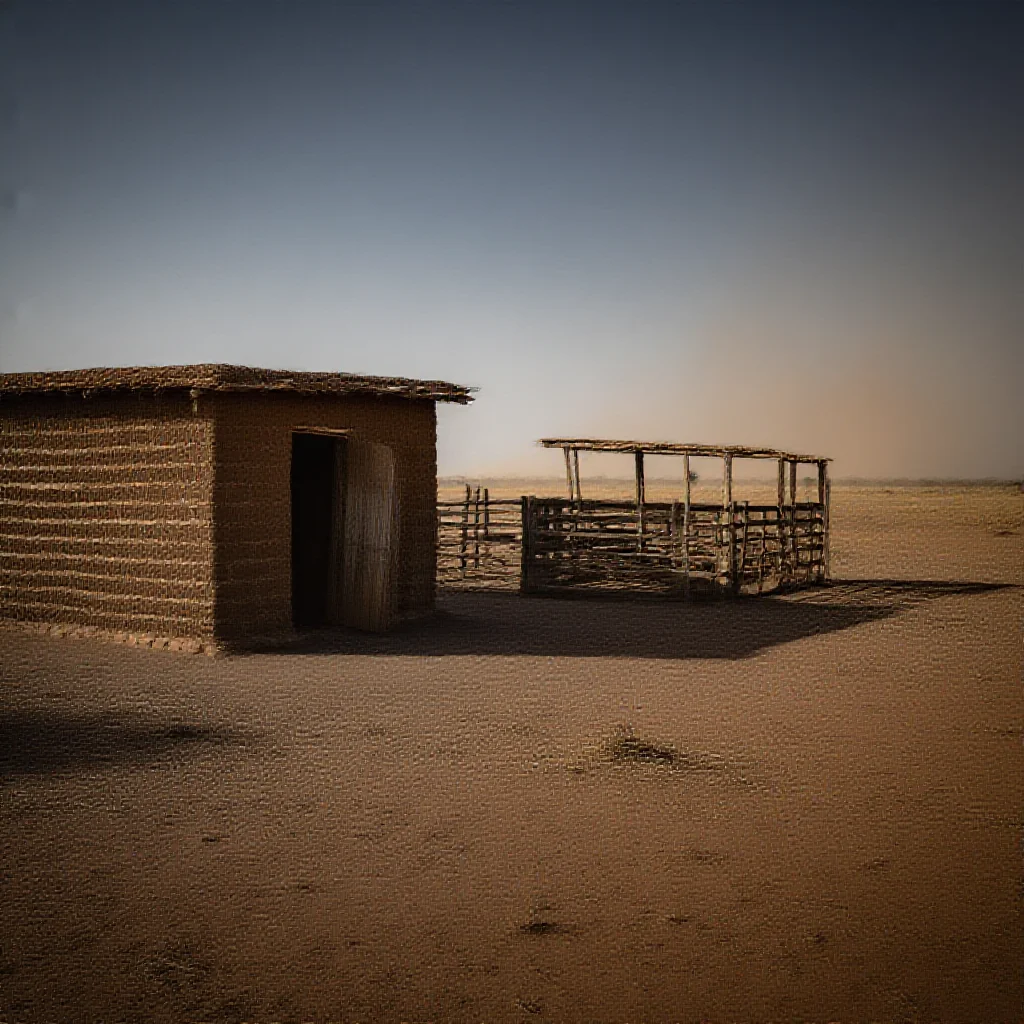
Livestock as Currency: How Bandit Extortion in Katsina Reveals a Rural Economic Collapse
Opening Summary
On a specified date, non-state armed groups, colloquially termed bandits, issued a demand for 700 cattle and 1,000 sheep from communities within the Kankara Local Government Area of Katsina State, Nigeria. The direct consequence was a mass exodus of residents from the affected areas. This event represents a critical inflection point, transitioning from sporadic violence to a systematic model of economic extraction that targets the foundational assets of agrarian society.
Beyond the Headline: The Economic Calculus of Predation
The specific demand for 1,700 head of livestock is not arbitrary. It constitutes a targeted liquidation of community capital. In Northwest Nigeria’s rural economy, where formal banking penetration is low, livestock function as a primary store of value, a savings mechanism, and a means of transaction. A herd of this size represents multi-generational wealth accumulation, emergency food reserves, and collateral for informal credit. The bandits’ demand demonstrates a precise understanding of this economic reality. The seizure of these animals converts biological assets into a liquid, tradable currency for the armed groups, fungible for weapons, logistical supplies, and patronage within their networks.This incident indicates a strategic shift from random violence to organized extraction. The act mirrors a predatory taxation system, implying a degree of territorial consolidation and long-term control ambitions by the armed actors. The demand operates as a dual-purpose mechanism: immediate resource acquisition and the deliberate erosion of the economic viability of the communities, reducing their capacity for resistance.
Image Suggestion: An infographic-style map highlighting Katsina State and Kankara LGA, with icons representing livestock and arrows showing displacement routes.
The Slow Audit: Unpacking the Long-Term Supply Chain Catastrophe
The immediate displacement triggers a cascade of systemic failures within the agrarian economic cycle. The severance of farmers and herders from their land disrupts planting, grazing, and harvest timelines. These cycles, once broken, require multiple seasons to re-establish, creating a multi-year food production deficit. The loss of 700 cattle and 1,000 sheep (Source 1: [Primary Data]) extends beyond immediate nutrition; it represents a catastrophic depletion of genetic stock, particularly for locally adapted breeds, affecting dairy, meat, and manure production for fertilizer for years to come.Market distortions are inevitable. The forced injection of this volume of livestock into parallel markets controlled by armed groups depresses prices for producers elsewhere, while simultaneously creating scarcity in legitimate markets, driving up consumer costs. The more profound loss is intergenerational. The displacement and asset-stripping lead to the erosion of specialized animal husbandry knowledge and land management practices. This deskilling of the rural population creates a human capital deficit that outlasts the immediate crisis, permanently degrading the region’s productive capacity.
Image Suggestion: A split-image concept: one side shows a healthy, managed herd; the other shows an empty, dry pasture.
Displacement as a Business Model: The New Human Geography
The mass exodus is likely a calculated outcome, not merely a side effect. Depopulation serves strategic purposes for non-state armed groups: it reduces potential sources of intelligence and resistance, clears corridors for movement, and can facilitate control over land and other resources. The resulting human displacement reconfigures the region’s demographic and economic geography.Displaced, asset-less populations migrate towards urban centers like Katsina and Kano. This influx places acute pressure on already strained urban infrastructure, housing, and labor markets, exacerbating existing urban poverty and social instability. This migration pattern is a direct transfer of rural economic collapse into urban centers. The vacuum of effective state governance—encompassing security, justice, and economic opportunity—is the enabling environment for this extractive system. The absence of credible alternatives or protection formalizes the bandits’ “taxation” as the prevailing economic institution in these territories.
Image Suggestion: A conceptual illustration showing a rural community with icons of homes and livestock, with arrows pushing people towards crowded urban silhouettes.
Evidence and Context: Verifying the Crisis
This incident in Kankara LGA is symptomatic of a broader regional crisis. Analysis from the International Crisis Group (ICG) has detailed the evolution of rural conflict in Northwest Nigeria, where competition over resources and weak governance have fueled violence. (Source 2: [ICG Analysis]). Furthermore, trends monitored by the National Bureau of Statistics (NBS) on livestock populations and agricultural output would provide a quantitative baseline against which the scale of such asset depletion can be measured, though real-time data in conflict zones remains challenging.The economic logic observed here—asset seizure precipitating displacement—creates a self-reinforcing cycle. Displacement further weakens agricultural output, which increases commodity prices and competition for remaining resources, in turn creating conditions for further predation.
Neutral Projections
Based on the established cause-and-effect dynamics, several projections can be made. In the short to medium term, the affected region in Katsina will experience a pronounced decline in livestock-derived protein availability and a contraction in land under cultivation, leading to increased local food prices and greater reliance on external food aid. The livestock and agricultural markets in neighboring states will see volatility due to both surplus from forced sales and scarcity from reduced production.
The armed groups, having successfully executed a large-scale extraction, are likely to replicate this model in other vulnerable communities, refining it as a standardized revenue stream. This will accelerate rural depopulation trends in the Northwest. The long-term economic projection includes the permanent alteration of land use in certain zones, a shift in demographic weight towards urban centers, and the entrenchment of a parallel, violence-based economic system in areas of persistent state absence. The recovery of the agrarian economy in these zones, should security be restored, will be a multi-decade endeavor requiring massive reinvestment in both biological capital and human knowledge.
(All rights reserved by Global Beacon Chronicle. Unauthorized reproduction is prohibited.)
Zhang Wei / Zhang Wei
Global business observer focusing on multinational enterprise strategy.