Beyond the Ribbon-Cutting: Lagos''s ''Largest School Complex'' and the Hidden
The commissioning of Lagos's largest school complex is more than a local

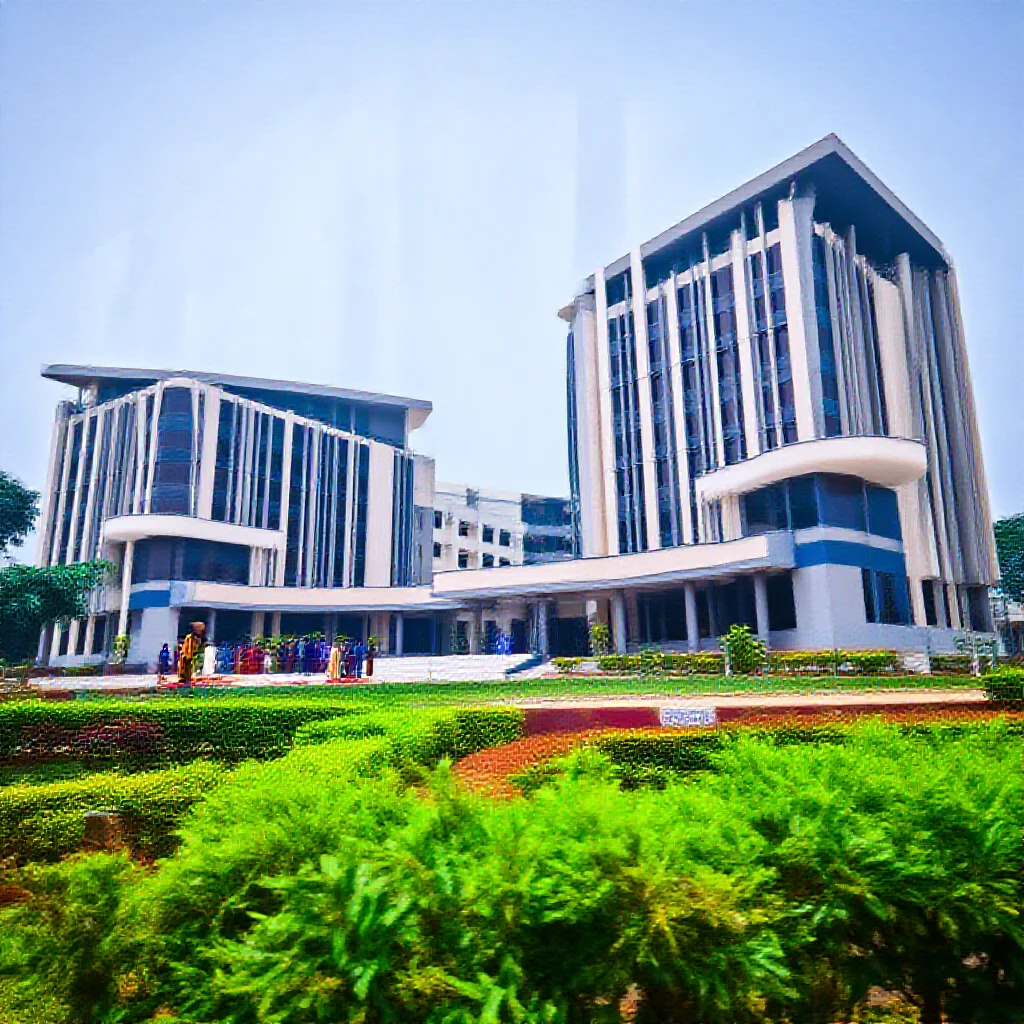
Beyond the Ribbon-Cutting: Lagos's 'Largest School Complex' and the Hidden Economics of Urban Education
Opening Summary
A new educational facility has been commissioned in Lagos. The complex is described by project authorities as the largest school complex in the state (Source 1: [Lagos State Government Project Description]). This event represents a significant addition to the city's physical infrastructure. The analysis that follows examines the strategic and economic dimensions of this development, moving beyond the ceremonial announcement to assess its implications for urban development, human capital investment, and long-term operational viability.
---
The Ceremony as a Signal: Decoding the 'Largest' Claim
The designation of "largest" requires immediate contextualization. In urban infrastructure reporting, such a claim can refer to student capacity, physical footprint, or the range of facilities offered. A comparative audit of Lagos's education sector history is necessary to verify this claim against previous "largest" projects, such as major government colleges or university annexes established in prior decades. The specific metrics used—whether it is the number of classrooms, laboratory spaces, or concurrent student occupancy—define the project's actual scale and intended impact.
The commissioning event itself functions as a form of political and economic theater. The public inauguration of a project of this scale signals a specific governance priority, shifting narrative focus towards long-term human capital development. This action is analytically interpreted as a strategic signal to multiple stakeholders: to the resident middle-class seeking quality education options, to domestic and international investors looking for indicators of a stable, future-oriented business environment, and to other tiers of government. The unstated message is one of competitive urbanism, where modern education infrastructure becomes a key asset in inter-city competition for talent and capital.
The Hidden Economic Logic: Education as Urban Infrastructure
The economic function of a large-scale school complex extends far beyond its educational mandate. Such institutions act as anchor tenants within their urban fabric. Their operation stimulates localized economic activity, including vendor opportunities for uniforms and supplies, increased demand for private transportation services, and heightened requirements for security and ancillary services. The daily congregation of students, staff, and parents creates a consistent micro-economy.
A deeper audit involves the real estate multiplier effect. Historical data from global urban studies indicates that the establishment of a high-profile educational institution typically exerts upward pressure on property values within its immediate catchment area. An analysis of local property listing trends and transaction volumes in the months preceding and following the project's announcement would provide empirical evidence of this anticipated effect. This potential appreciation represents a significant, though indirect, financial return on the public investment.
The most consequential economic logic is the investment in human capital over physical capital. Lagos's economy has historically been dominated by commerce and trade. A strategic pivot towards knowledge-based industries—technology, advanced services, creative sectors—requires a corresponding expansion in the local pipeline of skilled labor. This school complex can be analyzed as infrastructure for talent production. Its scale suggests an intent to systematically increase the city's stock of educated human resources, making it a more attractive location for industries whose primary assets are intellectual.
The Deep Audit: Sustainability and Unspoken Challenges
The long-term viability of a "largest" complex introduces significant operational challenges. The capital expenditure for construction is a discrete event, but the recurrent expenditure for staffing, utilities, maintenance, and educational materials constitutes a perpetual financial commitment. A slow, analytical contrast must be drawn between the one-time budget allocation for building and the projected annual operational costs. The sustainability of the project depends entirely on the continuity of this financial and administrative support.
The project's construction phase offers another audit point: local economic embeddedness. An examination of the supply chain—the sourcing of construction materials and labor—reveals the project's role as an economic stimulus during its build phase. A high degree of local content would indicate a retention of capital within the Lagos economy, while significant importation of materials would illustrate different economic linkages.
Finally, the concepts of "largest" and "most accessible" are not synonymous. A critical, non-moralistic analysis must consider admission policies and potential fee structures. The placement of a major public educational asset can alter neighborhood dynamics, potentially affecting existing informal educational setups and raising questions of equitable access for the immediate community versus a broader catchment area. The project's success as an economic and social instrument will be partially determined by its demographic intake and integration with the existing urban fabric.
---
Neutral Market/Industry Predictions
Based on the analysis of this project as a signal, the following trends are anticipated:
- Property Market Adjustment: Residential and commercial property values within a defined radius of the new complex are likely to experience a measurable increase over a 24-36 month period, as market actors price in the added amenity value.
- Ancillary Service Growth: The immediate vicinity will see a rise in registered businesses catering to the school community, from stationery suppliers to food vendors and private tutoring services.
- Policy Replication: The commissioning of this complex may establish a new benchmark for education infrastructure projects in other Nigerian urban centers, prompting similar large-scale announcements as part of competitive development strategies.
- Operational Scrutiny: The operational and maintenance performance of this facility will become a key metric for assessing the efficacy of similar future public infrastructure investments, with its sustainability challenges closely monitored by fiscal policy analysts.
The ultimate measure of this project will be longitudinal, assessed not at ribbon-cutting but through its decade-long impact on educational outcomes, local economic indicators, and its contribution to the structural transformation of the Lagos economy.
(All rights reserved by Global Beacon Chronicle. Unauthorized reproduction is prohibited.)
Zhang Wei / Zhang Wei
Global business observer focusing on multinational enterprise strategy.