Beyond the Profit: How Lafarge Africa''s 2023 Results Signal a Strategic Pivot
Lafarge Africa''s record 2023 financials, featuring a N51.14 billion profit

Beyond the Profit: How Lafarge Africa's 2023 Results Signal a Strategic Pivot in Nigerian Construction
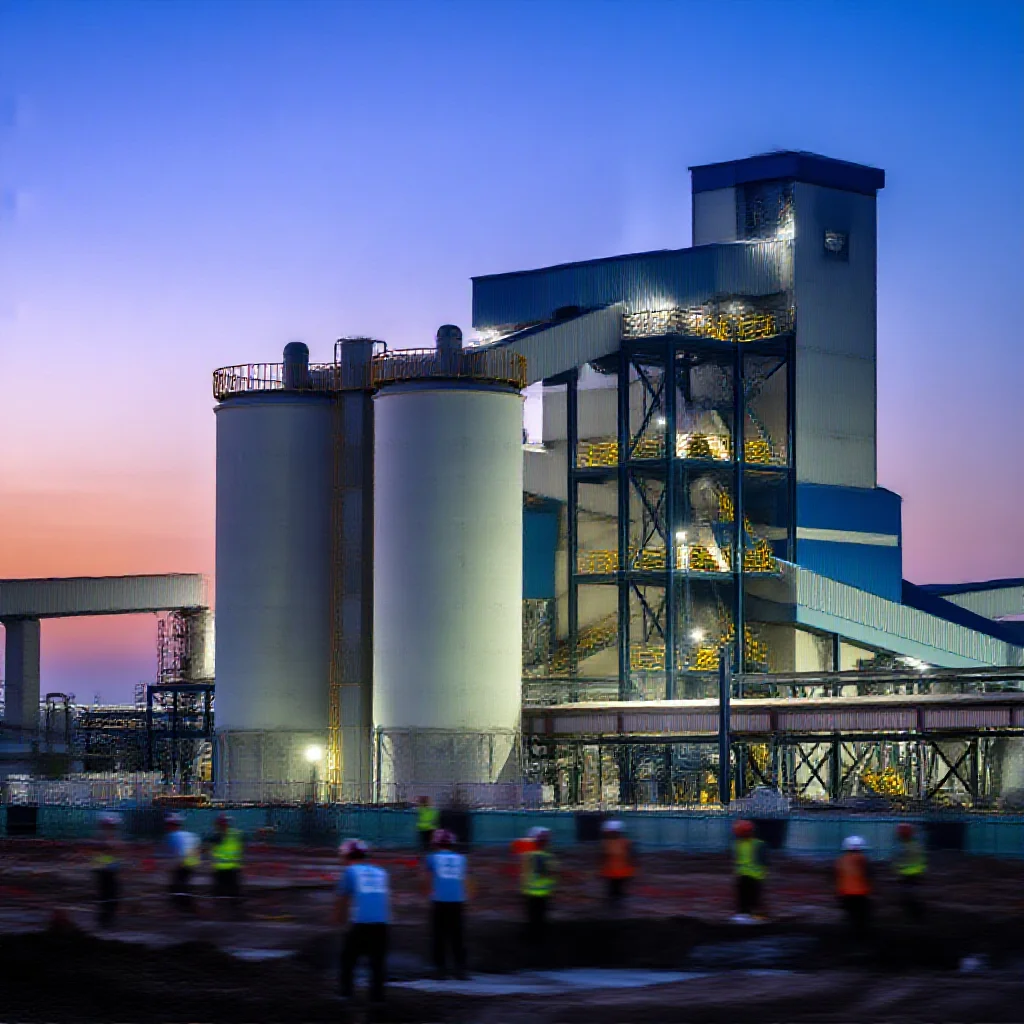
A dynamic, professional photograph showing a modern cement plant silo at dusk, with subtle lighting highlighting its structure. In the foreground, a blurred construction site with active workers symbolizes growth, all under a vibrant sunset sky reflecting industrial progress, photorealistic style.
The Surface Numbers: Decoding a Record Year
Lafarge Africa Plc closed its 2023 financial year with a declared profit after tax of N51.14 billion, marking a 4.7% increase from the N48.86 billion reported in 2022 (Source 1: [Primary Data]). Group revenue rose by 8.6% to N405.52 billion from N373.24 billion the prior year (Source 1: [Primary Data]). These headline figures, however, obscure a critical divergence in regional performance. While the company's net sales in Nigeria grew by 20.1%, the consolidated revenue growth of 8.6% indicates a more subdued or negative contribution from other segments, including its South Africa operations which recorded net sales of N35.5 billion (Source 1: [Primary Data]). The Board's recommendation of a N2.20 per share dividend functions as a tangible signal of returning capital to shareholders, a move made more feasible by the concurrent strengthening of the corporate balance sheet.
An infographic-style image comparing key 2022 vs. 2023 metrics: Profit After Tax, Revenue, Nigerian Sales Growth, and Net Debt.
The Strategic Core: Debt Reduction as a Springboard, Not an End Goal
The reduction of net financial debt by 34.7% to N21.8 billion is a pivotal achievement, but its strategic importance lies in its function as an enabler, not a terminus (Source 1: [Primary Data]). This deleveraging, against a total asset base of N617.32 billion, represents a tactical cleanup of the balance sheet (Source 1: [Primary Data]). The action transforms the company's financial structure, increasing strategic optionality for capital allocation. Chief Executive Officer Lolu Alade-Akinyemi framed this move as foundational, stating, "We are pleased to report that our net financial debt reduced significantly by 34.7% to N21.8 billion, contributing to a stronger balance sheet" (Source 1: [Primary Data]). This creates capacity for aggressive capital expenditure without the constraints of a heavy debt service burden, directly facilitating the next phase of expansion.
The Capacity Gambit: Ewekoro's 5th Plant and Supply Chain Sovereignty
The commissioning of a 5th production plant at the Ewekoro site in Ogun State during 2023 is the physical manifestation of the post-debt reduction strategy (Source 1: [Primary Data]). This expansion is not merely a response to current demand but a calculated bet on sustained domestic infrastructure expenditure. The economic logic extends beyond volume growth to encompass long-term cost control and supply chain resilience. Increased domestic capacity, particularly in the strategic southwest region of Nigeria, reduces logistical costs and vulnerability to supply chain disruptions. This move positions Lafarge Africa to capture market share proactively and builds a defensive moat against potential competitive pressures, including those that may arise under the African Continental Free Trade Area (AfCFTA) by emphasizing local production advantages.
A map of Nigeria highlighting Ogun State (Ewekoro plant location) and major infrastructure projects or urban centers, illustrating strategic market access.
The Dual-Market Dilemma: Nigeria's Boom vs. South Africa's Role
The financial results underscore a growing asymmetry in Lafarge Africa's portfolio. Nigeria operates as the primary growth engine, evidenced by the 20.1% sales surge, while the South African operation's contribution of N35.5 billion in net sales presents a strategic question (Source 1: [Primary Data]). The role of the South African unit appears to be transitioning. Analytically, it may be managed for steady cash flow and operational stability, providing a financial ballast that supports and de-risks the more capital-intensive growth investments in Nigeria. This structure allows the corporate entity to leverage mature market cash flows to fund emerging market expansion, a common portfolio strategy in multinational industrial groups.
Conclusion: Charting a Post-Holcim Course
The 2023 results collectively outline Lafarge Africa's strategic pivot following the Holcim Group's exit. The sequence of actions—aggressive debt reduction followed immediately by capacity expansion—indicates a coherent, self-directed growth plan. The company is fortifying its balance sheet to build domestic production sovereignty. The long-term implication is a business model increasingly insulated from external financial and supply chain volatility, squarely focused on capitalizing on Nigeria's infrastructure development cycle. Market performance will now be judged on the effective utilization of this new capacity and the ability to convert strategic capital investments into sustained market leadership and margin resilience.
(All rights reserved by Global Beacon Chronicle. Unauthorized reproduction is prohibited.)
Zhang Wei / Zhang Wei
Global business observer focusing on multinational enterprise strategy.