Beyond the Release: Judicial Decongestion, Garri Theft, and the Lingering
The release of 37 detainees in Akwa Ibom State, ordered by the Chief Judge,

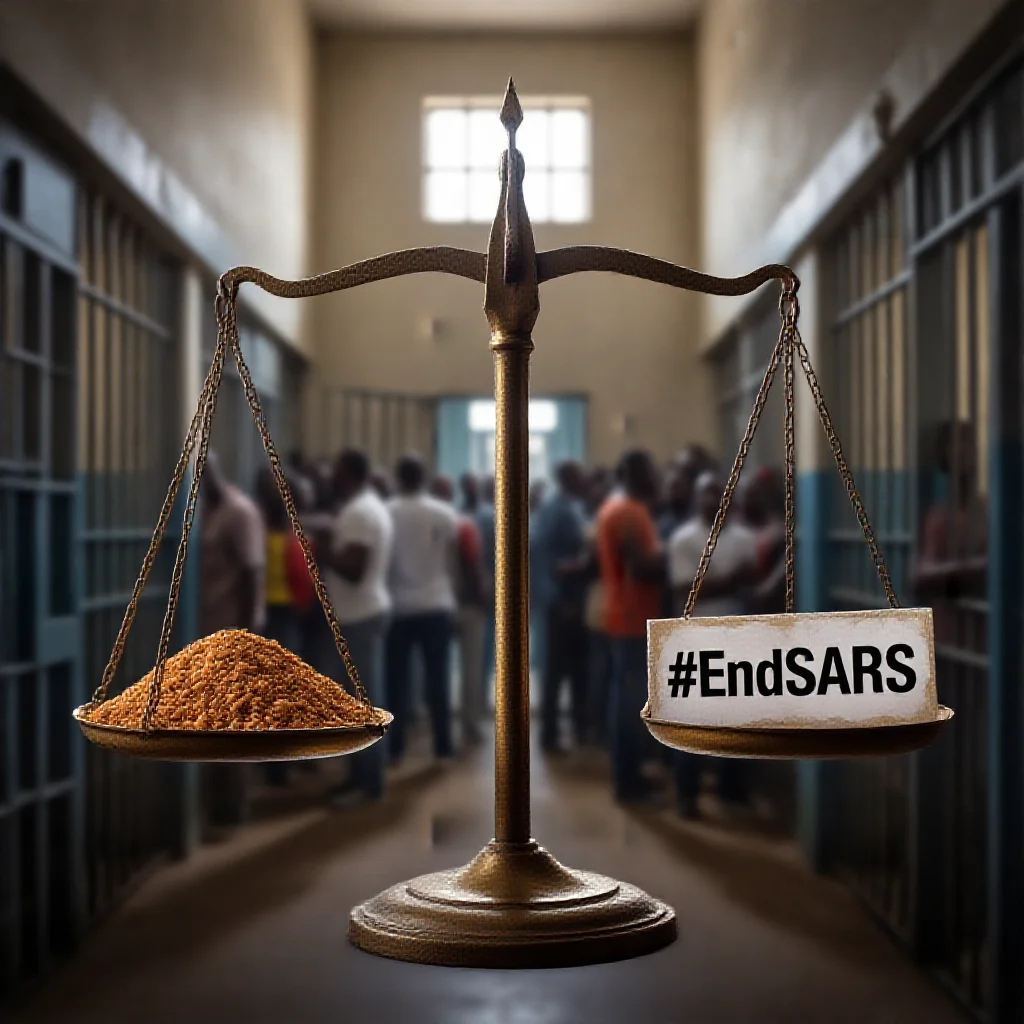
Beyond the Release: Judicial Decongestion, Garri Theft, and the Lingering Shadow of EndSARS in Akwa Ibom

Introduction: A Release Order as a Symptom of Systemic Strain
The Chief Judge of Akwa Ibom State ordered the release of 37 detainees from the Ikot Ekpene and Uyo correctional centers. (Source 1: [Primary Data]) This judicial act, while framed as an exercise of discretionary power, is a direct indicator of systemic pressures within Nigeria’s criminal justice administration. The demographic of the released individuals—encompassing a suspect in an alleged garri theft case and persons detained in connection with the 2020 EndSARS protests—reveals three intersecting narratives: the operational imperative of prison decongestion, the socio-economic drivers of petty crime, and the prolonged judicial processing of protest-related arrests. This event is not an isolated act of clemency but a procedural response to critical systemic strain.

The Unseen Driver: Prison Decongestion as an Imperative, Not a Choice
The release order aligns with nationwide judicial decongestion exercises, which are less a benevolent policy choice and more a functional necessity for system continuity. Nigerian correctional facilities operate at severe overcapacity. Pre-2023 data from the Nigerian Correctional Service (NCoS) indicated facilities built for approximately 50,000 inmates were holding over 75,000. (Source 2: [Institutional Report]) Non-governmental organizations like the Prison Rehabilitation and Welfare Action (PRAWA) have consistently documented occupancy rates exceeding 150% in many states. This overcrowding creates untenable conditions, elevating risks of disease outbreak and straining limited resources for feeding, healthcare, and security.
From an administrative and economic perspective, decongestion becomes a pragmatic tool. Overcrowded facilities impose significant financial burdens on state budgets and increase operational complexity, raising the probability of unrest. Judicial release exercises, therefore, serve as a pressure valve. They are a calculated intervention to maintain minimum operational functionality and mitigate liability, rather than a signal of comprehensive reform.

Garri Theft on the Docket: A Lens into Socio-Economic Desperation
The case of the released garri theft suspect provides a micro-analysis of crime etiology in a strained economy. Garri, processed cassava flakes, is a ubiquitous staple food, a symbol of basic subsistence. Its alleged theft is typically a crime of negligible monetary value but profound symbolic weight, indicating desperation. This incident directs analytical focus toward underlying economic pressures, including food inflation, which reached 40.53% year-on-year in April 2024 according to the National Bureau of Statistics, and youth unemployment, historically above 40% for segments of the population. (Source 3: [Government Statistical Bulletin])
The judicial processing of such a case represents a significant net cost to the state—from arrest and prosecution to incarceration. The suspect’s detention for a non-violent, subsistence-level offense highlights a systemic inefficiency where the cost of justice administration may far exceed the societal harm of the crime. It underscores a failure of social safety nets and economic opportunity, framing such offenses as outputs of socio-economic conditions rather than indicators of significant criminal propensity.

The EndSARS Long Tail: When Protest Detentions Outlive the Movement
The release of individuals detained since the 2020 EndSARS protests reveals a critical latency in the judicial system. The protests, a nationwide movement against police brutality, peaked in October 2020. The persistence of related detentions nearly four years later demonstrates a disconnect between the pace of civic action and the pace of judicial processing. Reports from legal aid organizations and Amnesty International have documented numerous cases of protesters held for years without trial, often on charges like arson or theft. (Source 4: [NGO Report])
This long tail of detention has calculable effects on civic trust and future mobilization. The extended period between arrest and resolution—whether release or conviction—acts as a chilling mechanism. It extends the state’s coercive presence in the lives of citizens well beyond the protest cycle, potentially influencing risk assessments for future civic engagement. The Akwa Ibom releases, while resolving specific cases, do not address the procedural and administrative failures that allowed such prolonged detentions without trial to occur.

Conclusion: Akwa Ibom’s Release and the Broader Calculus of Justice
The release of 37 detainees in Akwa Ibom State is a data point in a larger systemic equation. It reflects the necessary, recurrent cost of managing an overburdened correctional system. The inclusion of a garri theft suspect and EndSARS detainees within the same cohort illustrates how disparate pressures—economic desperation and the backlog of protest-related cases—converge to exacerbate systemic congestion.
Future trends suggest such decongestion exercises will continue as a standard administrative response until underlying issues are addressed. These include investing in alternative dispute resolution and diversion programs for minor offenses, accelerating judicial processes through procedural and technological reforms, and implementing robust social welfare policies to mitigate crimes of necessity. Without these structural interventions, judicial release orders will remain a cyclical, reactive measure, providing temporary relief but failing to alter the fundamental calculus of Nigeria’s overstretched criminal justice infrastructure. The Akwa Ibom event is a symptom; the treatment requires a systemic audit beyond the courtroom.
(All rights reserved by Global Beacon Chronicle. Unauthorized reproduction is prohibited.)
Zhang Wei / Zhang Wei
Global business observer focusing on multinational enterprise strategy.