The Digital Divide Deepens: Why Africa''s Internet Freedom Lag Threatens Its
A 2024 Surfshark study reveals a stark digital divide, with African nations

The Digital Divide Deepens: Why Africa's Internet Freedom Lag Threatens Its Economic Future
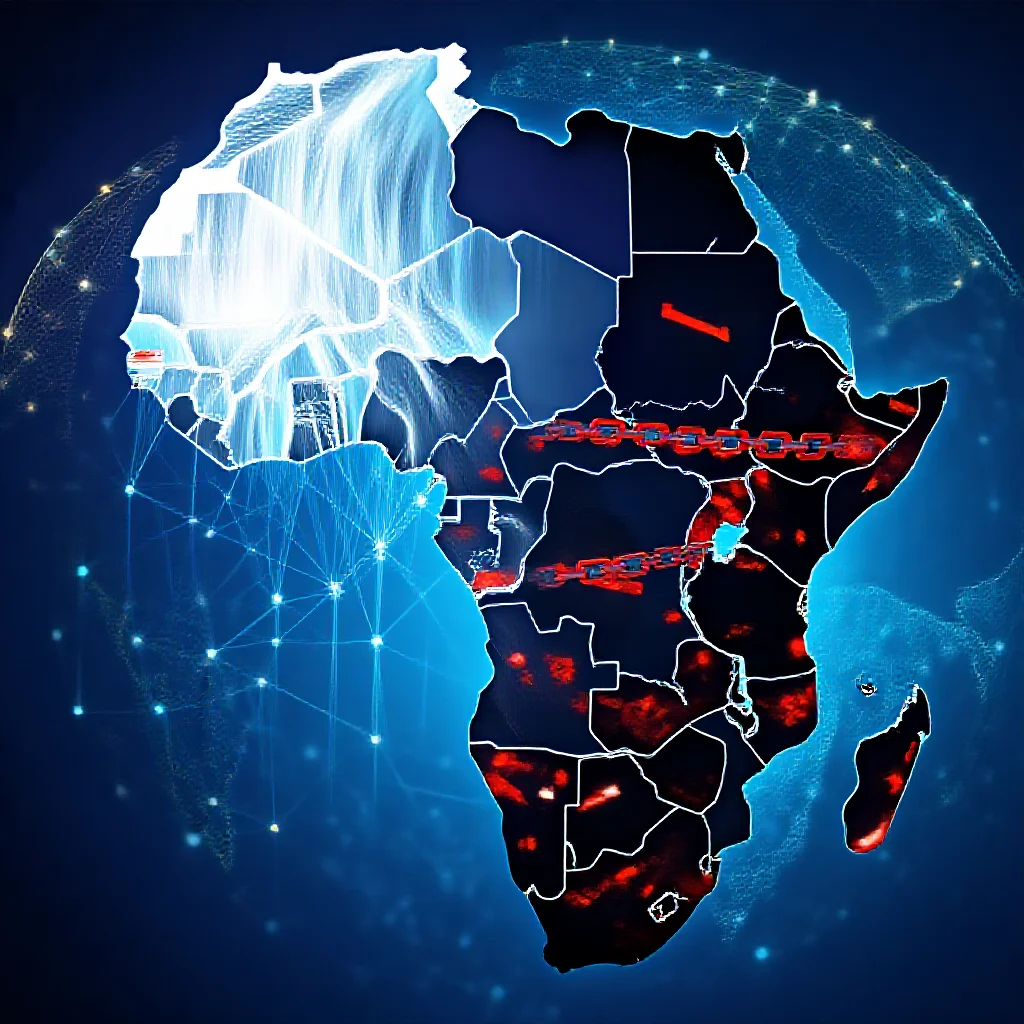
A 2024 study by cybersecurity firm Surfshark has quantified a significant gap in internet freedom between African nations and global leaders (Source 1: Surfshark study). The analysis of 65 countries included only five from Africa: South Africa, Nigeria, Ethiopia, Zimbabwe, and The Gambia. South Africa, the highest-ranked African nation, placed 21st globally, followed by Nigeria (49th), Ethiopia (50th), Zimbabwe (53rd), and The Gambia (54th). This stands in contrast to top-ranked Iceland, Estonia, and Canada. The continent also accounted for 11 of the world's documented internet shutdowns in 2024, with Ethiopia registering the highest number of restrictions regionally. This performance indicates systemic challenges that extend beyond digital rights into the realm of economic development.
Beyond the Rankings: Decoding the Pillars of Digital Oppression
The Surfshark study evaluates nations based on three core pillars: obstacles to internet access, limits on content, and violations of user rights (Source 1: Surfshark study). The low rankings of the African nations surveyed reflect deficits across this spectrum. The regional leader's position outside the global top 20 underscores a continent-wide disparity. This trend is not isolated; it aligns with a broader global regression, where 42 countries experienced declines in internet freedom in 2024 (Source 1: Surfshark study). The African cases, however, are distinguished by the frequency of the most severe intervention: the complete internet shutdown.
The structural obstacles to access—encompassing infrastructure gaps, affordability issues, and regulatory barriers—create a foundational disadvantage. When compounded by content limits and rights violations, the environment for digital interaction becomes constrained. This three-pillar framework reveals that the challenge is not monolithic but a composite of interlocking restrictions that collectively degrade the quality and utility of internet connectivity.
The Shutdown Economy: Calculating the Cost of Digital Blackouts
The 11 internet shutdowns recorded in Africa in 2024 represent a direct and measurable economic intervention (Source 1: Surfshark study). These are not merely political tools but mechanisms of significant economic disruption. The immediate impact includes the paralysis of digital financial services (fintech), the halt of e-commerce transactions, the interruption of remote work protocols, and the suspension of digital education platforms.
The long-term economic consequences are more profound. Recurrent shutdowns erode investor confidence, as they introduce unpredictable operational risk. For startup ecosystems, which rely on constant connectivity for development, deployment, and customer engagement, blackouts can be fatal. This pattern institutes a "digital risk premium," increasing the cost of capital and deterring the foreign direct investment necessary to improve the very digital infrastructure in deficit. The cyclical effect is self-reinforcing: restrictions undermine the economic activity needed to fund and justify expanded, more resilient digital networks.
The Innovation Bottleneck: How Content Restrictions Stifle Growth
Content restrictions, often analyzed through a lens of political censorship, also function as a critical bottleneck for economic innovation. Broad platform blocks and content filtering hinder the transfer of knowledge, restrict access to global academic research, and limit exposure to evolving technical skills and tools.
A constrained information environment directly impacts the innovation pipeline. Technology startups require access to global market data, development frameworks, and collaborative platforms to iterate and compete. Developers and engineers in restricted environments face barriers to participating in international tech discourse and utilizing cutting-edge cloud services. Ethiopia's position as the most restricted nation in the study exemplifies this dynamic (Source 1: Surfshark study). Such an environment systematically impedes the development of a competitive, homegrown digital economy and a skilled tech workforce, relegating nations to consumer status in the global digital marketplace.
Neutral Market and Industry Predictions
Based on the current trajectory, two primary outcomes are foreseeable. First, nations that maintain or increase the frequency of internet shutdowns and broad content restrictions will likely experience a deceleration in the growth of their formal digital economies. Sectors such as fintech, SaaS (Software-as-a-Service), and outsourced digital services will gravitate toward jurisdictions with higher predictability and digital rights stability, even within the African continent.
Second, the economic necessity of digital participation will generate pressure for alternative connectivity solutions. This may accelerate investment in satellite-based internet services, which are harder to shut down completely, and could foster more localized, resilient mesh networks for critical business functions. The divide may thus evolve from a simple binary of "connected" and "not connected" to a fragmentation between "open internet" economies and "restricted perimeter" economies, with significant implications for their respective roles in global value chains. The correlation between internet freedom rankings and digital GDP growth will become an increasingly critical metric for investors and policymakers.
(All rights reserved by Global Beacon Chronicle. Unauthorized reproduction is prohibited.)
Zhang Wei / Zhang Wei
Global business observer focusing on multinational enterprise strategy.