Rawdogging Flights and the Default Mode Network: The Ancient Neuroscience
The viral TikTok trend of 'rawdogging' flights—enduring them without digital

Rawdogging Flights and the Default Mode Network: The Ancient Neuroscience Behind a Modern Trend
Introduction: The Viral Phenomenon of 'Rawdogging' a Flight
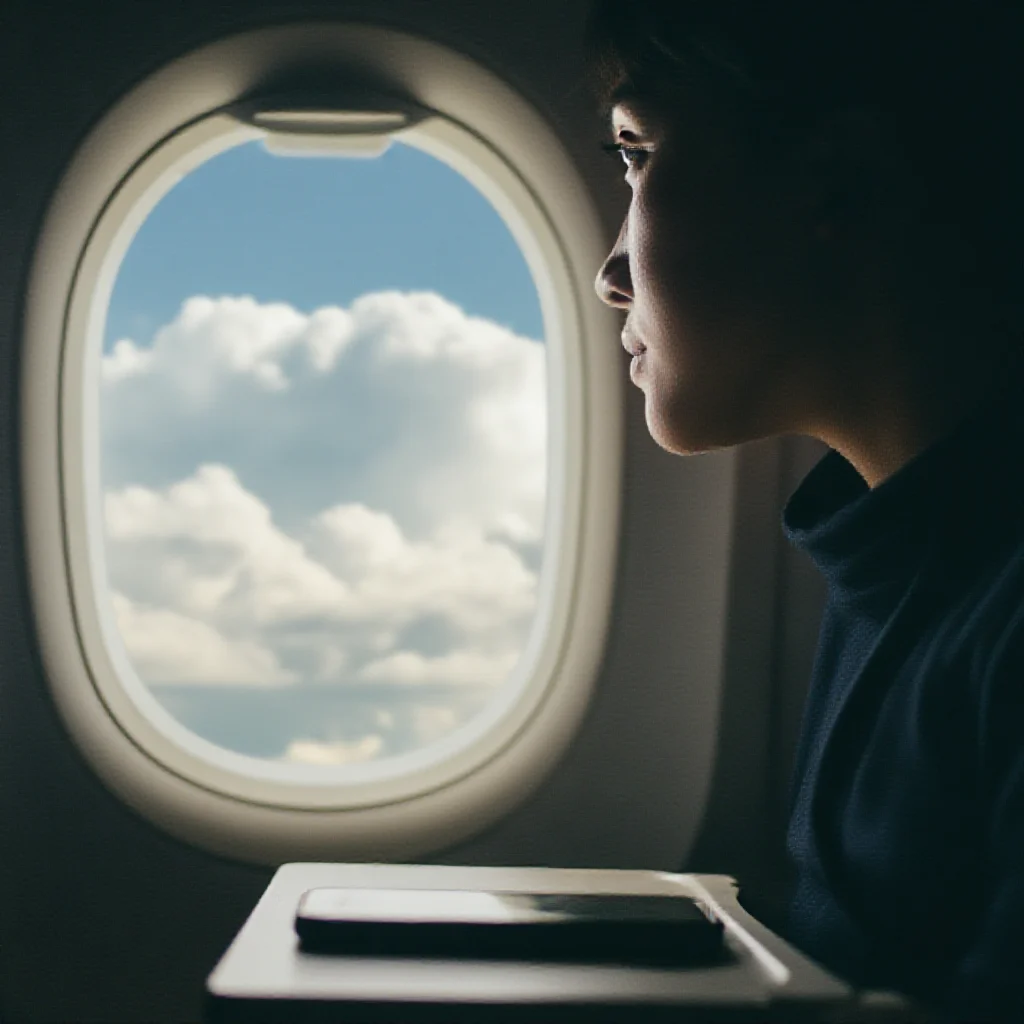
The term 'rawdogging' gained significant traction on the social media platform TikTok around 2024 (Source 1: [Primary Data]). In the specific context of air travel, it describes the act of enduring a flight without any digital distractions—no movies, music, podcasts, or internet browsing. The practice is documented in videos depicting passengers engaged in activities such as looking out the window or observing fellow travelers. In a hyper-stimulated digital environment, this choice presents as a radical behavioral anomaly. The resonance of this trend prompts an investigation into its underlying psychological mechanics. Initial analysis suggests the phenomenon is an involuntary, modern encounter with a fundamental, scientifically understood brain state known as the Default Mode Network.
The Brain's Background App: Unpacking the Default Mode Network
In 2001, neurologist Marcus Raichle described a "baseline default mode of brain function," referring to brain activity during resting states focused on internally directed thinking (Source 1: [Primary Data]). This discovery led to the identification of the Default Mode Network (DMN), a group of interconnected brain regions that become active when an individual is not focused on a specific external task. The DMN is associated with self-referential thought, autobiographical memory retrieval, envisioning the future, and mind-wandering. It functions as the brain's intrinsic activity system, an "idle" or "introspection" engine that constructs and maintains the sense of self. This network is typically suppressed when attention is directed outward toward goal-oriented tasks, which engage separate "task-positive" networks. The DMN's discovery provided a neurological substrate for states of rest and introspection previously considered merely passive.
From Ancient Practice to Accidental Activation: The Meditation Connection
The state induced by forced inactivity during 'rawdogging' bears direct functional parallels to the goal of mindfulness meditation. Mindfulness, with roots in Buddhist philosophy and adapted into modern therapeutic methodologies, involves observing thoughts and sensations without direct engagement or judgment (Source 1: [Primary Data]). Neuroscientific research indicates that long-term meditation practice is associated with a less active, but potentially more regulated and efficient, DMN (Source 1: [Primary Data]). This modulation is linked to clinical outcomes such as reduced anxiety and rumination. The 'rawdogging' trend can therefore be analyzed as an accidental, untrained induction of a meditative-like state. By removing the ubiquitous tools—digital screens—used to suppress DMN activity with constant external stimuli, the airplane cabin environment forces the brain into its default mode of operation, often an unfamiliar experience for the habitually connected individual.
The Hidden Economic Logic: Pushing Back Against the Attention Economy
The 'rawdogging' trend represents a micro-scale behavioral pushback against the economic model of the attention economy, which systematically monetizes human focus. The airplane cabin has emerged as one of the last common "captive" environments where connectivity is often slow, expensive, or entirely unavailable, creating a rare, externally enforced pause from digital consumption. The voluntary choice to not engage with available onboard entertainment, even when it is accessible, signals a nascent but growing consumer recognition of the cognitive cost of perpetual stimulation. This behavior functions as a market signal, indicating a latent demand for products, services, or experiences that facilitate or valorize disconnection and unmediated thought. It reflects a reassessment of the value of boredom and internal reflection, which have been systematically engineered out of daily life.
Conclusion: A Symptom of Cognitive Recalibration
The viral trend of 'rawdogging' flights is not a novel cultural invention but a symptom of a broader societal recalibration. It is a modern, involuntary encounter with the ancient neurological processes of the Default Mode Network. The trend highlights a growing, perhaps subconscious, collective response to cognitive overload, representing a rediscovery of the value inherent in unmediated mental states. Its popularity on a platform dedicated to hyper-stimulation is particularly indicative of this tension. Future trends may see this accidental engagement with the DMN evolve into more deliberate practices and influence the design of environments and services, creating structured opportunities for cognitive idling in an age of hyper-connectivity.
(All rights reserved by Global Beacon Chronicle. Unauthorized reproduction is prohibited.)
Liu Yan / Liu Yan
Business historian researching the intersection of tech and society.