The Mass Threshold Effect: How Accumulation Triggers Phase Transitions Across
This article explores the profound, non-linear principle that mass accumulation

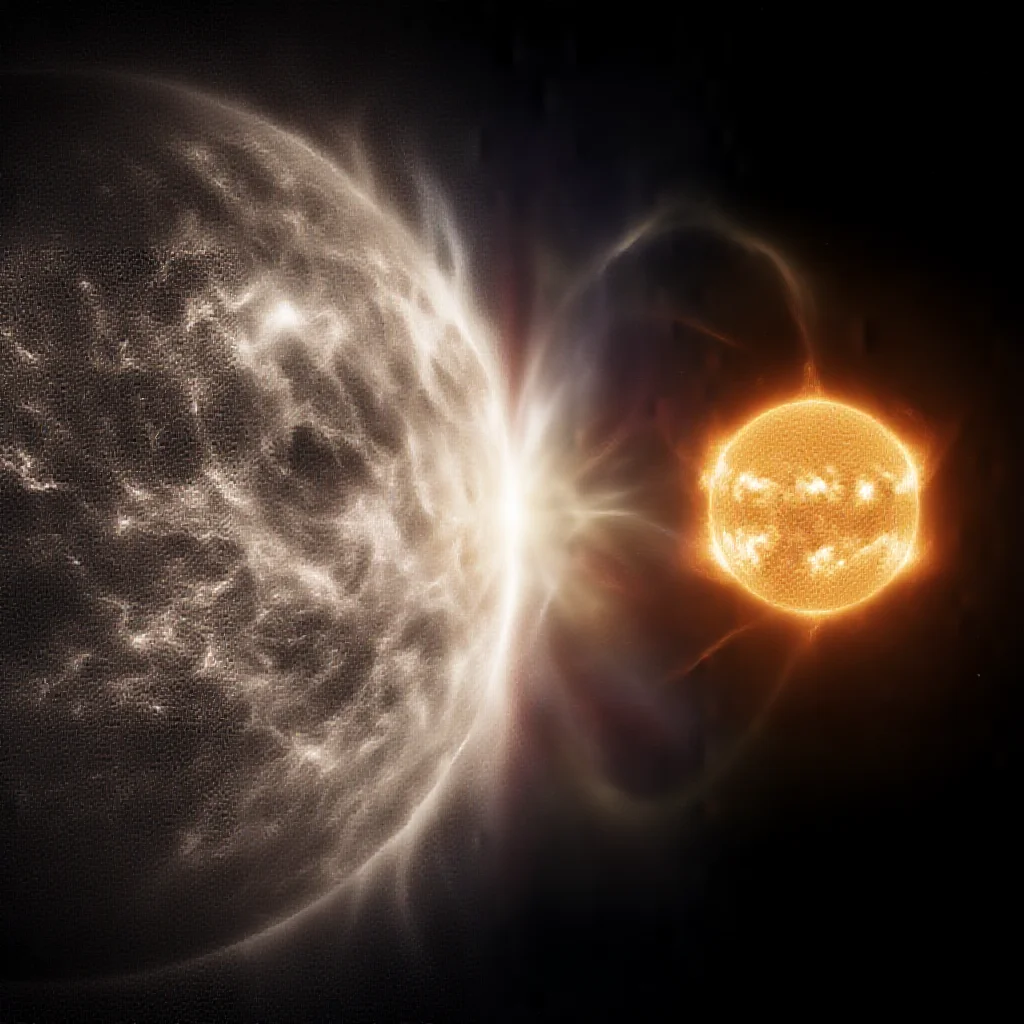
The Mass Threshold Effect: How Accumulation Triggers Phase Transitions Across the Universe
Introduction: Beyond Simple Addition – Mass as a Catalyst for Metamorphosis
The intuitive understanding of mass is quantitative: more mass equates to more of the same substance. This view is incomplete. Empirical observation across physical scales reveals a non-linear principle: the accumulation of mass is not merely additive but transformative. At specific critical thresholds, systems undergo fundamental phase transitions, altering their intrinsic nature and the physical laws that govern them. This pattern—where incremental accumulation precipitates sudden, qualitative change—constitutes a universal logic observable from quantum fields to galactic clusters.
![Infographic showing a scale from 'Subatomic' to 'Cosmic' with icons for particle, planet, star, and black hole, connected by arrows indicating transformative jumps at specific mass thresholds.]
The Universal Law of Critical Mass: Case Studies from Cosmos to Quantum
Stellar Metamorphosis
The classification of celestial bodies is dictated by mass thresholds. A gas giant like Jupiter, with a mass of approximately 1.9 x 10^27 kg, exhibits planetary characteristics. Adding mass does not linearly enhance these traits. Upon crossing a threshold of roughly 13 times Jupiter's mass (~2.5 x 10^28 kg), internal pressure and temperature become sufficient to ignite deuterium fusion, reclassifying the object as a brown dwarf. Further accumulation beyond approximately 75-80 Jupiter masses triggers sustained hydrogen fusion, creating a main-sequence star. The transition from planet to star is not a continuum but a binary shift in state defined by nuclear ignition.
The Ultimate Collapse
Stellar evolution is a sequence of mass-determined phase transitions. A main-sequence star's fate is sealed by its initial mass. Stars with cores exceeding approximately 1.4 solar masses (the Chandrasekhar limit) cannot be supported by electron degeneracy pressure after fusion ceases, leading to a supernova and the formation of a neutron star. If the remnant core surpasses the Tolman–Oppenheimer–Volkoff limit (estimated between 2-3 solar masses), neutron degeneracy pressure fails, resulting in complete gravitational collapse into a black hole, an object defined by its event horizon at the Schwarzschild radius. Each transition represents an irreversible leap into a new regime of physics.
Gravitational Dominion
On cosmological scales, mass accumulation dictates gravitational influence. A galaxy cluster's gravity increases with mass, but its functional role undergoes a phase change. Upon reaching a sufficient total mass (typically on the order of 10^14 to 10^15 solar masses), the cluster's gravitational field becomes powerful enough to significantly bend the path of light from background objects, a phenomenon known as strong gravitational lensing. This threshold marks the transition from a collection of galaxies to a single, dominant gravitational lens that dictates local spacetime geometry.
Quantum Identity Shift
The principle manifests at fundamental scales. In particle accelerators, adding kinetic energy (mass-energy equivalence, E=mc²) to collision events can create new, more massive particles. A collision with sufficient center-of-mass energy can transform the system's constituents, for instance, producing a Higgs boson or top quarks that were not present in the initial state. The system's identity changes upon crossing the energy threshold required for particle creation.
![Flowchart titled 'Cosmic Destiny: It's All About Mass' mapping end states—planet, brown dwarf, star, neutron star, black hole—based on initial and accumulated mass.]
The Hidden Logic: Energy Landscapes, Stability, and Irreversible Tipping Points
The underlying mechanism for these transitions involves competing forces and stability landscapes. Any physical system resides in a local minimum of potential energy—a stable state. For a planet, the equilibrium is between gravitational contraction and electron degeneracy pressure. For a star, it is between gravitational collapse and radiation pressure from fusion.
Adding mass increases gravitational force, effectively deforming the energy landscape. The system's stable "valley" becomes shallower. At a critical mass threshold, the local minimum vanishes or becomes unstable, and the system rolls into a new, deeper energy minimum—a new stable state. The ignition of fusion in a brown dwarf or the collapse of a stellar core into a neutron star are manifestations of this rollover.
This explains the characteristic irreversibility of these transitions. The new energy minimum is typically far deeper, making a return to the previous state energetically prohibitive. One cannot "un-ignite" a star or reverse the formation of a black hole's event horizon. The transition is a one-way journey over a saddle point in the energy landscape, a definitive tipping point.
![3D graph showing an abstract 'energy landscape' with two deep valleys labeled 'Planet' and 'Star,' separated by a hill. A ball representing an object rolls from the 'Planet' valley over the hill into the 'Star' valley.]
Cross-Domain Analysis and Predictive Implications
The mass threshold effect provides a predictive framework. In astrophysics, it allows for the classification of exoplanets and the forecasting of stellar remnants based on measured mass. The observed upper limit for neutron star mass (Source: Astrophysical Journal, measurements of PSR J0740+6620) provides empirical validation for the Tolman–Oppenheimer–Volkoff limit.
The logic extends metaphorically to complex systems in technology and economics. While not governed by gravity, these systems exhibit similar non-linear dynamics where incremental accumulation of capital, data, or network nodes can trigger phase changes—such as a platform achieving monopoly status, a currency reaching critical adoption, or an AI model emergent capabilities. The core analytical lesson is to identify the competing "pressures" (e.g., regulatory friction vs. network effects) and the critical points where the balance tips.
Future observational campaigns, particularly in gravitational wave astronomy (LIGO/Virgo) and very-long-baseline interferometry (Event Horizon Telescope), will test these thresholds with increasing precision. The detection of black holes within the purported "mass gap" between neutron stars and black holes could refine our understanding of the collapse threshold. Similarly, the ongoing census of brown dwarfs and rogue planets will better delineate the lower mass boundaries of stellar and sub-stellar objects.
The principle affirms that in physics, and by analogy in other complex systems, growth is not a simple narrative of expansion. It is a journey punctuated by critical gates, where passing through irrevocably changes the rules of the game. Understanding these thresholds is key to forecasting not just incremental change, but revolutionary transformation.
(All rights reserved by Global Beacon Chronicle. Unauthorized reproduction is prohibited.)
Liu Yan / Liu Yan
Business historian researching the intersection of tech and society.