Jan Morris: How a Writer''s Journey Through Place and Identity Redefined Narrative
Jan Morris''s life and prolific career offer a profound case study in the

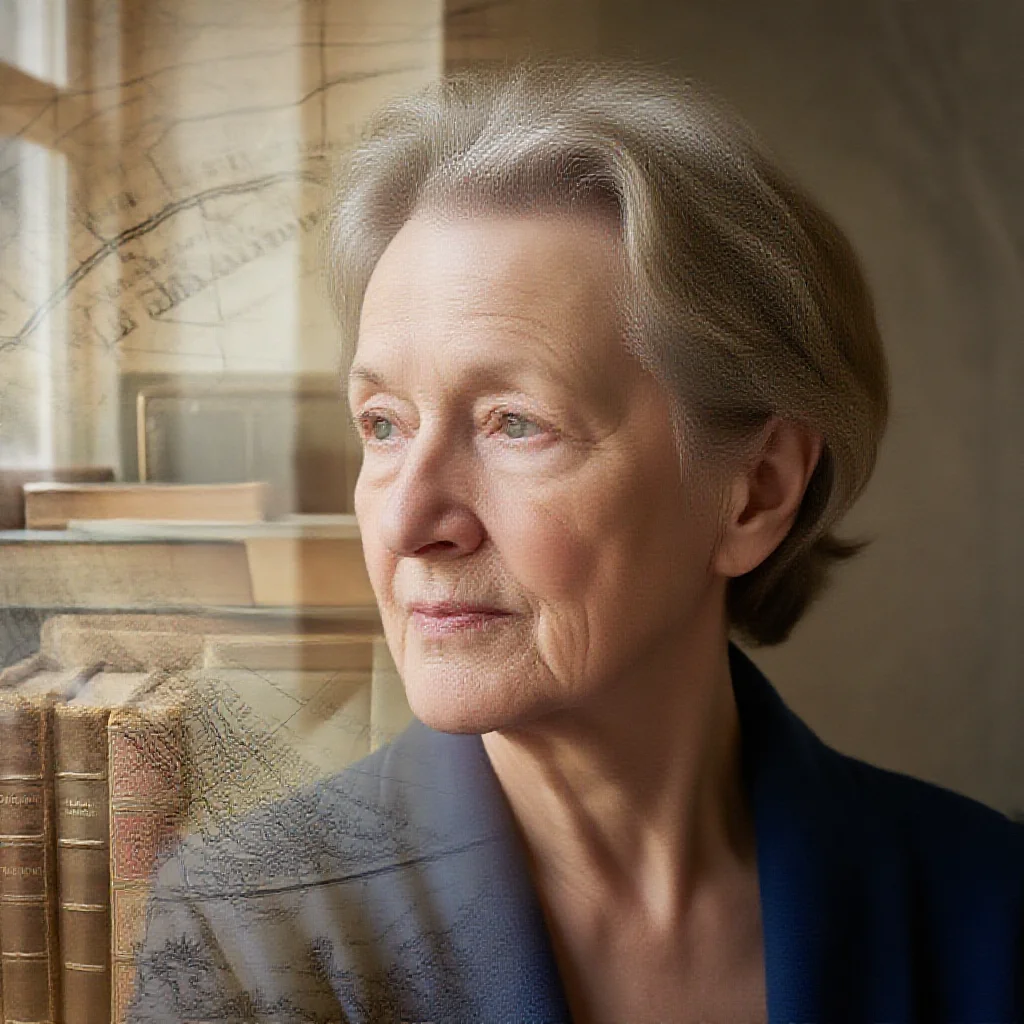
Jan Morris: How a Writer's Journey Through Place and Identity Redefined Narrative History
Introduction: The Cartographer of Self and Space
Jan Morris was a writer and historian whose career produced over 40 books (Source 1: [Primary Data]). Her body of work represents a systematic investigation into the nature of narrative perspective. The central thesis of her output posits that a profound understanding of a place is contingent upon an honest interrogation of personal identity. Morris’s life and work constitute a longitudinal analysis, or a "slow audit," of 20th-century consciousness, executed through the dual, inseparable lenses of geography and transition.
The Forging of a Perspective: From Regimentation to Reportage
The foundational methodology of Morris’s work was established in her early professional life. Her service in the British Army during World War II (Source 1: [Primary Data]) instilled a discipline for structured observation. This was followed by a career in journalistic reportage for The Times and The Guardian (Source 1: [Primary Data]), which trained her in factual verification and systemic analysis. These formative experiences provided the technical substrate for her later work. Her early historical project, the Pax Britannica trilogy, functions as verification of this methodical, fact-based foundation. It demonstrated an ability to deconstruct large, complex systems—in this case, the British Empire—into coherent narrative. This skill set was later redirected from analyzing political structures to deconstructing societal and personal ones.
The Pivot Point: Transition as a Literary and Historical Lens
The gender transition surgery Morris underwent in 1972 (Source 1: [Primary Data]) was not a disruption in her authorial continuum but its logical evolution. The event provided a unique empirical standpoint on the constructed nature of identity. This experience allowed for the synthesis of observed societal male perspectives and lived female experience into a singular, fluid authorial voice. The transition became the ultimate case study in her ongoing investigation, providing direct insight into how identities—whether national, cultural, or personal—are formed, performed, and perceived. It moved her analysis from the external to the internal, establishing identity itself as a landscape to be mapped.
The Morris Method: Synthesizing Place, Identity, and Time
The signature Morris style is a synthesis of personal reflection, historical fact, and acute geographical observation. Her method treats cities and nations not as static backdrops but as dynamic characters with evolving identities. In works such as The World of Venice and Trieste and the Meaning of Nowhere, the city’s history, architecture, and atmosphere are analyzed with the same depth one would apply to a human subject. Passages from these texts verify her approach: historical events are filtered through the sensory experience of place, and the character of a location is revealed through the accumulated layers of its past and present. This technique posits that truth about a place is verified not solely through archival data but through its deeply felt, experiential resonance.
Legacy and Predictive Analysis: The Verification of Felt Truth
Jan Morris’s legacy is a methodological one. She expanded the criteria for historical and geographical verification to include the dimension of subjective, felt experience. Her work challenges the rigid categorization of genres, blending travel writing, history, memoir, and social commentary into a cohesive form of narrative non-fiction. The predictive analysis for literary and historical fields suggests a continued erosion of strict boundaries between objective and subjective reporting. Morris’s career demonstrates the market and academic viability of a hybrid methodology that audits facts through the lens of personal and collective identity. Future trends in narrative non-fiction are likely to further validate this approach, prioritizing analytical frameworks that can accommodate multiple, fluid perspectives to construct a more dimensional truth. The enduring relevance of her work is verified by its foundational role in this ongoing methodological shift.
(All rights reserved by Global Beacon Chronicle. Unauthorized reproduction is prohibited.)
Liu Yan / Liu Yan
Business historian researching the intersection of tech and society.