The Hidden Architecture of Reality: Why Physical Laws Are More Than Just Human
Physical laws are commonly framed as human-made descriptions of nature''s

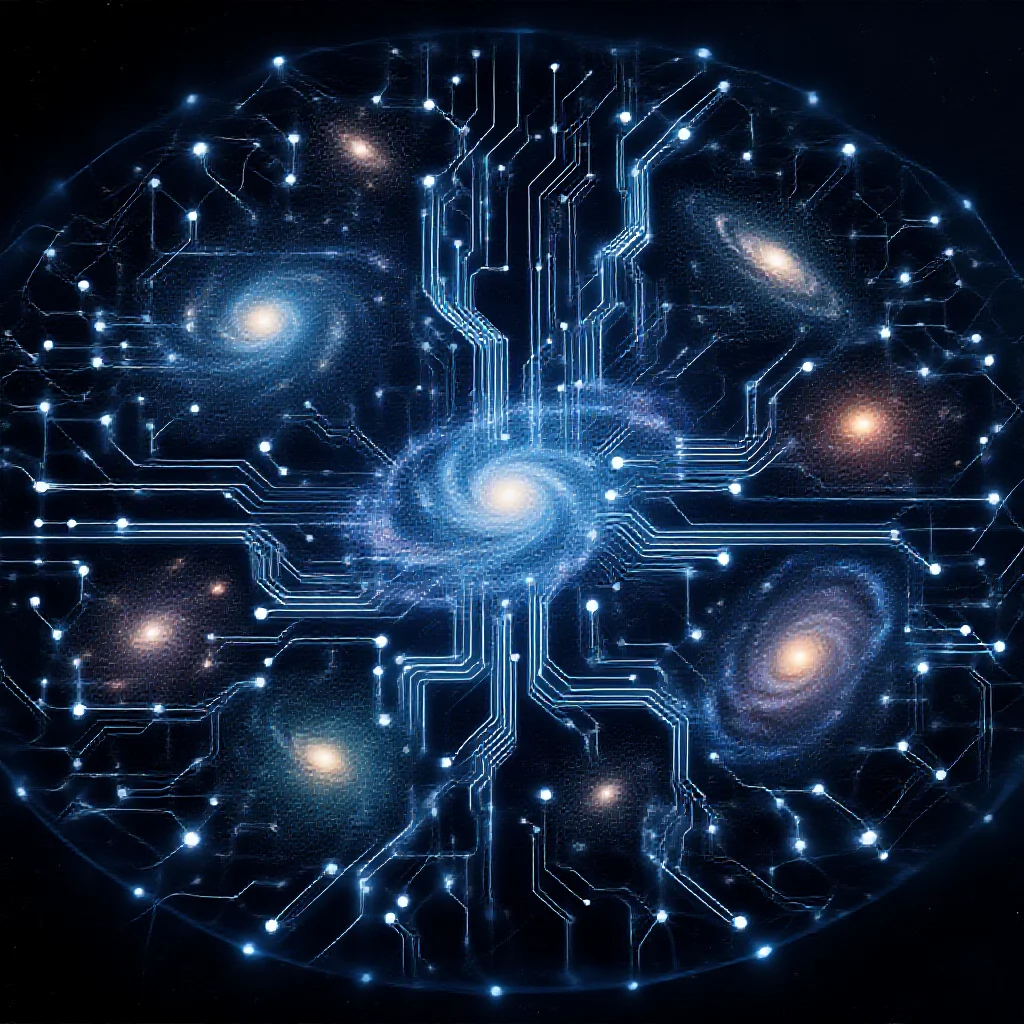
The Hidden Architecture of Reality: Why Physical Laws Are More Than Just Human Descriptions
Beyond Description: Physical Laws as the Universe's Operating System
The conventional framework posits physical laws as human-made descriptions, inductive summaries of observed regularities in nature. This view treats laws as a posteriori constructs, useful for prediction and technological application but fundamentally separate from the reality they model. An alternative, more consequential argument asserts that these mathematical constants and relationships constitute the non-negotiable, constitutive rules of the universe. They form an immutable operating system that defines the set of all possible states, interactions, and evolutions, not merely cataloging patterns after the fact.
This distinction moves from a passive, descriptive model to an active, prescriptive one. The laws of physics are the logical and mathematical constraints that render any physical event or object possible. Evidence for this deeper necessity is found in what physicist Eugene Wigner termed "the unreasonable effectiveness of mathematics in the natural sciences." The precision with which abstract mathematical structures predict and describe physical phenomena—from the orbit of planets to the behavior of subatomic particles—suggests a process of discovery, not invention. The mathematical relationships are embedded within the fabric of reality itself, waiting to be uncovered.
The Axis of Necessity: Why This Specific Set of Laws?
The operating system of our universe is defined by a specific set of fundamental constants and force laws. Analysis reveals these parameters are precisely calibrated within exceedingly narrow tolerances to permit the emergence of complexity, chemistry, and life. This is the fine-tuning problem. For instance, the strength of the strong nuclear force, which binds atomic nuclei, is critical. A variation of a few percent would either prevent the formation of any elements beyond hydrogen or would fuse all hydrogen into heavier elements too rapidly, preventing long-lived stars and the chemistry essential for life. The cosmological constant, governing the acceleration of the universe's expansion, is fine-tuned to an accuracy of one part in 10^120. A slightly larger value would have blown the universe apart before any structure could form; a slightly smaller value would have caused a rapid gravitational recollapse.
Competing explanations for this precise calibration are subject to ongoing analysis. The Anthropic Principle offers a observational selection effect: we can only observe a universe whose laws permit our existence. Multiverse theories propose a vast ensemble of universes, each with different physical parameters, with ours being one of the rare, life-permitting variants. A third avenue seeks a deeper, single unifying principle—a Theory of Everything—from which all constants and laws would flow with logical necessity, leaving no room for arbitrary tuning. The current absence of empirical evidence for a multiverse or a completed unifying theory leaves this as the central unresolved inquiry in foundational physics.
The Unseen Economic Logic of Cosmic Rules
Physical laws can be analyzed as the universe's foundational regulatory and incentive framework. They dictate cosmic resource allocation, transaction costs, and the allowable products of physical processes. The law of universal gravitation, for example, provides the long-range incentive for structure formation. It dictates that density fluctuations grow, acting as a gravitational potential that draws in matter, leading to the formation of galaxies, stars, and planets. This law governs the capital formation of the cosmos.
Thermodynamics serves as the supreme regulatory body. The First Law mandates the conservation of energy, the universe's primary currency. The Second Law, through the increase of entropy, regulates the direction and efficiency of all energy transactions, setting an ultimate limit on all processes and defining the arrow of time. The cross-sections of fundamental interactions—the probabilities that particles will interact—act as transaction costs, determining the rates of cosmic processes from nuclear fusion in stars to chemical reactions.
This underlying legal code establishes the entire supply chain of the observable universe. It begins with the initial conditions and laws governing nucleosynthesis in the first minutes, which allocated the cosmic budget of hydrogen and helium. Stellar factories, governed by the laws of gravity and nuclear physics, process this primordial material into heavier elements. Supernova events, governed by the laws of hydrodynamics and weak nuclear interactions, then distribute these elements, enabling the formation of rocky planets and the complex chemistry that constitutes life. The laws are the supply-side economics of reality.
A Slow Analysis: Auditing the Foundation of All Industries
This inquiry constitutes a form of slow analysis—a fundamental audit of the substrate upon which all human and natural systems are built. Every industry, technology, and biological process is a subsidiary operating within the constraints of this cosmic regulatory framework. The stability of matter, the flow of energy, the transmission of information, and the very possibility of computation are downstream consequences of the laws of physics.
Future trends in scientific discovery hinge on the resolution of this audit's central question. If the laws are necessary truths of a single, logically coherent mathematical universe, the trajectory points toward the eventual discovery of a final theory that would represent the completion of fundamental physics. If the anthropic-multiverse explanation holds, the focus may shift toward cosmology and the potential for empirical detection of other universe domains. A third trend involves the exploration of whether the laws themselves can evolve or are subject to higher-level meta-laws, a question probing the ultimate origin of the operating system.
The market for knowledge—encompassing basic research, advanced materials science, quantum computing, and existential risk assessment—is wholly dependent on the continued mapping of this architecture. Understanding the non-negotiable limits set by physical law, from thermodynamic efficiency bounds to the speed of information transfer, defines the ceiling for all technological and economic advancement. The audit is ongoing, and its findings will dictate the long-term trajectory of capability and understanding.
(All rights reserved by Global Beacon Chronicle. Unauthorized reproduction is prohibited.)
Liu Yan / Liu Yan
Business historian researching the intersection of tech and society.