Beyond the Standard Model: The High-Stakes Scientific Hunt for a Fifth Force
The long-standing edifice of the Standard Model of particle physics is facing

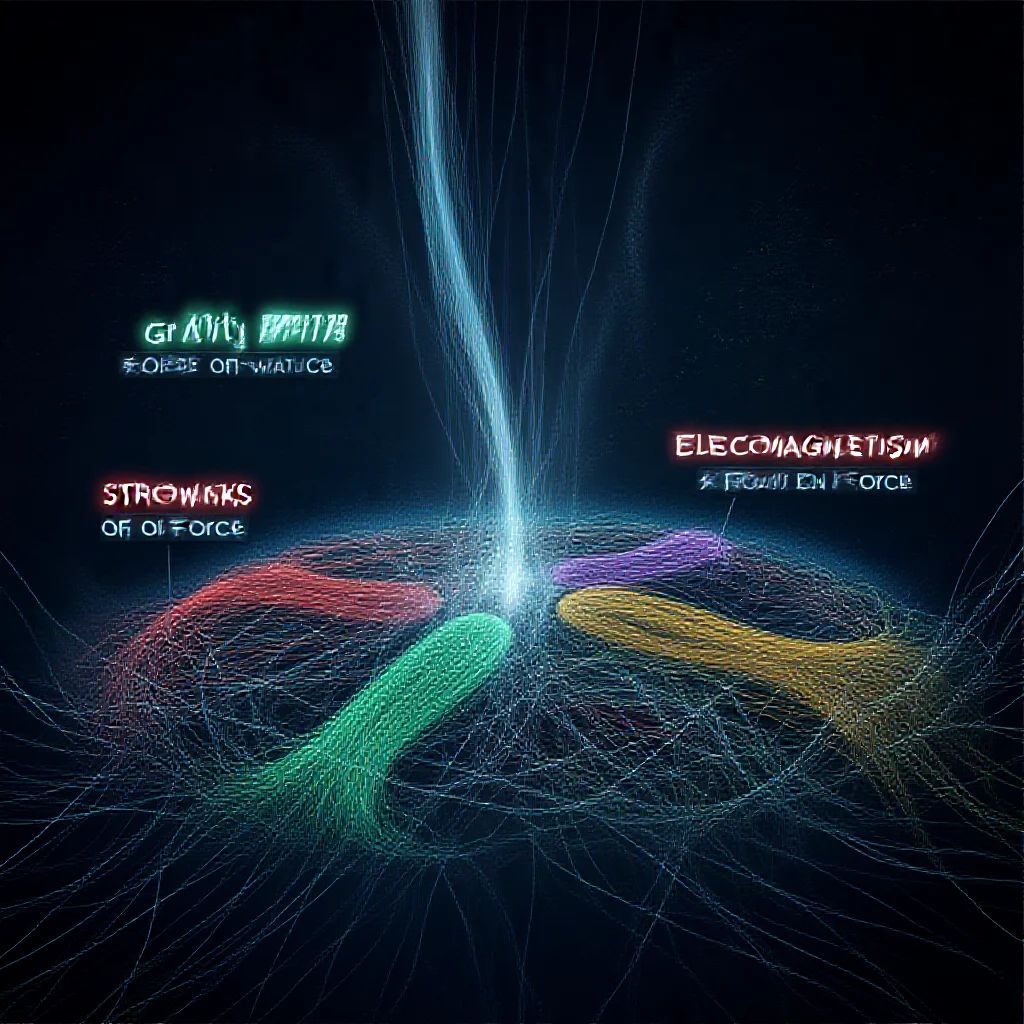
Beyond the Standard Model: The High-Stakes Scientific Hunt for a Fifth Force and Its Revolutionary Implications
Introduction: The Crack in the Cosmic Code
The Standard Model of particle physics stands as one of humanity's most successful intellectual frameworks. It categorizes the known elementary particles and describes three of the four fundamental forces—electromagnetism, the strong nuclear force, and the weak nuclear force—with exquisite precision. Gravity, described by Einstein's theory of general relativity, remains outside its purview. For decades, the model's predictions have been validated, yet its acknowledged incompleteness, particularly regarding gravity, dark matter, and dark energy, has driven physicists to probe its boundaries. A series of persistent experimental anomalies has now introduced a core tension: are these discrepancies mere statistical fluctuations, or do they constitute the signature of a new, fifth fundamental force? This investigation represents more than a search for a new particle; it is a systemic stress test of physics' foundational operating system.
Converging Anomalies: The Evidence Mounts from Disparate Labs
The evidence challenging the Standard Model's completeness originates from independent experimental fronts, each employing distinct methodologies.
The most statistically significant anomaly comes from the Muon g-2 experiment at Fermilab. This experiment measures the magnetic moment of the muon, a heavier cousin of the electron. As muons circulate in a magnetic storage ring, they interact with a quantum "foam" of virtual particles, causing a characteristic precession or "wobble." The Standard Model predicts the rate of this wobble with extreme precision. The 2021 results from Fermilab showed a 4.2-standard-deviation discrepancy from this prediction (Source 1: [Primary Data]). The 2023 update, which combined more data, maintained and slightly increased the statistical significance of this anomaly. This persistent gap suggests the muon may be interacting with virtual particles or forces not accounted for in the current model.
Simultaneously, experiments at CERN's LHCb detector have observed anomalies in the decay patterns of beauty quarks. Certain rare decays of B-mesons, which contain beauty quarks, appear to violate lepton universality—a Standard Model principle stating that electrons, muons, and tau particles should interact with equal strength, apart from mass differences. The measured ratios of these decays consistently deviate from theoretical expectations, hinting at a potential new particle or force mediating the process asymmetrically.
A third, more cautionary line of evidence emerged from dark matter detectors. In 2020, the XENON1T experiment reported an unexpected excess of electron recoil events. Some interpretations suggested this could be evidence of a new, lightweight particle acting as a force carrier. However, the subsequent, more sensitive XENONnT experiment, with a larger detector and reduced background, found no confirmation of this signal in its 2023 data (Source 2: [Primary Data]). This sequence underscores the rigorous process of eliminating false positives and systemic errors in high-stakes physics.
The Hidden Axis: Not Just a New Particle, But a New Market for Discovery
The pursuit of a fifth force operates within a complex ecosystem, an "economics of discovery" defined by immense capital investment and intellectual competition. Billion-dollar facilities like the Large Hadron Collider and upgraded national labs like Fermilab function as a marketplace for paradigm-shifting results. Collaborations comprising thousands of scientists compete for priority in discovery while simultaneously relying on each other for independent verification. A confirmed anomaly from one experiment, such as Muon g-2, immediately raises the value of related data from others, like LHCb, creating a feedback loop that directs analytical focus and theoretical development.
This process mandates a "slow analysis" imperative. Unlike breaking news, the audit of the Standard Model is a decade-long endeavor. Each anomalous result must survive intense scrutiny: Could it be an unaccounted-for background effect? Are the theoretical calculations against which it is compared themselves uncertain? The community's workflow is designed to be deliberately conservative, requiring consensus from multiple independent lines of inquiry before a foundational framework is amended.
The long-term impact on the "supply chain" of physics would be profound. A confirmed discovery would trigger a strategic reallocation of global funding, redirecting the focus of graduate research, and catalyzing the development of next-generation experimental technologies for a generation. It would establish a new frontier, creating demand for specialized theorists, engineers, and data scientists to explore its implications.
The Great Divide: Caution, Hope, and the Burden of Proof
The physics community remains cautiously divided, reflecting the inherent tension between revolutionary potential and empirical rigor.
The conservative view emphasizes prudent skepticism. The history of particle physics is marked by anomalies that faded with more data or refined calculations. For the muon magnetic moment, a significant uncertainty lies in the theoretical prediction itself, which relies on complex lattice Quantum Chromodynamics (QCD) calculations of hadronic contributions. Any error here could shrink or eliminate the discrepancy. The LHCb anomalies, while intriguing, have not yet reached the gold-standard 5-sigma threshold for discovery. The XENON1T/nT sequence is cited as a textbook example of why initial signals must be treated with extreme caution.
The revolutionary view posits that these converging hints are too compelling to ignore. A fifth force, potentially mediated by a "Z-prime" boson or a leptoquark, could provide a bridge to dark matter, offering a candidate particle that interacts feebly with normal matter. It might also resolve other cosmological puzzles or suggest novel pathways toward a grander unified theory. The convergence of anomalies from muon behavior and B-meson decays, which probe different energy regimes and processes, is particularly suggestive to proponents.
The path to consensus is clearly defined. It requires two concurrent streams of work: the collection of more data from upgraded experiments (like the next runs of LHCb and future Muon g-2 analyses) and the continued refinement of the Standard Model's own theoretical predictions, particularly from lattice QCD. Only when the experimental discrepancy persists and the theoretical uncertainty is minimized can a definitive verdict be reached. This high-stakes audit of the universe's operating system continues, its outcome holding the potential to redefine the fundamental rules of reality.
(All rights reserved by Global Beacon Chronicle. Unauthorized reproduction is prohibited.)
Liu Yan / Liu Yan
Business historian researching the intersection of tech and society.