The Distributed Self: How Neuroscience and Social Identity Theory Redefine
Modern neuroscience dismantles the myth of a singular, localized self. Instead,

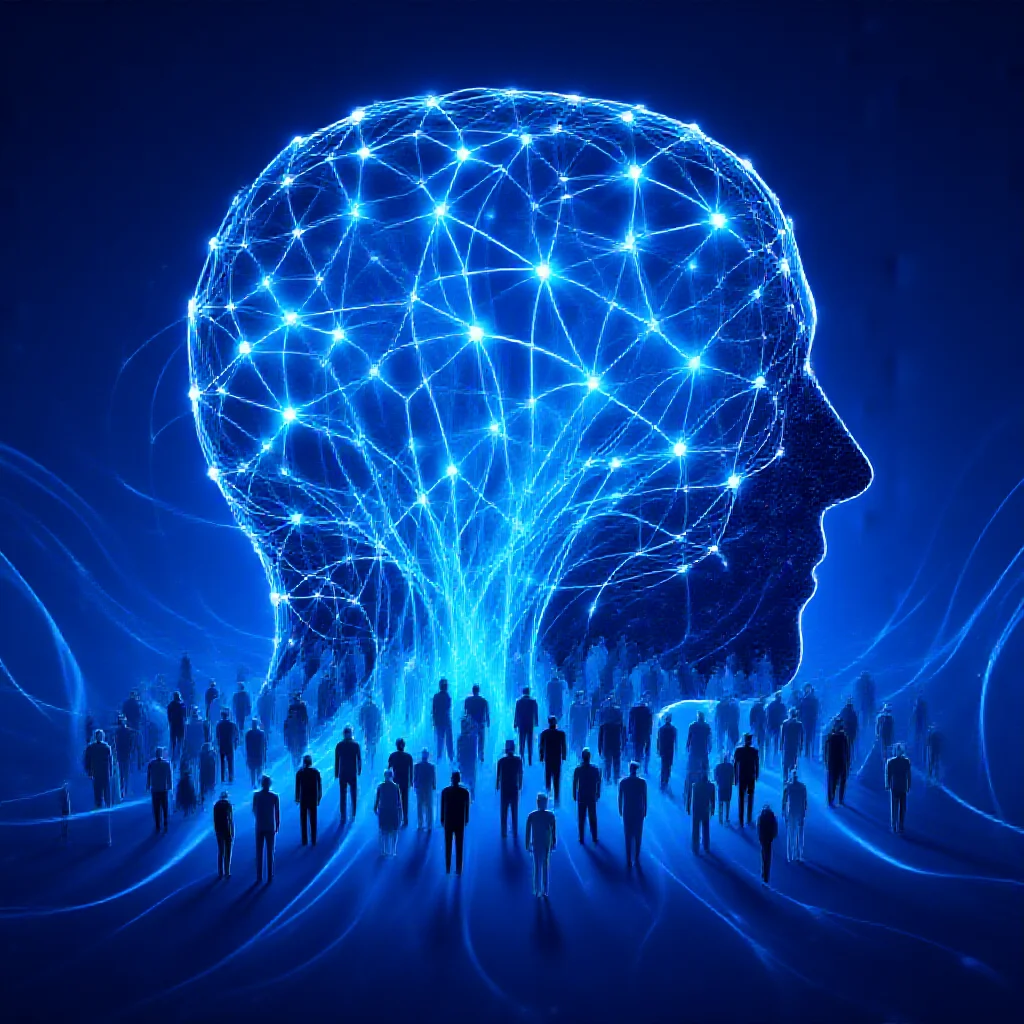
The Distributed Self: How Neuroscience and Social Identity Theory Redefine What Makes Us Who We Are
Introduction: The End of the Homunculus - Dismantling the Singular Self
The traditional model of the self, often visualized as a central "homunculus" or a unified executive residing within the brain, is no longer tenable. This view, which philosopher Daniel Dennett identifies as a "category mistake to start looking around for the self in the brain," has been systematically dismantled by converging lines of empirical research. The contemporary scientific consensus posits that the self is not a singular entity to be found but an emergent property. It arises from a complex, distributed network of internal cognitive processes and is fundamentally scaffolded by external social frameworks. This article examines the dual-track model of identity, where the personal self is a fragile neurological construct and an inescapably social phenomenon.
The Neurological Foundation: A Self Built from Fragile Parts
Modern neuroscience establishes the brain as the physical substrate of the self, not a separate entity that interacts with it. Investigations into neurological disorders provide the most compelling evidence that identity is composed of separable, and vulnerable, cognitive modules. For instance, damage to regions responsible for episodic memory can erase a person's autobiographical narrative, while frontal lobe impairments can radically alter personality, decision-making, and social comportment. Neuroscientist Masud Husain's work on motivation and agency further illustrates how discrete brain networks underpin components of what we consider the self.
These findings support the model of the self as an emergent property—a coherent whole that arises from, but is not reducible to, the sum of its neurological parts. Personal identity is therefore best understood not as a static "thing" but as a dynamic process, a narrative constructed in real-time by interacting cognitive systems. The consequence is a view of identity that is inherently fragile; alterations to specific cognitive faculties, as demonstrated in clinical studies of brain disorders, can result in a fundamental change to the self (Source 1: [Primary Data]).
The Social Imperative: Why 'Belonging' is Hardwired into Identity
Parallel to the neurological deconstruction of the self, social psychology provides a complementary and equally essential track. Social Identity Theory, developed by Henri Tajfel and John Turner, argues that an individual's self-concept derives significantly from their memberships in social groups. These group identities are not peripheral add-ons but constitutive elements of the self. This theory finds a biological correlate in the work of social psychologists Baumeister and Leary, who posit the "need to belong" as a fundamental human motive with deep evolutionary roots in survival and reproductive success.
This perspective bridges the internal cognitive model with external reality. As philosopher David Carr notes, "Personal identity is social identity." The cognitive abilities that underpin personal narrative and continuity are the same faculties required to understand social roles, norms, and group memberships. The formation of a coherent personal identity is, in essence, a process of integrating individual experiences within a social context. The failure to establish these social connections represents not just a psychological deficit but a failure in a core self-system.
The Convergence: A Dual-Track Model for the Modern Self
The integration of neurological and social models creates a powerful dual-track framework for understanding the modern self. This model introduces a new vulnerability matrix: the self can be disrupted not only by internal neurological events, such as a stroke or neurodegeneration, but also by external social rupture. Extreme loneliness, ostracism, or the loss of a defining group membership can inflict damage analogous to a "social brain injury."
Empirical health data substantiates this convergence. Loneliness is associated with a statistically significant increase in the risk of coronary heart disease, stroke, depression, anxiety, cognitive decline, and earlier mortality (Source 2: [Primary Data]). These are not merely correlative psychosocial outcomes but measurable biological costs, indicating that the failure to successfully integrate social identity has direct physiological and neurological consequences. The brain regions and systems that maintain the self are dependent on social nourishment for optimal function.
Implications and Future Trajectories
The distributed, dual-track model of the self has clear implications for mental health, neurology, and social policy. Therapeutic interventions must address both tracks: cognitive rehabilitation for neurological injury and social integration strategies for conditions like depression or severe loneliness. In organizational and societal design, this model underscores the necessity of fostering genuine group belonging, as it is a prerequisite for individual psychological integrity.
Future research will likely focus on mapping the precise neural correlates of social identity processes and quantifying the neurological impact of social interventions. The development of digital and virtual identities presents a novel test case for this model, challenging traditional boundaries of the self. The market for technologies and services aimed at cognitive enhancement and social connection is predicted to expand, driven by an increasing scientific and public understanding that the self is a distributed system requiring maintenance on both neurological and social levels. This paradigm shift moves the conversation from a search for the seat of the soul to the practical maintenance of a complex, emergent network.
(All rights reserved by Global Beacon Chronicle. Unauthorized reproduction is prohibited.)
Liu Yan / Liu Yan
Business historian researching the intersection of tech and society.