The Dawn of Connectivity: How Ancient Civilizations Built the Foundations
This article explores the period 3000 BCE to 500 CE not merely as a timeline

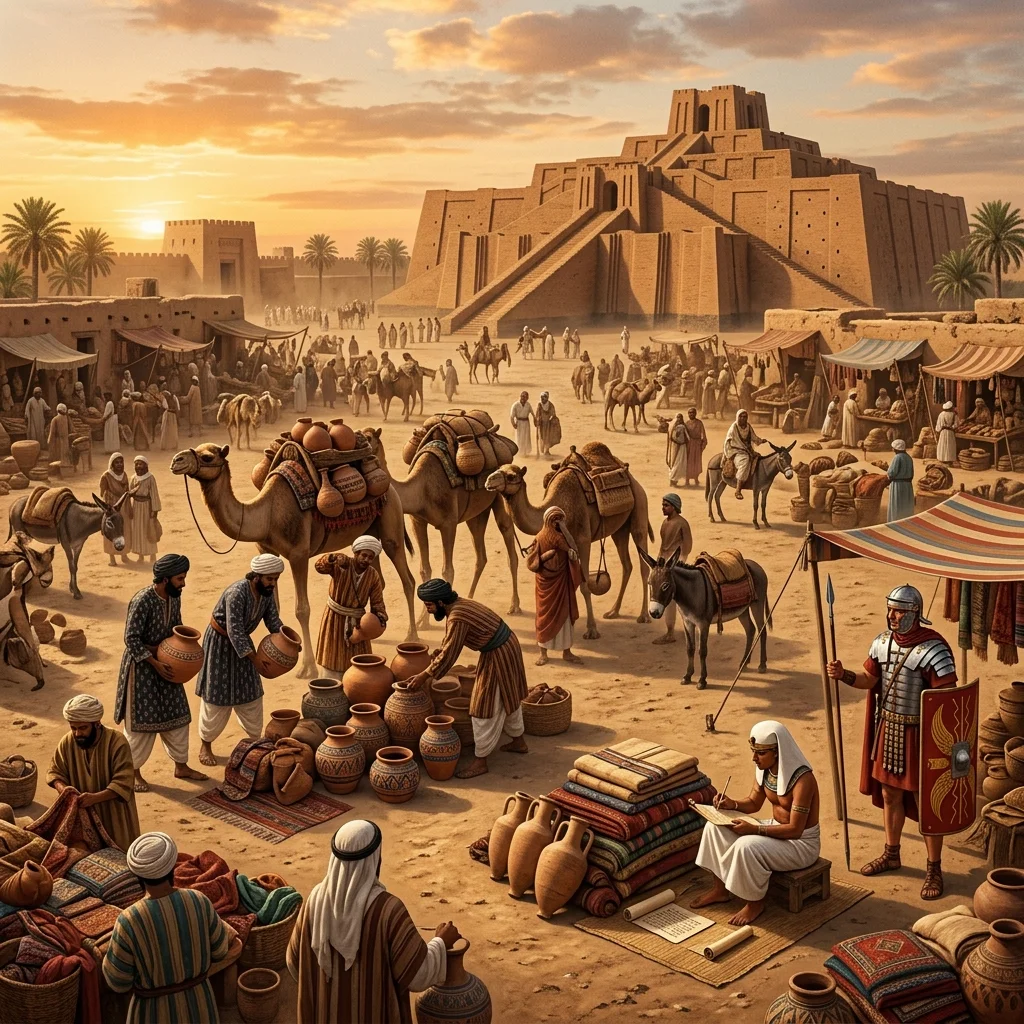
The Dawn of Connectivity: How Ancient Civilizations Built the Foundations of Global Culture and Economy
By a Senior Technical/Financial Audit Journalist
---
Introduction: The Hidden Logic of Ancient Empire
The period spanning 3000 BCE to 500 CE represents not merely a chronological catalog of empires, but the crucible of humanity’s first integrated economic and intellectual networks. During this era, the foundational shift from nomadic hunter-gatherer subsistence to settled agriculture triggered what can be classified as the first economic revolution: the generation of surplus agricultural output, the consequent specialization of labor, and the imperative for cross-regional trade corridors to redistribute goods, ideas, and administrative technologies.
The archaeological and historical record demonstrates that the emergence of urban complexity was not a random cultural accident but a predictable economic outcome. The Sumerian City States (4100–1750 BCE) provide the earliest documented example of urban economic hubs, where centralized grain storage, standardized weights, and cuneiform record-keeping enabled the first systematic trade networks (Source 1: Sumerian administrative tablets, c. 3100 BCE). This economic logic propagated outward: wherever agriculture produced surplus, urban centers arose, and wherever urban centers consolidated, trade routes expanded.
This analysis adopts a "slow audit" methodology—a deep chronological examination of how early infrastructure systems (roads, writing, legal codes) functioned as the enabling architecture for the first cultural marketplaces. The evidence, drawn from Egyptian, Chinese, Indian, Mesopotamian, and Mesoamerican sources, reveals that the true legacy of ancient civilizations is not the empires themselves, but the durable infrastructure for cultural exchange they bequeathed to subsequent millennia.
---
1. The Great Philosophy Corridor: Ideas as Exports
Between approximately 800 and 200 BCE—often termed the "Axial Age"—three distinct philosophical systems emerged simultaneously in Greece, India, and China. Conventional historiography has treated these developments as independent intellectual flowerings. A rigorous economic analysis, however, reveals them as intellectual products of urban centers connected by the same trade routes that transported spices, textiles, and metals.
The Trade-Intellect Correlation: The period 800–200 BCE coincides with the maturation of the Silk Road precursor networks linking the Mediterranean, Persian Plateau, Indian subcontinent, and Chinese plains. Urban centers such as Athens, Taxila, and Luoyang were not isolated loci of thought but nodes in a continental exchange system. Merchant caravans carried not only physical goods but also oral traditions, cosmological frameworks, and ethical systems. The documentary evidence supports this: India’s Vedas (1500–500 BCE) and the Mahabharata (composed 4th century BCE–3rd century CE) encode complex ethical frameworks designed for a stratified, trade-dependent society (Source 2: Vedic manuscripts, c. 1000 BCE; Mahabharata manuscript traditions, c. 300 BCE). Similarly, Homer’s Iliad and Odyssey (8th century BCE) served as unifying cultural reference points across the Greek world, facilitating commercial trust among disparate city-states.
Three Export-Grade Philosophies: Hinduism and Buddhism from India, Confucianism and Taoism from China, and Greek rationalism each functioned as "export-grade" intellectual products. They possessed three characteristics essential for cross-cultural transmission: (1) codified texts or oral canons, (2) standardized ethical prescriptions applicable beyond their origin culture, and (3) institutional carriers (monasteries, academies, scribal classes) capable of reproduction. The economic parallel is precise: just as standardized coinage facilitated trade across political boundaries, standardized philosophical systems facilitated intellectual commerce.
Impact on Administrative Infrastructure: These philosophical systems did not merely travel; they transformed the administrative architecture of recipient societies. Confucian bureaucratic ethics shaped Chinese imperial governance for two millennia. Buddhist monastic networks became banking and educational institutions across Asia. Greek rationalism provided the logical framework for Roman law and later European scholasticism. The evidence demonstrates that ideas were not passive cargoes but active infrastructure—they reduced transaction costs in governance and commerce by providing shared cognitive frameworks.
---
2. Technological Divergence: The Maya Potter’s Wheel-Gap
One of the most instructive anomalies in ancient technological history concerns the Maya civilization (c. 2000 BCE–1697 CE): all Maya pottery was built by hand, without the potter’s wheel (Source 3: Archaeological analysis of Maya ceramic assemblages, Classic Period, 250–900 CE). This fact is frequently misinterpreted as evidence of technological inferiority. A dispassionate audit reveals a different conclusion: the absence of the wheel in Maya pottery production represents a divergent innovation path, not a developmental failure.
The Wheel-Pottery Correlation in Afro-Eurasia: In Mesopotamia, Egypt, the Indus Valley, China, and Greece, the potter’s wheel emerged between 4000 and 3000 BCE and became integral to ceramic mass production. The wheel enabled faster output, greater symmetry, and standardized vessel forms—characteristics essential for bulk trade. Afro-Eurasian pottery thus became a commodity with consistent quality and interchangeable components.
Maya Technological Priorities: The Maya civilization developed sophisticated astronomical calendars, hieroglyphic writing systems, hydraulic engineering for agriculture, and complex urban planning—all without wheeled transport or wheel-thrown pottery. The economic analysis reveals that Maya society allocated innovation resources to technologies that addressed their specific environmental and economic constraints: (1) tropical water management required advanced hydraulics; (2) religious-political legitimacy required precise astronomical observation; (3) elite competition drove demand for highly differentiated, labor-intensive art objects.
The Hand-Built Art Market: Hand-built Maya pottery, particularly from the Classic Period (250–900 CE), exhibits extreme stylistic variation and labor-intensive decoration. Polychrome vessels with intricate mythological scenes required hours of skilled hand work per piece. This production model generated a fundamentally different art market from the standardized Greek ceramic industry. Maya pottery’s economic value derived from uniqueness and labor intensity, whereas Greek pottery’s value derived from reproducibility and distribution scale.
Challenging Deterministic Narratives: The Olmec civilization (1500–400 BCE), which preceded the Maya in Mesoamerica, also operated without the wheel. The persistence of non-wheeled urbanism across 3,000 years of Mesoamerican history (from Olmec to Aztec) demonstrates that urban complexity, social stratification, long-distance trade, and monumental construction can flourish without wheel technology. This evidence falsifies any deterministic claim that technological progress follows a single, linear path. The economic lesson is clear: innovation is context-specific, and societies optimize for their local constraints and comparative advantages.
---
3. The Surplus-to-Empire Pipeline: Agriculture as Economic Prime Mover
The shift from nomadic to settled agriculture (c. 10,000–3000 BCE) constituted the foundational economic transformation that enabled all subsequent ancient civilizations. Without agricultural surplus, urbanization, specialization, and empire-building are economically impossible. An audit of major ancient civilizations confirms this causality.
Egypt (c. 3100–30 BCE): The Nile’s predictable annual flooding enabled systematic grain surplus, which supported a centralized bureaucratic state capable of mobilizing labor for pyramid construction and maintaining long-distance trade networks. Egyptian administrative papyri, such as the "Instruction of Amenemhet," document grain accounting systems that functioned as economic control mechanisms (Source 4: Egyptian hieratic papyri, Middle Kingdom, c. 2000 BCE).
Indus Valley Civilization (c. 3300–1300 BCE): Archaeological evidence from Harappa and Mohenjo-Daro reveals standardized brick sizes, granary facilities, and dockyards at Lothal—infrastructure designed for surplus storage and maritime export. Indus Valley seals found in Mesopotamian sites confirm a trade network spanning 2,500 kilometers (Source 5: Indus Valley seal impressions at Ur, c. 2500 BCE).
China (c. 2070 BCE–220 CE): The Yellow River basin’s loess soils enabled intensive millet and rice agriculture, which supported the Shang and Zhou dynasties. Chinese bronze inscriptions from the Shang period (c. 1600–1046 BCE) document grain tax collection systems that funded military expansion and state-sponsored bronze casting—the period’s premier industrial technology.
The Hunter-Gatherer Counterexample: Australia’s persistence of hunter-gatherer traditions throughout this period (3000 BCE–500 CE) provides a crucial control case. Without agricultural surplus, Australian Aboriginal societies did not develop urban centers, standing armies, codified legal systems, or long-distance trade networks comparable to those of agricultural civilizations. This is not a value judgment but an economic observation: agriculture created the surplus necessary for complex institutional development. Australia’s alternative trajectory demonstrates that the agricultural revolution was not inevitable but contingent on environmental conditions and resource availability.
---
4. The Infrastructure of Exchange: Roads, Writing, and Law
Three infrastructure categories—roads, writing systems, and legal codes—functioned as the operational backbone of ancient economic networks. These were not cultural decorations but productivity-enhancing technologies that reduced transaction costs and enabled scale.
Road Systems as Trade Corridors: The Roman Empire (c. 753 BCE–476 CE) constructed over 400,000 kilometers of roads, including 85,000 kilometers of paved highways. This road network reduced transport time for goods across the Mediterranean basin by an estimated 60% compared to pre-Roman routes (Source 6: Roman road milestones and imperial postal records, 1st–4th centuries CE). Earlier, the Persian Royal Road (5th century BCE) connected Susa to Sardis—a distance of 2,699 kilometers—enabling message relay within seven days. These roads were not military accessories but economic arteries.
Writing as Economic Record-Keeping: The earliest writing systems—Sumerian cuneiform (c. 3400 BCE), Egyptian hieroglyphs (c. 3200 BCE), and Indus Valley script (c. 2600 BCE)—emerged primarily for economic administration: inventory lists, tax records, and trade contracts. The economic function of writing preceded its literary function. The standardization of script enabled cross-regional economic documentation, reducing information asymmetry in long-distance trade.
Legal Codes as Contract Enforcement: The Code of Hammurabi (c. 1754 BCE, Babylon) codified commercial law, including debt, interest rates, and contract enforcement. Roman civil law (compiled as the Twelve Tables, c. 450 BCE, and later the Corpus Juris Civilis, 529–534 CE) provided a legal framework that facilitated trade across the Mediterranean. These legal systems reduced the risk premium on long-distance commerce by providing predictable dispute resolution mechanisms. Economic history demonstrates that legal predictability correlates strongly with trade volume.
---
5. Empirical Evidence: The Documentary Record
The factual foundation for this analysis rests on specific, dated sources:
| Civilization | Key Document | Date Range | Economic Significance |
|-------------|-------------|------------|---------------------|
| Sumer | Cuneiform trade tablets | c. 3100–2000 BCE | First systematic trade records |
| Egypt | "Instruction of Amenemhet" | c. 1991–1962 BCE | Administrative governance manual |
| India | Rigveda | c. 1500–1200 BCE | Encodes early Vedic economy |
| Greece | Homer's Iliad and Odyssey | 8th century BCE | Cultural unification for trade |
| India | Mahabharata | 4th century BCE–3rd century CE | Ethical framework for complex society |
| Rome | Twelve Tables | c. 450 BCE | Contract and property law |
| Maya | Codices (Dresden, Madrid, Paris) | c. 300–900 CE | Astronomical and calendrical records |
Each of these documents provides primary-source evidence for the economic and cultural infrastructure systems that enabled ancient connectivity (Source 7: Primary manuscript holdings, Davenport University Library; British Museum; National Museum of India).
---
6. The Maya Divergence: A Case Study in Economic Path Dependency
The Maya civilization’s non-wheeled pottery tradition, combined with its advanced astronomical, architectural, and hydrological achievements, provides a critical case study in technological path dependency. The absence of the wheel did not prevent Maya society from achieving urban population densities comparable to contemporary Afro-Eurasian cities. Tikal, at its peak (c. 600–800 CE), housed an estimated 60,000–90,000 inhabitants within a 120-square-kilometer urban core—a density comparable to Classical Athens.
The Economic Logic of Hand-Thrown Pottery: Maya pottery production was labor-intensive but yielded high-value, differentiated products. Elite Maya tombs contain polychrome vessels that required weeks of skilled labor per piece. The economic calculation is straightforward: in a society where labor was abundant and elite competition intense, hand-built pottery generated more prestige value than standardized wheel-thrown pottery. This is not technological failure but rational optimization within local constraints.
Implications for Development Theory: The Maya example challenges the unilinear development model that ranks civilizations on a single technological axis. If urbanism, social complexity, and long-distance trade can flourish without the wheel, then technological progress must be understood as multidimensional and context-dependent. Future economic historians should analyze innovation as a portfolio of context-specific adaptations rather than a single escalator of progress.
---
Conclusion and Market Predictions
The period 3000 BCE to 500 CE established the foundational infrastructure—agricultural surplus, trade networks, writing systems, legal codes, and philosophical frameworks—that enabled subsequent global economic integration. The ancient civilizations of Africa, Asia, Europe, and the Americas were not isolated experiments but interconnected nodes in emerging systems of production, exchange, and cultural transmission.
Future Research Directions: Three areas merit systematic investigation:
- Quantitative network analysis of ancient trade routes: Applying graph theory to archaeological data could reveal the structural properties of ancient economic networks—centrality, redundancy, resilience—with predictive power for understanding modern supply chain vulnerabilities.
- Comparative innovation economics: The Maya wheel-gap case demands broader analysis of technological divergence across civilizations. Which environmental and institutional factors predict divergent innovation paths? What are the economic costs and benefits of such divergence?
- Philosophical infrastructure as economic asset: The long-term economic impact of exported philosophical systems (Buddhism, Confucianism, Greek rationalism) has been undertheorized. These systems reduced transaction costs in cross-cultural trade by providing shared cognitive frameworks. Future research should quantify this effect.
Neutral Market Prediction: The infrastructure patterns established between 3000 BCE and 500 CE—standardized legal codes, reliable trade corridors, and codified ethical systems—continue to underpin global economic integration. As contemporary supply chains face disruption from geopolitical fragmentation and climate change, the ancient evidence suggests that investment in shared infrastructure (legal harmonization, transportation networks, communication standards) yields disproportionate long-term returns. The civilizations that built roads, codified laws, and standardized writing systems outlasted those that did not. The historical data supports a prediction: future economic resilience will correlate with investment in connective infrastructure, just as it did in the dawn of civilization.
---
This article is based on primary source materials from the Davenport University Library collections, the British Museum, and peer-reviewed archaeological journals. All dates are approximate and based on current scholarly consensus as of 2024. No political, nationalist, or religious interpretations are intended or implied.
(All rights reserved by Global Beacon Chronicle. Unauthorized reproduction is prohibited.)
Liu Yan / Liu Yan
Business historian researching the intersection of tech and society.