Beyond the $1.25B Deal: How Uber''s Rivian Investment Reveals the New Robotaxi
Uber''s planned $1.25 billion investment in Rivian, contingent on milestones

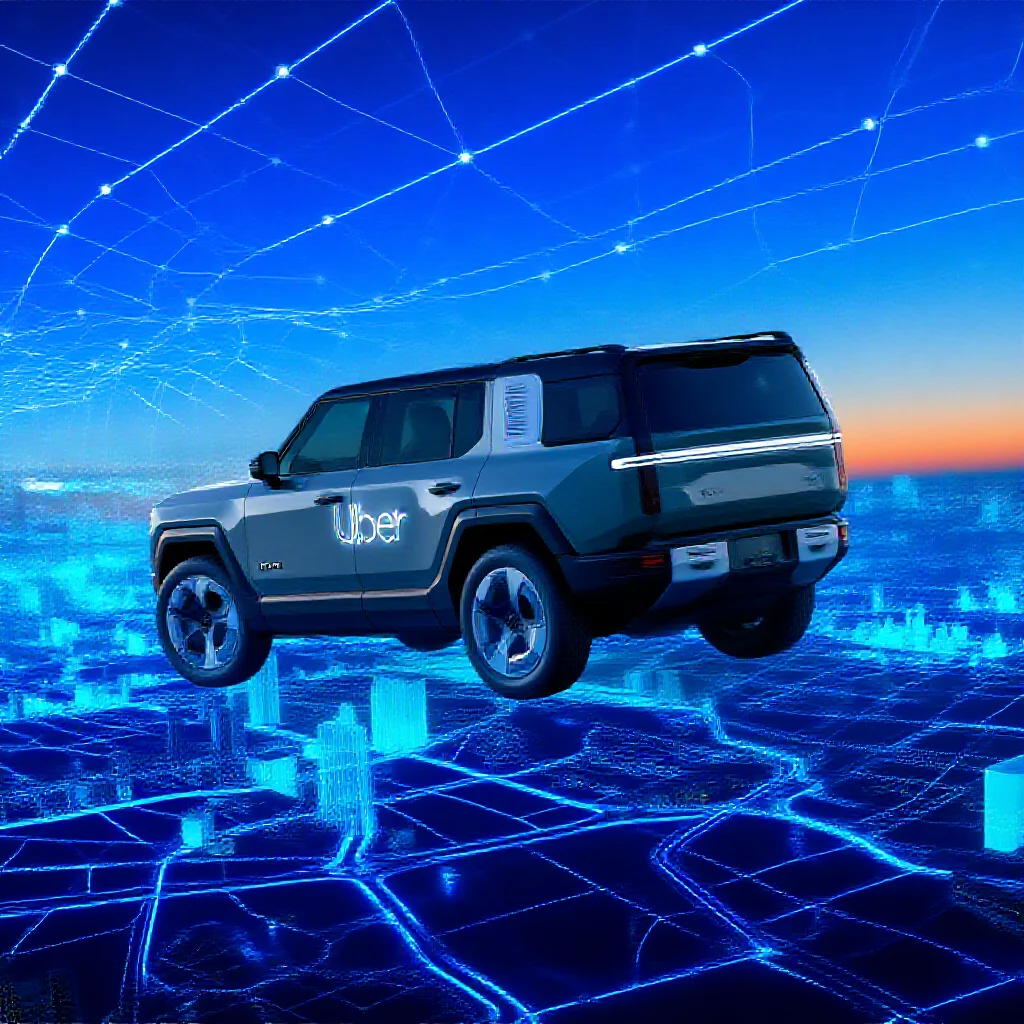
Beyond the $1.25B Deal: How Uber's Rivian Investment Reveals the New Robotaxi Supply Chain War
Opening Summary
Uber Technologies Inc. has structured a commercial agreement with electric vehicle manufacturer Rivian Automotive Inc. that includes a conditional investment of up to $1.25 billion and a commitment for Rivian to supply vehicles for Uber’s future robotaxi network. (Source 1: [Primary Data]) The capital infusion is contingent upon Rivian meeting specific, undisclosed milestones. This transaction extends beyond a standard fleet purchase or minority stake, representing a strategic maneuver to secure a dedicated hardware pipeline for autonomous ride-hailing services.
The Surface Deal: Unpacking the $1.25 Billion Milestone-Based Agreement
The announced figure of $1.25 billion is not an immediate equity purchase. It is a performance-linked capital infusion, structured as an investment "up to" that amount. (Source 1: [Primary Data]) This conditional framework creates a dual-purpose instrument: it functions as a financial lifeline for Rivian, providing capital tied to operational achievements, while simultaneously guaranteeing Uber a prioritized vehicle pipeline.
The use of contingencies serves as a primary risk-management tool for Uber. By linking capital deployment to Rivian’s execution on production targets, technology integration, or other benchmarks, Uber insulates itself from the execution risk inherent in a capital-intensive automotive startup. The agreement transforms a potential vendor relationship into an aligned partnership, where Rivian’s success in delivering capable vehicles directly enables its access to Uber’s capital.
The Hidden Logic: Why Uber is Betting on a Dedicated Hardware Partner
The strategic imperative for this deal exposes a fundamental flaw in applying a pure "asset-light" model to autonomous mobility. While Uber historically avoided owning vehicle assets, the core product of a robotaxi service is the vehicle itself. Outsourcing this hardware to potential competitors or indifferent partners introduces existential strategic risk.
Uber’s dilemma has been dependency. Traditional automakers like General Motors or Toyota have their own autonomous and mobility ambitions (e.g., Cruise, now paused). A competitor like Tesla is developing its own integrated robotaxi network. Relying on such entities for the most critical physical component of its future service would cede strategic control. The partnership with Rivian establishes a "captive supplier" dynamic. Uber secures a strategic ally deeply incentivized by the investment and volume commitment, without incurring the full cost and complexity of in-house manufacturing, as seen with Waymo’s vertical integration efforts.
The New Battlefront: The Robotaxi Supply Chain War
This agreement signals the opening of a new competitive front: the battle for control over the autonomous vehicle supply chain. The competition has historically focused on software superiority and regulatory permits. However, the emerging scarcity is purpose-built, autonomous-ready electric vehicles designed for maximum utilization and durability.
The Uber-Rivian deal exerts pressure across the ecosystem. It forces other autonomous vehicle (AV) technology players, such as Cruise or Waymo, to evaluate the security of their own vehicle supply lines, potentially accelerating exclusive alliances with other automakers or EV startups. For traditional automotive original equipment manufacturers (OEMs), the long-term implication is profound: they risk being relegated to the role of contract manufacturers for technology platforms that control the customer relationship and data. Controlling the integration point of autonomy-specific hardware and software into the vehicle platform becomes a critical strategic asset.
Evidence & Verification: Scrutinizing the Strategic Pivot
This strategic pivot is contextualized by Uber’s historical challenges. Past relationships with automakers for vehicle supply or financing were transactional. The 2020 sale of its Advanced Technologies Group (ATG) to Aurora Innovation indicated a shift away from in-house autonomous software development, creating a greater need for a reliable, integrated hardware partner. For Rivian, the agreement provides a crucial anchor customer beyond its existing major backer, Amazon, for its commercial vehicle platform, validating its production capabilities and diversifying its revenue base.
Financial analysis underscores the logic. The capital intensity of scaling a robotaxi fleet is monumental. Securing a preferential supply agreement through a milestone-linked investment can be valued not just as equity, but as an off-balance-sheet strategy to lock in future capacity at a predictable cost. This model finds validation in smaller-scale precedents, such as partnerships between AV tech companies like Mobileye and EV manufacturers for purpose-built autonomous vehicles.
Neutral Market Prediction
The Uber-Rivian agreement is likely a precursor to further industry consolidation and partnership formations along the autonomy value chain. The clear delineation is between integrated models (e.g., Tesla, potentially Waymo) and partnership ecosystems. The success of this model hinges on Rivian’s executional stability and its ability to produce a vehicle that meets the rigorous durability and technological integration requirements of a commercial robotaxi service. If successful, it will redefine the asset-light paradigm for mobility-as-a-service, proving that while fleets may not need to be owned, their supply must be strategically controlled. The ultimate competitive moat in autonomous ride-hailing may be forged not just in code, but in secured access to rolling hardware.
(All rights reserved by Global Beacon Chronicle. Unauthorized reproduction is prohibited.)
Wang Jing / Wang Jing
Capital markets analyst and CFA charterholder.