Beyond the $1.25B Deal: How Uber''s Rivian Bet Reshapes the Robotaxi Supply
Uber's planned $1.25 billion investment in Rivian, aimed at deploying up

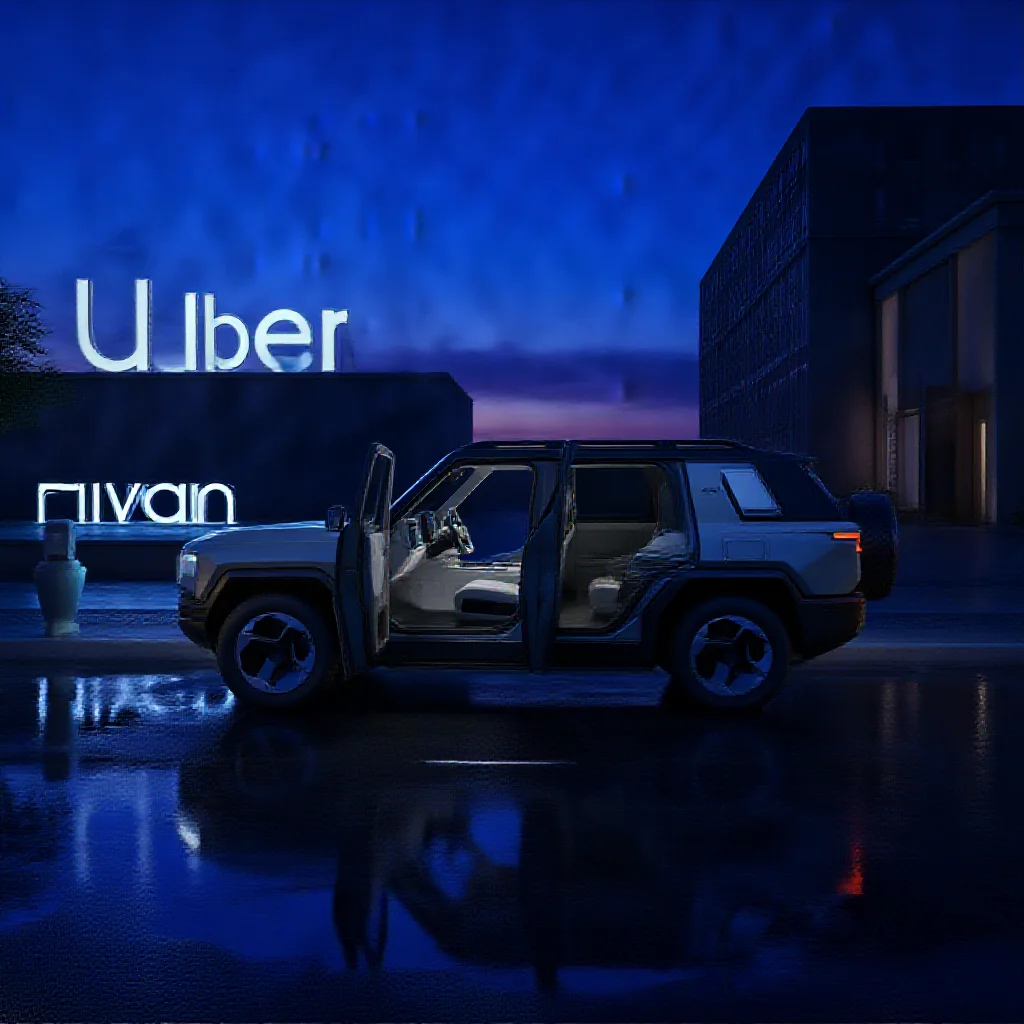
Beyond the $1.25B Deal: How Uber's Rivian Bet Reshapes the Robotaxi Supply Chain
Opening Summary
Uber Technologies Inc. has announced a conditional plan to invest up to $1.25 billion in Rivian Automotive Inc., with the objective of deploying up to 50,000 Rivian electric vehicles onto its network. (Source 1: [Primary Data]) The investment is structured to be contingent on Rivian meeting specific, undisclosed milestones, with vehicle deliveries projected to commence in 2025. (Source 2: [Primary Data]) This transaction extends beyond a conventional fleet procurement, representing a strategic reconfiguration of capital and supply chain strategy by a leading mobility-as-a-service provider.
The Surface Deal: Uber's $1.25B Fleet Gamble
The headline figures outline a significant capital commitment. The $1.25 billion investment, when divided by the 50,000-vehicle target, implies a substantial per-vehicle capital outlay by Uber. The conditional nature of the investment, tied to Rivian's performance milestones, functions as a risk mitigation tool, ensuring vehicle cost, performance, and delivery timelines align with commercial requirements before full capital deployment.The 2025 start date for deliveries is a strategic marker. This timeline coincides with projected industry inflection points for electric vehicle cost parity and scaling of autonomous driving subsystems. It is not merely a logistical target but a positioning move within a competitive landscape. This deal signifies a fundamental shift from Uber's historical asset-light, driver-owned vehicle model. The company is now directly committing capital to vehicle ownership, indicating a strategic pivot where control over core hardware is deemed a future competitive necessity.
The Hidden Logic: Securing the Robotaxi Hardware Moat
The transaction's core logic is a supply chain play. The global automotive industry is experiencing a scarcity of flexible, purpose-built electric vehicle platforms suitable for high-utilization robotaxi services. By securing access to up to 50,000 units from Rivian, Uber is attempting to lock in dedicated manufacturing capacity. This preempts potential constraints and insulates Uber from competitive bidding wars for similar vehicles.This move is a direct strategic response to looming competition. The prospective launch of Tesla's "Robotaxi Network" and the continued expansion of Waymo's vertically integrated service present a clear threat. Both competitors control or deeply influence their vehicle platforms. Uber's partnership with Rivian is an attempt to construct an analogous hardware moat, ensuring it has a designed-for-purpose vehicle optimized for network management, durability, and eventual autonomous integration. Rivian's expertise in commercial (Rivian Commercial Van) and adventure platforms suggests potential for a vehicle architecture emphasizing robustness, high uptime, and modular interiors—key attributes for a profitable robotaxi.
The Rivian Calculus: More Than a Capital Infusion
For Rivian, the agreement provides a critical anchor tenant. The commitment for up to 50,000 vehicles delivers production volume certainty, aiding in stabilizing its manufacturing ramp and improving economies of scale. It serves as a powerful validation of Rivian's technology and its B2B platform strategy, extending beyond consumer retail.The milestone-based structure of the investment creates a shared-risk framework. It incentivizes Rivian to meet stringent targets on vehicle cost, quality, and delivery schedules that align with Uber's operational economics. This clause protects Uber's capital while ensuring Rivian remains accountable for delivering a product that fits the commercial ride-hail use case, a departure from standard automotive OEM-fleet sales relationships. This partnership aligns with statements from Rivian's leadership on seeking strategic avenues to scale production and validate its business-to-business channel.
Deep Audit: The Unspoken Challenges and Industry Ripples
The unit economics present a primary challenge. Assuming the full $1.25 billion is deployed for the 50,000 vehicles, the implied cost is $25,000 per unit before operational expenses. Achieving profitability in ride-hail with a company-owned asset at this price point requires unprecedented vehicle utilization rates and durability. Industry benchmarks for driver-owned models may not translate directly, placing pressure on vehicle design for longevity and low maintenance.A significant timeline mismatch exists. Vehicles are scheduled to arrive starting in 2025, but widespread, geofence-unconstrained Level 4 autonomy is likely several years away. The interim use case for these vehicles must be defined. They will likely enter service as human-driven electric vehicles on the Uber network, serving to amortize costs, gather data, and refine operational processes before any autonomous retrofit. This phased approach mitigates risk but delays the full strategic payoff.
The partnership will send ripples through the automotive supplier ecosystem. Purpose-built robotaxis demand specialized components: redundant braking and steering systems, integrated sensor cleaning, and interior monitoring systems. This creates potential for a new tier of suppliers catering specifically to the mobility-as-a-service market, distinct from traditional automotive or consumer electronics suppliers.
Conclusion: A New Template for Mobility-as-a-Service
The Uber-Rivian partnership establishes a potential template for the future of mobility networks. It demonstrates a convergence where network operators, facing existential competition from vertically integrated rivals, must secure influence over their hardware supply chain. The success of this model hinges on Rivian's execution against its milestones and its ability to deliver a cost-effective, durable platform that meets the unrelenting demands of commercial service.The deal accelerates the formal bifurcation of the automotive market into consumer-focused and commercial-mobility segments. If successful, it will pressure other ride-hail and mobility companies to form similar strategic alignments, potentially reshaping relationships between automakers and service providers. The ultimate industry impact will be determined by the partnership's ability to navigate the intricate challenges of unit economics, technological integration, and scaled deployment over the coming decade.
(All rights reserved by Global Beacon Chronicle. Unauthorized reproduction is prohibited.)
Wang Jing / Wang Jing
Capital markets analyst and CFA charterholder.