Sicily''s Solar Surge: How a $177M EIB Deal Signals Southern Europe''s Energy
The European Investment Bank and Société Générale's $177 million financing

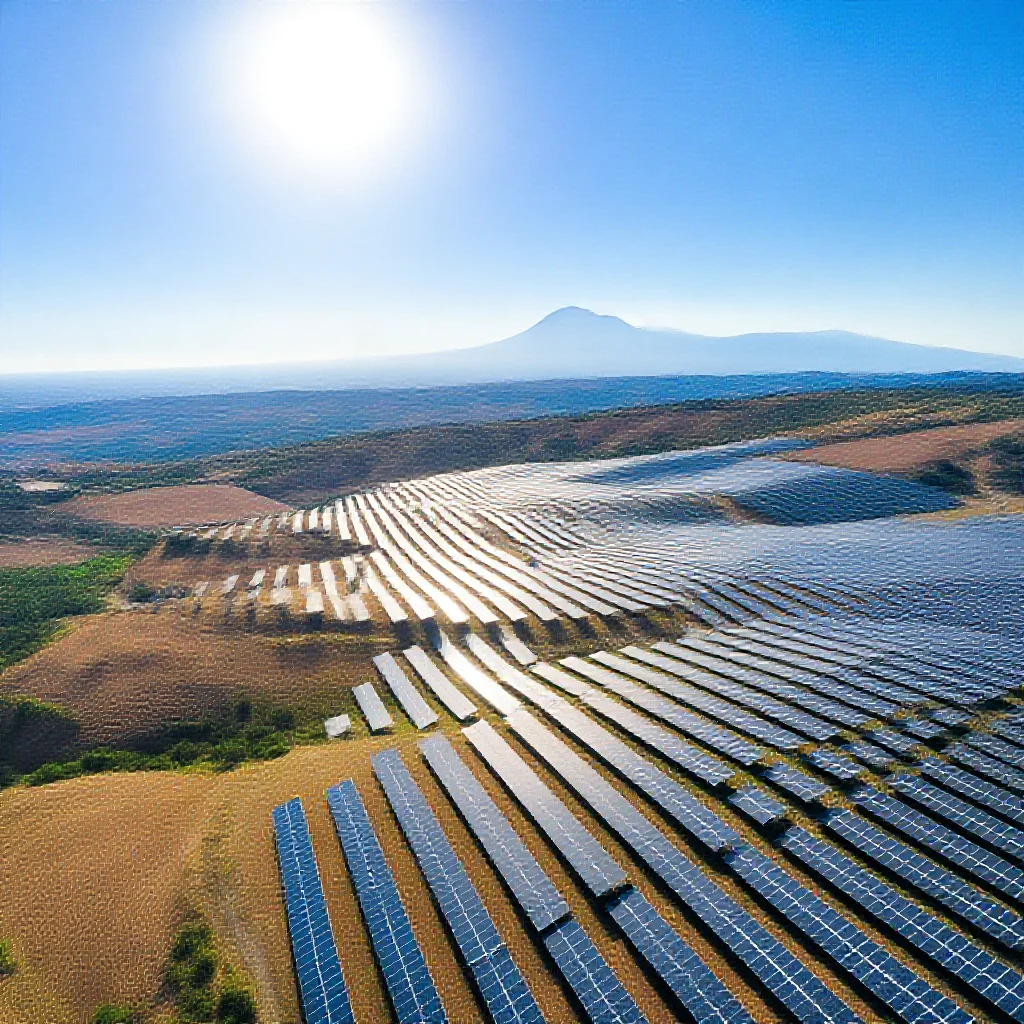
Sicily's Solar Surge: How a $177M EIB Deal Signals Southern Europe's Energy Transformation
Opening Summary
On April 8, 2026, the European Investment Bank (EIB) and Société Générale secured $177 million in financing for the Sand Solar Project, a 135-megawatt photovoltaic installation in Sicily, Italy (Source 1: [Primary Data]). This transaction represents a significant capital allocation toward utility-scale renewable infrastructure in Southern Europe. The project’s location and scale provide a concrete case study for analyzing strategic shifts in European energy policy, regional development economics, and grid modernization imperatives.
Beyond the Headline: The Strategic Calculus of a Sicilian Solar Farm
The disclosed $177 million financing figure extends beyond simple project capitalization. It functions as a measurable signal of institutional confidence in the bankability of large-scale renewables in the European Union’s cohesion regions. Sicily’s selection is not incidental. The island possesses a high solar irradiance profile, aligning with economic logic for generation efficiency. Its geographic position also suggests a dual utility: serving local and regional demand while potentially evolving into a node for future Mediterranean energy interconnectivity, linking North African renewable potential with Central European demand centers.This investment aligns with a discernible pattern in the EIB’s recent activity, characterized by a portfolio shift toward de-risking energy transition projects in regions targeted for economic convergence. The involvement of a major commercial bank, Société Générale, indicates a maturation of the project finance model for such assets, where public institutions like the EIB help catalyze private capital participation.
The Slow Analysis: Decoding Europe's Southern Energy Corridor Strategy
The Sand Solar Project can be audited as a keystone within a longer-term, strategic energy security architecture. Italy’s Piano Nazionale Integrato per l’Energia e il Clima (PNIEC) outlines specific decarbonization and capacity targets for 2030. A 135 MW installation constitutes an incremental but material contribution to these goals. The project’s output will directly offset natural gas-fired generation, reducing dependence on imported fossil fuels—a persistent vulnerability in the national energy balance.The infrastructure implications are systemic. Projects of this scale in the Mezzogiorno (Southern Italy) necessitate concurrent investment in grid modernization and storage capacity. The intermittent nature of solar generation requires reinforcement of transmission networks to transport power to demand centers and integration with storage or complementary generation sources to ensure grid stability. Therefore, the solar farm’s approval and financing likely predicate and justify parallel capital expenditures in enabling infrastructure, a multiplier effect often absent from headline project valuations.
The Unseen Ripple Effect: Supply Chain and Socioeconomic Implications
An analysis of procurement patterns for utility-scale solar in Europe indicates a continued reliance on a globalized supply chain, predominantly for photovoltaic modules. The Sand Solar Project will test whether local content requirements or economic advantages can stimulate segments of a regional PV manufacturing or servicing ecosystem in Sicily. The long-term operational phase will generate a specialized maintenance economy, creating skilled technical employment opportunities in a region grappling with elevated youth unemployment rates.Land use presents another critical variable. The deployment of large-scale solar infrastructure in historically agricultural regions like Sicily necessitates models for coexistence. Agrivoltaics—the dual use of land for energy generation and crop cultivation or livestock grazing—represents an evolving approach that could mitigate land-use conflict and preserve agricultural traditions while enabling the energy transition. The project’s implementation will serve as a practical test of this model’s viability in the Mediterranean context.
Verification and Future Trajectory: Scrutinizing the Deal's Foundations
Cross-referencing the EIB’s project database with Société Générale’s published sustainability commitments verifies the deal’s alignment with stated institutional mandates for climate action and regional development. The announced terms confirm the transaction’s role in the EIB’s climate bank roadmap and the commercial bank’s energy transition financing targets.A neutral risk assessment identifies several project-specific challenges. These include the logistical and environmental considerations of securing water resources for panel cleaning in an arid climate, potential bottlenecks in securing final grid connection agreements, and the inherent complexities of the Italian permitting process for large infrastructure. Successful navigation of these hurdles will influence the cost-effectiveness and replication potential of similar future projects.
Market and Industry Predictions
The financing of the Sand Solar Project is predictive of an accelerated investment trajectory in Southern European solar capacity. The convergence of high resource potential, strategic energy security policy, and available EU-backed financing mechanisms creates a favorable investment thesis. The market will monitor this project’s execution timeline and final capital efficiency as a benchmark. Subsequent projects in Italy, Spain, Greece, and Portugal will likely employ a similar financing structure, blending EU institutional capital with private debt. The long-term success of this strategy will be quantified by the sustained addition of renewable capacity without compromising grid reliability, ultimately determining the pace at which Southern Europe transforms from an energy importer to a renewable energy hub.
(All rights reserved by Global Beacon Chronicle. Unauthorized reproduction is prohibited.)
Wang Jing / Wang Jing
Capital markets analyst and CFA charterholder.