Resilience in Retail: How La-Z-Boy''s Supply Chain Strategy Defies Economic
While surging gas prices and geopolitical shocks like the Iran crisis typically

Resilience in Retail: How La-Z-Boy's Supply Chain Strategy Defies Economic Volatility
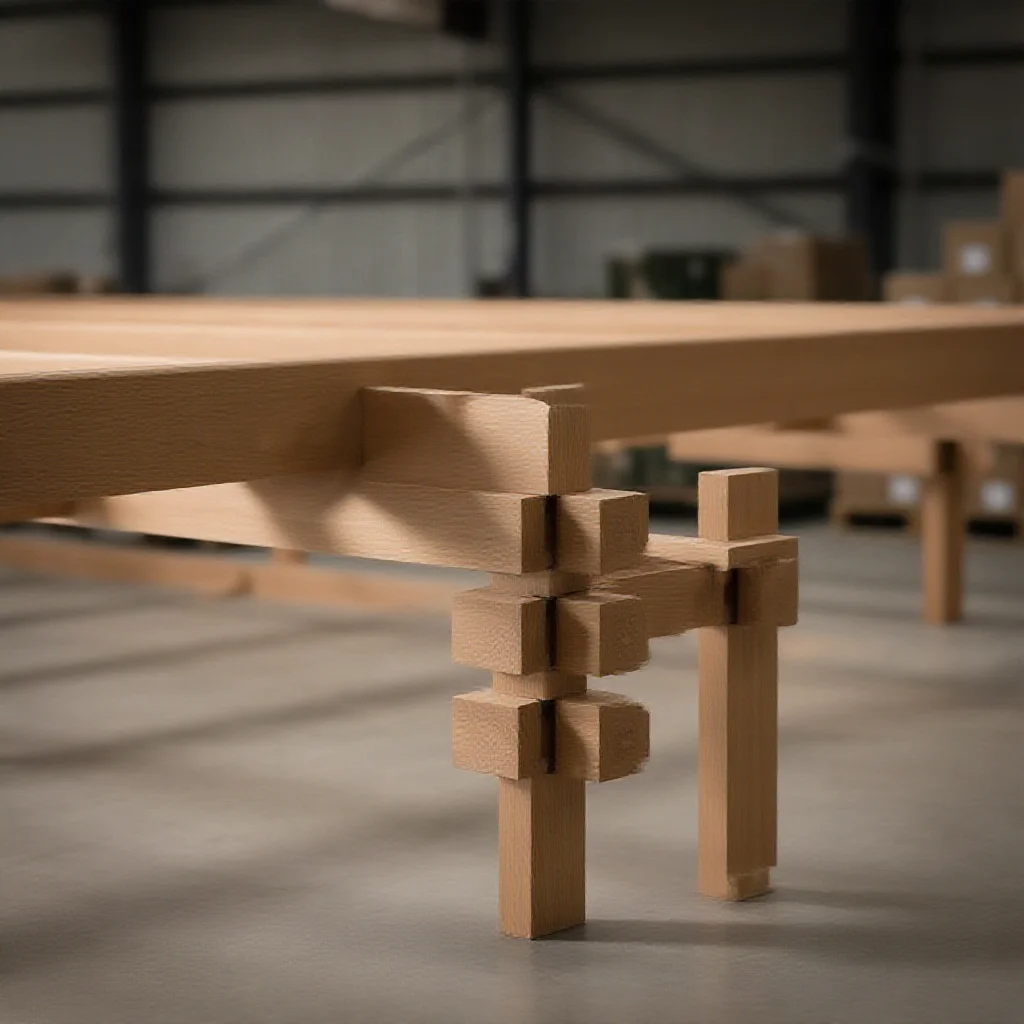
A minimalist, professional photograph from a low angle, focusing on the sturdy, interlocking wooden joints of a high-quality furniture frame, symbolizing a resilient supply chain. Soft, strategic lighting highlights the connections against a blurred background of a modern, well-organized warehouse.
The Anomaly: Stable Sales Amidst Macroeconomic Turbulence
Headline economic indicators present a challenging landscape for consumer-facing businesses. Surging gas prices increase household expenses and logistics costs. Concurrent geopolitical shocks, such as recent tensions involving Iran, typically disrupt global trade flows and consumer confidence. Within this context, the reported stable sales performance of furniture retailer La-Z-Boy presents a notable anomaly. This 35-year-old company's sales have not been rocked by these factors as of the latest report. This stability raises a core analytical question: does this resilience stem from industry-specific insulation, strategic operational foresight, or a temporary lag effect in consumer spending on durable goods? The case serves as a critical test for narratives of recession-proofing within the durable goods sector, where purchase cycles are inherently longer and less frequent.
A split-image graphic: left side showing a gas price sign with rising numbers, right side showing a calm, well-stocked furniture showroom.
Deconstructing the Resilience: Beyond the Price Tag
Initial analysis points beyond simple pricing power. The resilience appears structurally embedded in La-Z-Boy's operational model. The primary buffer is its supply chain architecture. The company sources products from multiple countries, a strategy that geographically diversifies risk. This multi-country sourcing acts as a shock absorber; a disruption in one region can be partially mitigated by shifting sourcing or production volume to another, insulating the company from regionalized geopolitical or economic shocks.
The company's pricing strategy also demonstrates calculated restraint. Rather than implementing blanket price increases, La-Z-Boy has raised prices on some items selectively. This targeted approach suggests a focus on high-demand products or those disproportionately affected by logistics cost inflation. The strategy aims to preserve overall value perception among consumers while managing margin pressure on specific SKUs. Furthermore, as a seller of big-ticket, long-lifecycle items, La-Z-Boy benefits from a product dynamic where purchases are often planned and saved for over time. This can decouple buying decisions from short-term economic pulses, leveraging brand equity and customer loyalty built over decades.
An illustrated global map with multiple arrows flowing from different continents (e.g., Asia, North America, Europe) converging into a single, stable icon of a furniture retailer.
The Deep Audit: Is This a Sustainable Model or a Calm Before the Storm?
A slow, forensic analysis is required to assess the model's sustainability. The first line of inquiry examines the long-term cost structure. While diversified sourcing avoids single-point failures, it does not eliminate global inflationary pressures. The critical question is whether suppliers are absorbing higher logistics and material costs, or if this model merely delays an inevitable, broader price pass-through to consumers in future quarters. Embedded verification from industry cost indices and reports from entities like Furniture Today or the American Home Furnishings Alliance would be necessary for a full assessment.
Second, the multi-country model contains hidden vulnerabilities. Diversification is not immunity. An over-reliance on any single region within the portfolio, or exposure to a common global choke point like container shipping or a key raw material, could still cause systemic strain. The model's strength is in mitigating specific, localized disruptions, not a synchronized global downturn.
Finally, benchmarking is essential. Is La-Z-Boy's performance unique, or are other furniture retailers with concentrated supply chains suffering in silence? Comparative analysis with peer financial disclosures and logistics cost data would determine if this is a case of superior strategy or an industry-wide phenomenon masked by aggregation.
A conceptual image of a balanced scale. One side holds a globe with multiple pins; the other side holds a stack of coins and a rising graph, slightly tilted.
The Strategic Imperative: Lessons for Durable Goods Retail
The La-Z-Boy case, pending deeper industry benchmarking, suggests a potential playbook for durable goods retail in an unstable global economy. The strategic imperative centers on proactive supply chain design over reactive crisis management. The core tenets appear to be: deliberate geographic diversification of sourcing to build in redundancy; nuanced, data-driven pricing that protects brand value while addressing cost pressures; and the cultivation of deep brand equity that fosters customer loyalty beyond transactional price sensitivity.
This model does not promise immunity from macroeconomic forces. Instead, it offers operational agility—the capacity to absorb, adapt, and respond to shocks with more options than a centralized, optimized-for-cost supply chain. The future trend for the sector will likely see a reevaluation of the efficiency-versus-resilience trade-off. Companies may accept marginally higher baseline costs for the strategic optionality that a diversified network provides. The ultimate market prediction is that volatility will remain a persistent feature. Retailers whose operational models are hardened against discrete shocks, like La-Z-Boy's appears to be, may demonstrate more predictable performance curves, attracting investor premium for reduced operational risk in the durable goods space.
(All rights reserved by Global Beacon Chronicle. Unauthorized reproduction is prohibited.)
Wang Jing / Wang Jing
Capital markets analyst and CFA charterholder.