Beyond the Upgrade: Why Freshpet''s ''Durable Moat'' Signals a Shift in Pet
TD Cowen's recent upgrade of Freshpet from Hold to Buy, with a $150 price

Beyond the Upgrade: Why Freshpet's 'Durable Moat' Signals a Shift in Pet Food Economics
A stock rating upgrade is a routine event in financial markets. On May 21, 2024, TD Cowen upgraded Freshpet Inc.’s stock rating from Hold to Buy and established a price target of $150 (Source 1: [Primary Data]). The accompanying rationale, however, was not routine. The analyst’s citation of a “significant long-term growth opportunity” and a “durable competitive moat” provides a diagnostic lens for a fundamental evolution within the $50+ billion pet food industry. This analysis examines the structural, rather than speculative, foundations of that assessment.
The Signal in the Noise: Decoding the Analyst's Verdict
The timing of the upgrade is a strategic marker. Issued in May 2024, it positions ahead of traditional consumer spending cycles and anticipates inflection points in retail strategy for the latter half of the year. In the lexicon of financial analysis, a “significant long-term growth opportunity” implies a total addressable market expansion, not merely incremental market share capture. A “durable competitive moat” denotes structural business advantages that are capital-intensive and time-consuming for rivals to replicate. The upgrade, therefore, functions as a validation of business model resilience against macroeconomic and competitive pressures. It signals a transition for Freshpet from a high-growth, high-risk narrative to one of scaled execution within a defensible position.
Deconstructing the 'Durable Moat': Freshpet's Unseen Infrastructure
The durability of Freshpet’s moat is not rooted in brand sentiment alone, but in tangible, integrated infrastructure.
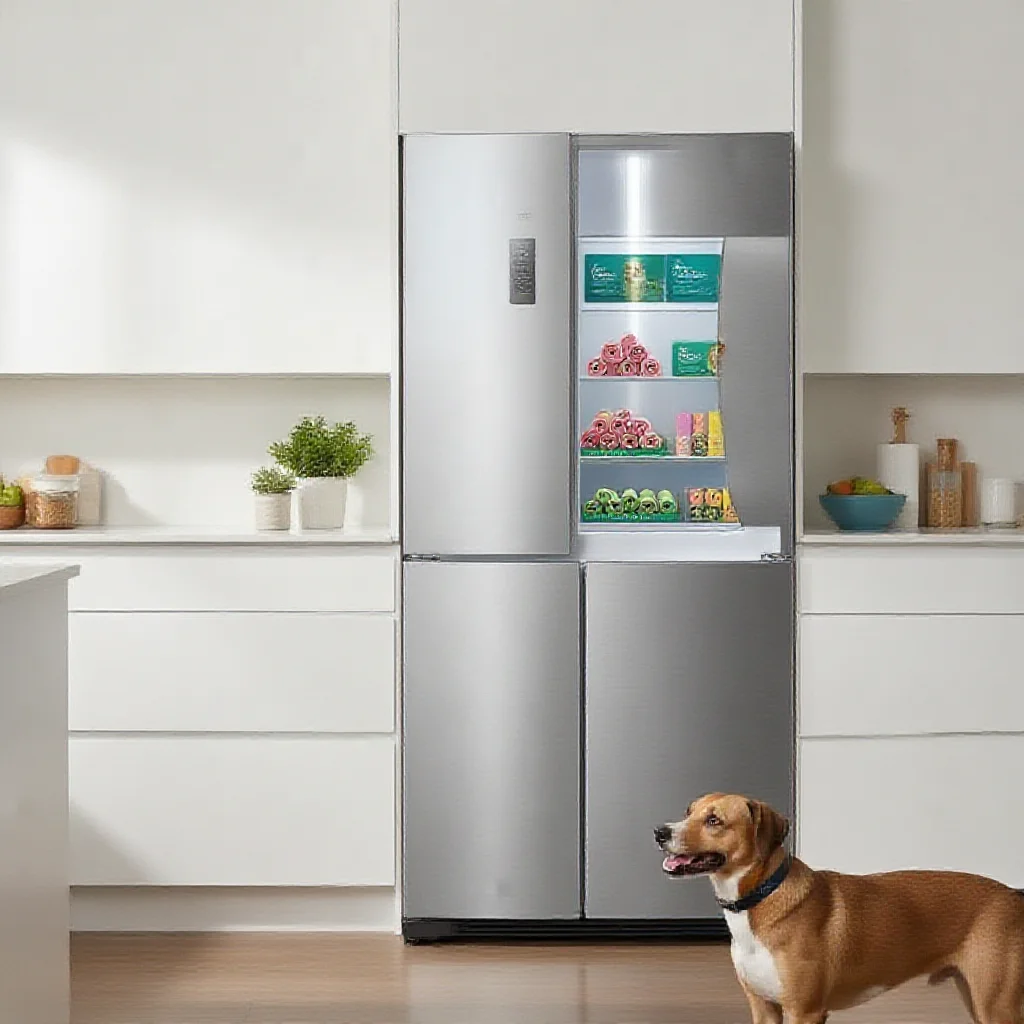
The Cold Chain Barrier: The most formidable component is the owned and managed cold chain. From manufacturing to the in-store refrigerator—often a dedicated Freshpet unit—the company controls the critical temperature-controlled logistics. This creates a high-cost entry wall, as competitors must invest billions to replicate a parallel refrigerated network or rely on third-party logistics with lesser control and higher marginal cost.
The Ecosystem Lock-in: The model operates on an embedded “razor-and-blades” dynamic. The proprietary refrigerators in retail stores (the “razor”) necessitate the consistent purchase of Freshpet rolls (the “blades”). This ensures recurring revenue and minimizes shelf space competition. The consumer’s home refrigerator becomes the final node in this controlled ecosystem, reinforcing habit and brand loyalty.
Supply Chain Integration: Vertical integration over ingredient sourcing and manufacturing reduces exposure to commodity volatility and ensures quality specification. This control directly supports the marketing claim of human-grade ingredients, a key trust factor. The company’s direct-to-consumer communication verifies this supply chain integrity, creating a feedback loop that traditional mass-market brands, reliant on co-packers and commodity inputs, cannot easily emulate.
The Ripple Effect: Implications for the Pet Food Supply Chain
The ascendance of a vertically integrated, fresh-food model exerts pressure across the traditional pet food economy.
Ingredient Network Disruption: The shift toward human-grade, fresh proteins and vegetables disrupts established, commodity-based supply networks that service dry and wet food production. Ingredient suppliers face a bifurcating demand: bulk commodities for traditional kibble versus higher-specification, traceable ingredients for fresh formats.
Retail Shelf Wars: The primary retail battleground shifts from the center aisle to the perimeter cooler. Securing and expanding refrigerated footprint is now a critical strategic objective, marginalizing the growth potential of center-aisle dry food. Retailers are incentivized to partner with Freshpet due to the higher velocity and margin per cubic foot of cooler space compared to traditional alternatives. Industry reports on pet humanization trends corroborate this shift, with refrigerated food’s growth rate consistently outpacing the stagnation of the dry food category (Source 2: [Industry Data]).
The Long Game: Sustainability and Scaling the Model
The long-term viability of the moat hinges on scalability and adaptive resilience.
Vulnerability Assessment: Scalability of the capital-intensive cold chain presents both a barrier and a challenge. Economic sensitivity remains a factor, though the 2008-2009 period demonstrated the relative recession-resistance of premium pet spend. The largest threat may emerge from retailer-developed private-label fresh food, though the required investment in supply chain and brand trust presents a significant hurdle.
The Sustainability Angle: Operational advantages may extend into environmental, social, and governance (ESG) factors. Potential waste reduction through precise portioning, compared to dry food overconsumption, and a focus on sustainable sourcing could evolve into regulatory and consumer advantages, further solidifying the brand’s premium positioning.
The Endgame Vision: The Freshpet model presents a potential blueprint for the future of premium consumables: deep vertical integration, ecosystem control, and a supply chain built for transparency and quality. Its success may predicate a more consolidated industry structure where the winners are those who control the means of production and distribution, not just the brand marketing.
The TD Cowen upgrade is a financial marker of a commercial transition. The “durable moat” is a structural reality built on cold chain infrastructure, supply chain control, and a locked-in retail footprint. The consequent prediction is a continued reallocation of capital within the pet food industry, favoring integrated operators and pressuring traditional, asset-light brand houses. The economics of pet food are being rewritten, not on the packaging, but in the logistics network and the refrigerator case.
(All rights reserved by Global Beacon Chronicle. Unauthorized reproduction is prohibited.)
Wang Jing / Wang Jing
Capital markets analyst and CFA charterholder.