The Fed''s 2026 Rate Cut: A Signal of Prolonged Restrictive Policy and Economic
The Federal Reserve's decision to hold rates steady while projecting a single

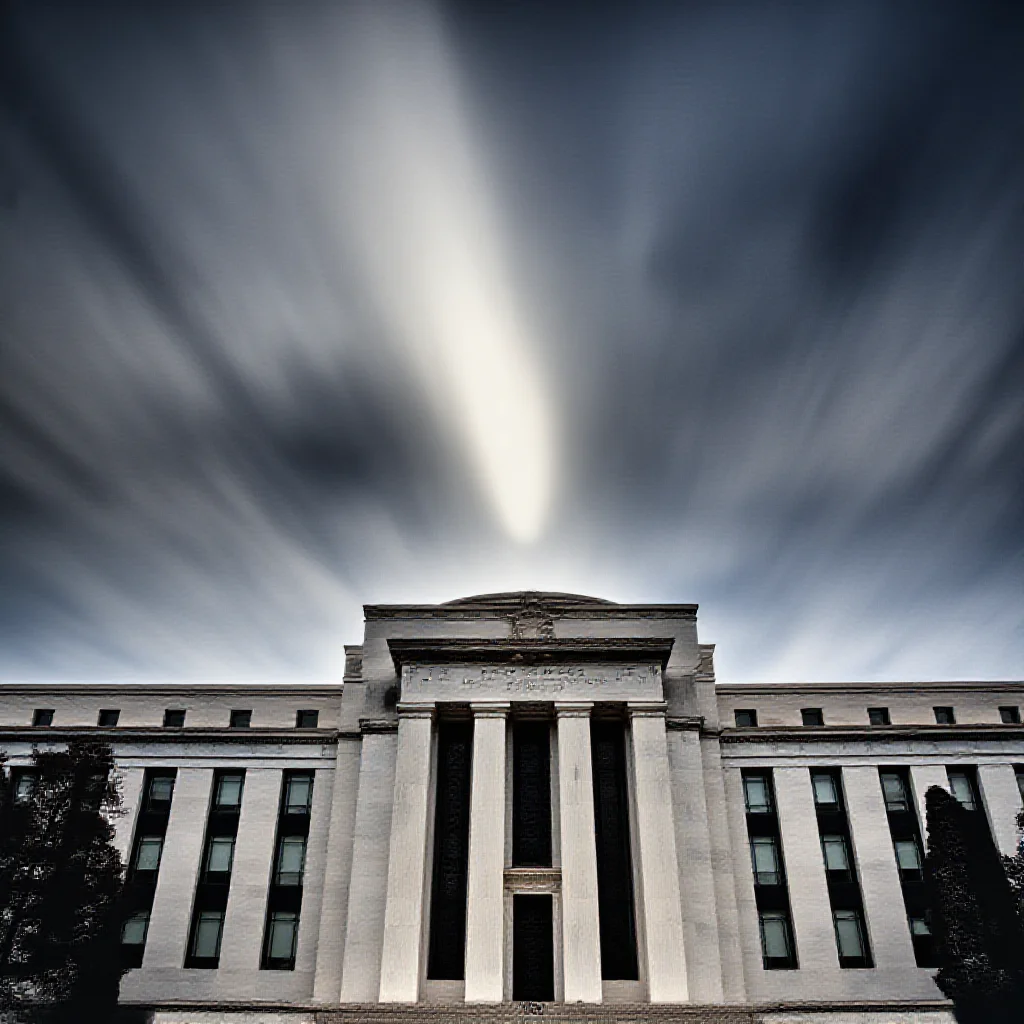
The Fed's 2026 Rate Cut: A Signal of Prolonged Restrictive Policy and Economic Uncertainty
Opening Summary
The Federal Open Market Committee (FOMC) concluded its latest meeting by holding the benchmark federal funds rate steady. The accompanying update to the Summary of Economic Projections (SEP) introduced a significant shift in the policy horizon, forecasting only a single quarter-percentage-point interest rate reduction for the year 2026. (Source 1: [Primary Data]) This distant forecast, juxtaposed against a steady current rate, represents a strategic recalibration of the "higher-for-longer" monetary policy narrative into a more extended timeframe.
Beyond the Headline: Decoding the 2026 Forecast as a Policy Anchor
The projection of a rate cut in 2026 functions less as a precise prediction and more as a critical communication tool. Its primary purpose is to anchor long-term inflation expectations by signaling an explicit commitment to maintaining a restrictive policy stance for multiple years. The immediate market reaction to the hold and distant cut is secondary to the structural shift this communicates. The central implication is a reorientation of the strategic planning horizon for both corporate finance and public debt management. Capital expenditure plans, merger and acquisition timelines, and government debt issuance strategies must now internalize a multi-year period of elevated financing costs, altering investment calculus and risk assessments today.The Hidden Economic Logic: Why 'Higher for Longer' is Now 'Higher for Much Longer'
The extended timeline is a direct function of the Federal Reserve's internal economic modeling. The SEP data indicates a projected slow return of core Personal Consumption Expenditures (PCE) inflation to the 2% target, alongside an unemployment rate expected to remain near its longer-run level. (Source 2: [Primary Data]) This slow descent justifies the elongated restrictive period. The unspoken driver is an assessment of persistent inflationary pressures, particularly within services, coupled with a labor market viewed as structurally tight. Wage growth dynamics and uncertain productivity trends are modeled to require a prolonged economic cooling period. This stance creates a pronounced gap between the Fed's 2026 "dot" and previous market expectations for easing in 2024 or 2025, underscoring the institution's prioritization of policy credibility and inflation containment over near-term market comfort.The Long-Term Ripple Effects: From Supply Chains to Venture Capital
The implications of a policy horizon stretched to 2026 extend deep into economic substructures. For global supply chains, a higher long-term cost of capital disincentivizes large-scale investments in reshoring, nearshoring, and capacity expansion. This may prolong existing fragilities by delaying the capital-intensive build-out of redundant and resilient manufacturing networks. A sectoral analysis reveals a paradigm shift for venture capital and growth equity. An extended high-rate environment systematically pressures valuations, increases the discount rate on future cash flows, and shifts investor preference decisively from growth-at-all-costs to demonstrable, near-term profitability. This reshapes the entire startup ecosystem, from funding availability to exit strategies. Historical analysis of prolonged high-rate periods, such as the late 1990s, demonstrates correlated impacts on business formation rates and the performance of capital-intensive industries.!Interconnected Economic Gears
Verification and Context: Placing the Fed's Stance in the Credible Narrative
The Federal Reserve's current posture is consistent with a credible narrative built on post-2022 policy actions. The shift from rapid tightening to a plateau, and now to signaling an extended plateau, follows a logical sequence aimed at avoiding premature easing that could reignite inflation. This stance is verified by cross-referencing the SEP's inflation and unemployment projections with observed stickiness in core services prices and robust employment data. The policy represents a deliberate choice to accept the risk of subdued economic growth over the coming years to definitively secure price stability. It is a calculated trade-off, with the 2026 forecast serving as the benchmark for this extended operational timeframe.Neutral Market and Industry Predictions
Based on this policy signal, several neutral predictions can be derived. Fixed income markets will continue to price securities with a steeply inverted or flat yield curve reflecting the long wait for policy relief. Equity sector performance will increasingly diverge, with sectors generating strong current cash flows favored over long-duration growth stocks. Corporate debt issuance strategies will likely pivot toward longer-term fixed-rate financing to lock in current yields before any potential future shifts. The commercial real estate sector will face an extended period of refinancing risk and valuation pressure. Finally, the definition of "long-term" in strategic business planning will effectively be recalibrated from a 12-18 month outlook to one spanning three to five years, with 2026 serving as the new focal point for anticipating a potential change in the monetary policy regime.
(All rights reserved by Global Beacon Chronicle. Unauthorized reproduction is prohibited.)
Wang Jing / Wang Jing
Capital markets analyst and CFA charterholder.