Aehr Test Systems Q1 2025: A Strategic Pivot Amidst Losses, Fueled by Silicon
Aehr Test Systems' Q1 2025 results reveal a company in strategic transition.

Aehr Test Systems Q1 2025: A Strategic Pivot Amidst Losses, Fueled by Silicon Carbide and $300M Capacity Bet
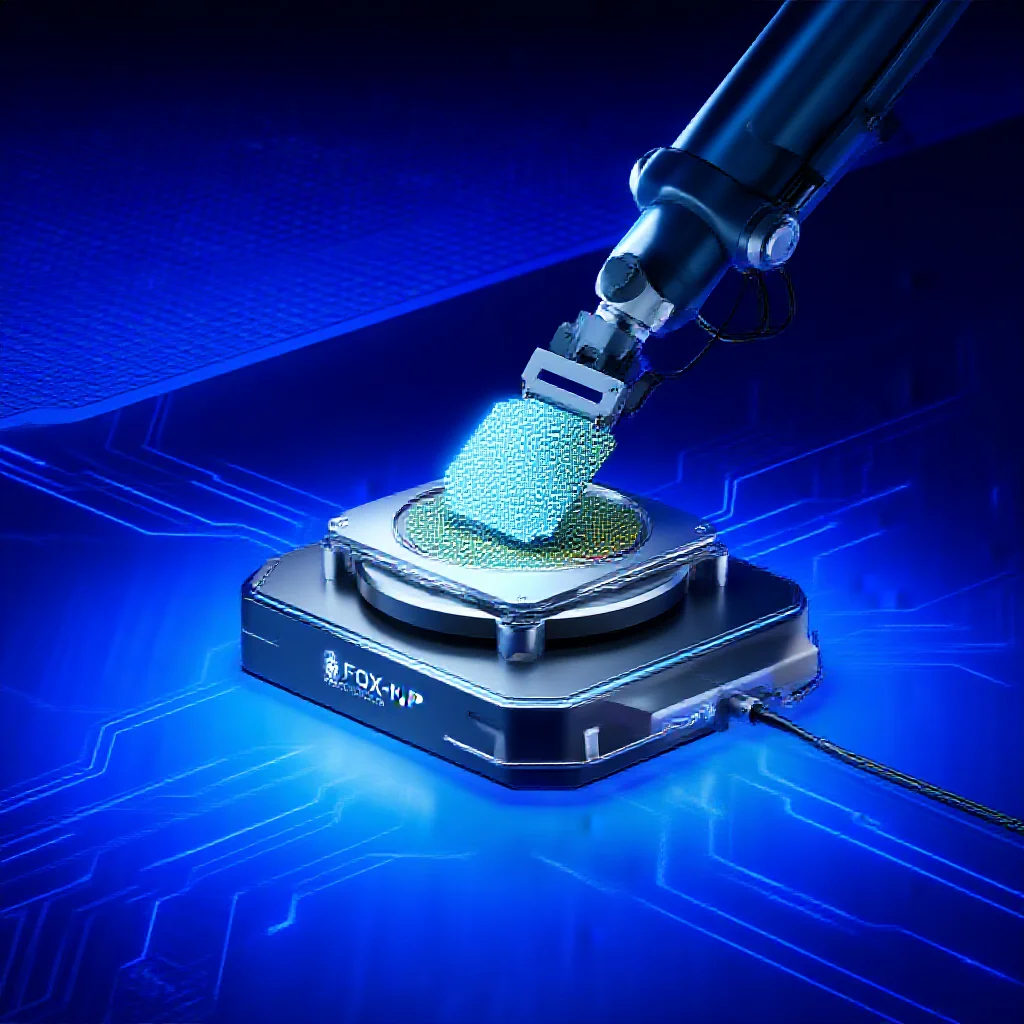
Cover Image Prompt: A futuristic, clean-room style image depicting a robotic arm placing a glowing, geometric silicon carbide wafer onto a sleek, high-tech testing module (FOX-NP system). The background is dark with subtle electric blue circuit-like patterns, symbolizing electric vehicles and energy grids. The lighting is dramatic, focusing on the precise connection between wafer and tester.
Aehr Test Systems’ financial results for the first quarter of fiscal 2025 present a stark dichotomy. The company reported revenue of $7.2 million alongside a GAAP net loss of $2.8 million (Source: Aehr Test Systems Q1 2025 Financial Results). This performance stands in direct contrast to its full-year revenue guidance of $70 million to $100 million. The narrative emerging from these figures is not one of operational failure but of a deliberate, capital-intensive strategic pivot. The company is executing a high-stakes bet on the silicon carbide (SiC) semiconductor revolution, underpinned by a new customer order, engagements with over 40 prospects, and a radical capacity expansion to support over $300 million in annual revenue.
The Surface Tension: Q1 Losses Versus a $100M Guidance
The Q1 2025 financials establish a baseline of present operational challenges. Revenue of $7.2 million and a GAAP net loss of $2.8 million indicate a period of subdued near-term demand and investment phase costs. Non-GAAP net loss was $2.1 million (Source: Aehr Test Systems Q1 2025 Financial Results). However, the company’s liquidity position remains robust, with cash, cash equivalents, and investments totaling $94.7 million at quarter-end. This financial reservoir is critical, as it provides the fuel for strategic investment independent of current operating cash flow.
The defining tension is between these quarterly results and the company’s fiscal 2025 revenue forecast of $70 million to $100 million. This guidance implies a significant sequential acceleration in revenue recognition throughout the remainder of the year. The disconnect signals that Aehr Test Systems is not being evaluated on its current run-rate but on its anticipated position within a specific market inflection point. The thesis is clear: current losses are funding a pre-emptive scale-up ahead of a perceived demand surge.
Infographic Suggestion: An infographic contrasting Q1 2025 metrics (Revenue: $7.2M, Net Loss: $2.8M, Cash: $94.7M) with the Fiscal 2025 Guidance range ($70M-$100M).
The Strategic Core: Betting Everything on the Silicon Carbide Tipping Point
The company’s strategy is explicitly tied to the adoption of silicon carbide in electric vehicles (EVs) and renewable energy. The statement, “We are seeing strong interest from silicon carbide device manufacturers in both electric vehicles and renewable energy applications,” frames current engagements as a leading indicator of broader supply chain expansion (Source: Aehr Test Systems Commentary). The engagement with “over 40 potential customers” is not merely a sales pipeline metric; it is a proxy for the planning phase across the entire SiC power device ecosystem.
A critical validation point was the receipt of an order for two FOX-NP systems from a new silicon carbide customer during the quarter, alongside the shipment of two other FOX-NP systems (Source: Aehr Test Systems Q1 2025 Operational Results). The FOX-NP system, designed for wafer-level test and burn-in of high-power semiconductors, is positioned as a key enabling technology for production-scale SiC device manufacturing. This new customer order serves as a credibility milestone, demonstrating the technology’s fit for the rigorous demands of SiC production.
Diagram Suggestion: A diagram showing the flow from SiC wafer production to Aehr's FOX test systems, integrated into EV powertrain and solar inverter manufacturing.
The $300M Gamble: Pre-emptive Capacity Scaling as a Competitive Moat
The most audacious element of the strategy is the capacity expansion to “support over $300 million in annual revenue” (Source: Aehr Test Systems Commentary). Compared to a trailing run-rate of approximately $30 million, this implies a 10x growth assumption. This move is a classic “build it and they will come” gamble, intended to establish a competitive moat based on lead-time advantage and scale.
The risks are substantial. This scaling imposes a significant fixed cost burden and accelerates cash burn. If the anticipated adoption curve for SiC in EVs and renewables slows or falters, Aehr would be left with overcapacity and a strained balance sheet. The success of this bet hinges on capturing a dominant share of a rapidly expanding total addressable market (TAM) for SiC wafer-level test equipment.
The potential reward is equally significant. By constructing capacity ahead of demand, Aehr aims to position itself as the de facto supplier capable of meeting large-volume orders with short lead times. In a supply-constrained market, this could create a powerful first-mover advantage, locking in customers and creating high barriers to entry for competitors.
Conceptual Image Suggestion: A conceptual image of an empty, vast, state-of-the-art manufacturing floor ready for equipment, symbolizing pre-built capacity.
Verification and Context: Grounding the Ambition in Market Reality
Aehr Test Systems’ ambitious scaling finds contextual support in independent market analysis. According to Yole Group, the SiC power device market is projected to grow at a compound annual growth rate (CAGR) of approximately 30%, exceeding $6 billion by 2028 (Source: Yole Group, “Power SiC 2023” report). This growth is primarily driven by the automotive sector’s transition to electric powertrains. This external validation supports the core premise of Aehr’s strategy: that a significant and sustained increase in demand for SiC production equipment is imminent.
The company’s $70-$100 million fiscal 2025 guidance, while ambitious, represents only an initial step toward its $300 million capacity target. Achievement of this guidance is contingent upon converting the “over 40 potential customers” into firm, volume orders within the current fiscal year. The two FOX-NP shipments and the new customer order in Q1 are early, but necessary, steps in that conversion process.
Conclusion: A High-Beta Play on Semiconductor Megatrends
Aehr Test Systems has positioned itself as a high-beta investment on the proliferation of silicon carbide. The Q1 2025 financial results are a snapshot of a company in transition, sacrificing short-term profitability to fund a capacity build-out predicated on a specific market forecast. The strategy is binary in its potential outcomes. If SiC adoption in EVs and renewables accelerates as projected, Aehr’s pre-emptive scaling could deliver disproportionate revenue growth and establish a durable market leadership position in a specialized niche. If demand materializes more slowly than expected, or if alternative technologies gain traction, the company faces significant financial and operational headwinds from its elevated cost structure. The coming quarters will serve as a critical test of both the SiC market timeline and Aehr’s capacity to execute its ambitious pivot.
(All rights reserved by Global Beacon Chronicle. Unauthorized reproduction is prohibited.)
Wang Jing / Wang Jing
Capital markets analyst and CFA charterholder.