US Bag-in-Box Packaging Machine Market: A $7.2 Billion Opportunity Driven
The US Bag-in-box (BIB) packaging machine market is poised for robust growth,

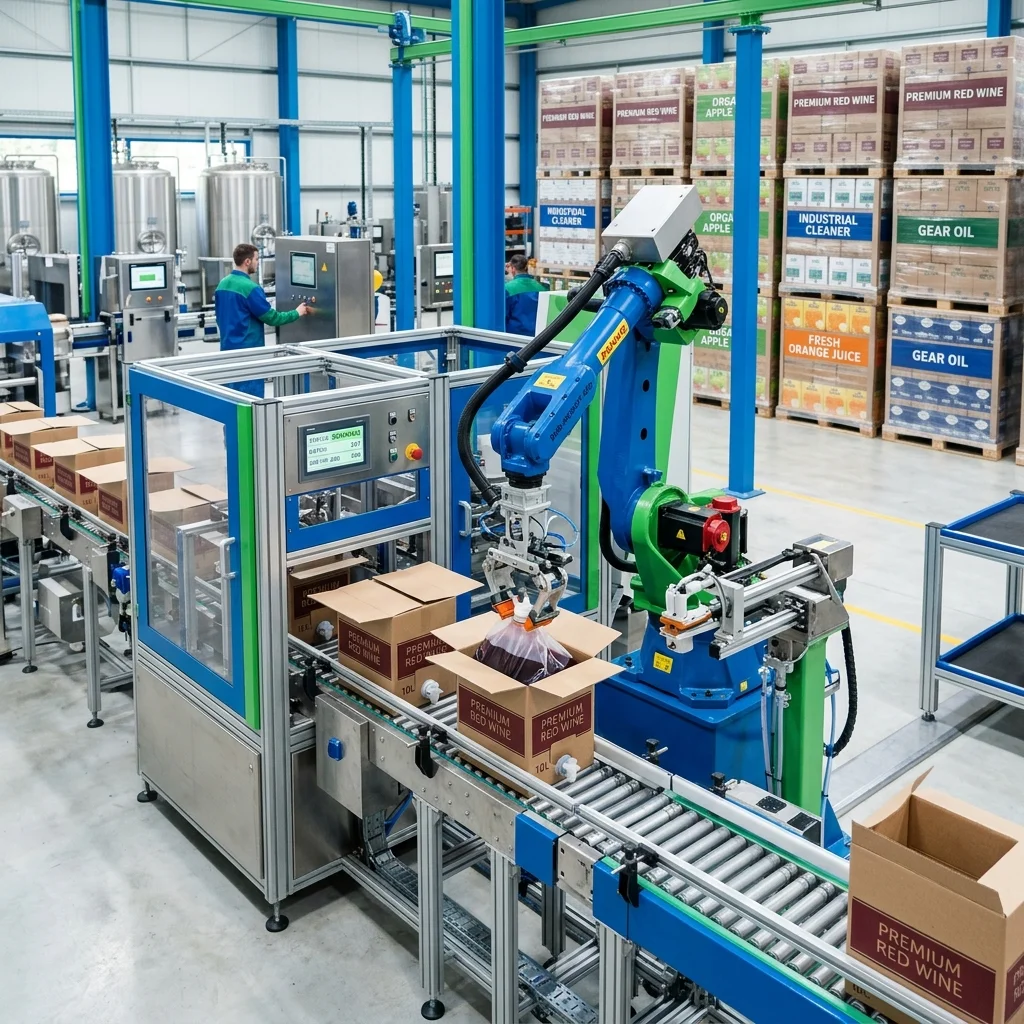
US Bag-in-Box Packaging Machine Market: A $7.2 Billion Opportunity Driven by Sustainability and Automation
Introduction: The Quiet Revolution in Bulk Liquid Packaging
Bag-in-box (BIB) packaging has long been the silent workhorse of industrial liquid storage—used for everything from wine to fountain syrups, cleaning chemicals to cooking oils. But what was once a niche solution is now rapidly becoming a mainstream choice across multiple sectors, including beverages, food service, and industrial chemicals. The shift is not subtle: it reflects a fundamental rethinking of how liquids are packaged, transported, and consumed.
According to DataVerse Insights, the US bag-in-box packaging machine market was valued at $4.5 billion in 2022 and is projected to reach $7.2 billion by 2030, expanding at a compound annual growth rate (CAGR) of 6.3%. These numbers point to more than just steady expansion—they signal a systemic change in packaging economics and supply chain resilience. As sustainability mandates tighten and automation technologies mature, BIB packaging is emerging as a cost-effective, eco-friendly alternative to rigid containers, and the machines that produce these systems are at the center of this transformation.
[IMAGE: A montage of BIB packages for wine, laundry detergent, and fountain syrup, showing versatility.]
Market Drivers: Beyond Simple Convenience
The growth of the US bag-in-box packaging machine market is underpinned by three interrelated drivers: regulatory pressure, cost economics, and shifting consumer preferences.
Sustainability mandate – One of the most powerful forces is environmental regulation. Bag-in-box packaging typically uses up to 80% less plastic than rigid containers of equivalent volume. The flexible inner bag requires far less resin, while the outer cardboard box is fully recyclable and often made from recycled content. This aligns with extended producer responsibility (EPR) laws that are being adopted across states such as Maine, Oregon, and California. These laws hold producers financially responsible for the end-of-life management of packaging, creating a strong incentive to reduce material use and improve recyclability. BIB packaging directly addresses this burden.
Cost efficiency for producers – Beyond compliance, BIB offers clear economic advantages. A standard 3-liter BIB package weighs about 80% less than a glass bottle of the same volume, dramatically reducing shipping costs per unit. The flexible bag collapses as liquid is dispensed, minimizing product waste and eliminating the need for venting or preservatives in many applications. For industrial liquid producers, the reduced storage footprint means more product can be stored in the same warehouse space. Controlled dispensing taps also prevent spillage and contamination—critical for high-value products like wine or specialty chemicals.
Consumer behavior shift – Retail and foodservice channels are seeing a growing preference for larger-format, resealable, and environmentally friendly packaging. In the wine segment, BIB now accounts for more than 10% of US wine sales by volume, and the share is climbing. Juice concentrates, cooking oils, and even laundry detergents are following suit. Consumers appreciate the convenience of a tap that stays fresh for weeks, while foodservice operators value the reduced labor cost of replacing a 15-liter bag rather than a stack of cans or jugs.
[IMAGE: Infographic comparing carbon footprint of BIB vs. glass bottles and rigid plastic jugs.]
Technological Innovations: The Automation and Smart Machine Frontier
The machinery behind bag-in-box production has evolved rapidly to meet rising demand for speed, flexibility, and data-driven operations. Today’s BIB packaging machines are far from the simple fill-and-seal units of a decade ago.
IoT and smart monitoring – A growing number of machines now integrate Internet of Things (IoT) sensors that track fill accuracy, material usage, and machine health in real time. Operators can monitor production lines remotely, receive alerts when a film splice is near, or predict maintenance needs before a breakdown occurs. This digital layer reduces downtime and material waste, directly improving the bottom line for converters and brand owners. For example, a servo-driven filler can adjust fill volume on the fly based on temperature or viscosity changes, ensuring consistent performance across batches.
Speed and flexibility gains – Modern form-fill-seal (FFS) machines for BIB packaging are capable of handling multiple bag sizes and film structures on a single production line. Changeovers that once took hours can now be completed in minutes, thanks to servo-driven adjustments and automated tension control. High-speed models can produce up to 50 bags per minute, a significant leap from earlier generations. This flexibility allows mid-size converters to serve diverse customers—from a 1.5-liter wine box to a 20-liter industrial chemical bag—without dedicating separate lines.
Collaborative robots – Collaborative robots, or cobots, are being deployed for tasks such as spout insertion and case packing. These lightweight, safe-to-operate machines work alongside human operators, reducing repetitive strain injuries and labor dependency. In a tight labor market, automation of spout placement—previously a manual, error-prone step—has become a critical competitive advantage. Some systems now include vision-guided robots that inspect spout alignment before the bag is sealed, further improving quality.
[IMAGE: Close-up of a BIB machine's robotic spout insertion unit with a digital display showing production KPIs.]
Supply Chain Ripple Effects: From Film Producers to End Users
The expansion of the bag-in-box packaging machine market is sending ripples through the entire supply chain, from raw material suppliers to logistics operators.
Impact on raw material suppliers – The growing demand for BIB films is driving innovation in multilayer co-extruded films with high barrier properties against oxygen, moisture, and light. Film producers are investing in new extrusion lines to produce sustainable laminates that use less virgin polymer, incorporate post-consumer recycled (PCR) content, or replace traditional EVOH barriers with bio-based alternatives. For example, some suppliers now offer films with up to 50% PCR content while maintaining the shelf-life performance required for wine or juice. This shift creates new opportunities for chemical companies specializing in barrier polymers and adhesives.
Machine manufacturers race to modular designs – OEMs of BIB packaging machines are responding to market demand by offering modular platforms that allow converters to start with a basic fill-seal unit and later add spout inserters, date coders, or robotic case packers. This scalability lowers the barrier to entry for small and mid-size converters who previously could not justify a fully automated line. Modular designs also simplify retrofits: a converter who initially purchases a machine for 3-liter wine bags can later upgrade to handle 20-liter industrial bags with minimal downtime. This flexibility is a key factor driving the adoption of BIB packaging in new sectors such as automotive fluids and agricultural chemicals.
Logistics transformation – The shift from rigid containers to flexible packaging has profound implications for distribution. A standard pallet of BIB wine bags occupies roughly 60% of the volume of an equivalent pallet of glass bottles, allowing for significantly more product per truckload. For distributors, this translates to fewer trips, lower fuel costs, and a reduction in carbon footprint. Some large retailers are now requiring suppliers to use BIB for certain private-label products specifically to reduce transportation emissions. Additionally, the collapsible nature of empty bags means that converters can store more packaging materials in less space, further improving warehouse efficiency.
[IMAGE: Diagram showing the supply chain flow: film suppliers → machine OEMs → converters → brand owners → retail/foodservice.]
Conclusion: A Structural Shift with Staying Power
The US bag-in-box packaging machine market is not simply riding a wave of cyclical demand. The 6.3% CAGR projected through 2030 reflects deep structural trends: regulatory pressure to reduce plastic waste, the economic logic of lightweight and space-efficient packaging, and the operational advantages of automation. For raw material suppliers, the shift means new markets for high-barrier sustainable films. For machine manufacturers, it opens opportunities in modular, smart, and robot-integrated systems. For end users—from wineries to chemical plants—BIB packaging offers a tangible path to lower costs and improved environmental performance.
As bulk dispensing gains traction in retail and foodservice, and as more industrial sectors recognize the benefits of flexible packaging, the machinery that produces these systems will continue to evolve. The $7.2 billion opportunity is not just a number—it is a signal that the quiet revolution in bulk liquid packaging has only just begun.
(All rights reserved by Global Beacon Chronicle. Unauthorized reproduction is prohibited.)
Editorial Board / Editorial Board
Collective pseudonym for the Global Beacon Chronicle editors.