Beyond Text: How Gemini''s 3D Model Update Signals a Fundamental Shift in
Google's reported update to Gemini, integrating 3D models into its interface,

Beyond Text: How Gemini's 3D Model Update Signals a Fundamental Shift in AI Interaction
An analysis of the economic and technological logic behind the reported interface evolution.
---
The 3D Tipping Point: From Chatbots to Spatial Collaborators
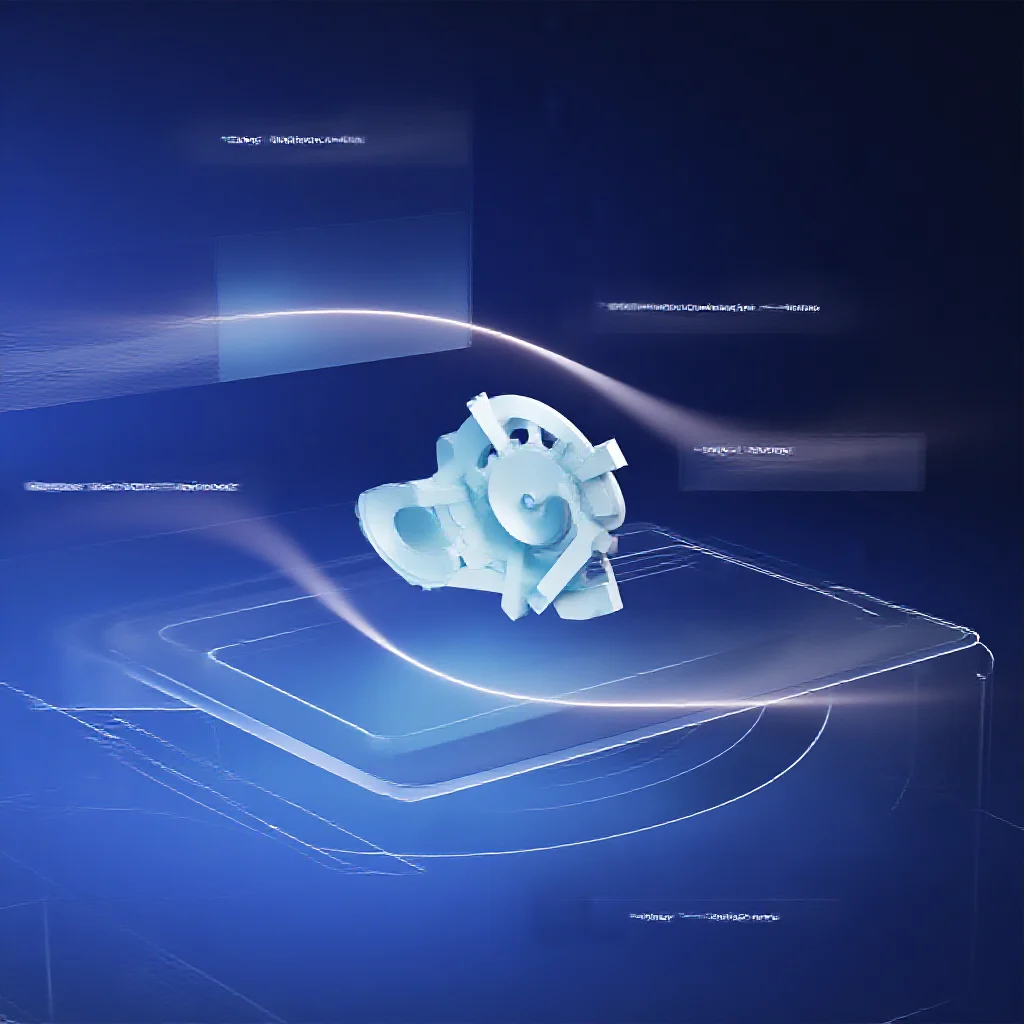
On April 9, 2026, a report indicated that Google's Gemini AI would integrate 3D models directly into its user interface (Source 1: [Primary Data]). This development is not an isolated feature addition. It represents a pivotal transition in artificial intelligence from static, text-based query systems to dynamic, spatial, and interactive environments. The core axis of this shift moves the economic logic of AI from "answer efficiency" to "problem-solving immersion." Value creation increasingly depends on reducing the cognitive translation gap between a user's intent and the AI's output.
The introduction of three-dimensional objects signifies the natural progression beyond text, voice, and two-dimensional images. For complex domains such as engineering, molecular biology, architecture, and advanced education, a Spatial UI for AI provides a native language for spatial reasoning. It transforms the AI from a conversational partner into a collaborative workspace, where ideas can be manipulated, examined from multiple angles, and understood in their intended context. This evolution mirrors the historical progression from command-line interfaces to graphical user interfaces, now advancing toward immersive, depth-based interaction.
Deconstructing the Shift: The Technology and Market Patterns
The reported update is enabled by a converging technology stack. Advanced multimodal foundation models now possess a more sophisticated understanding of spatial relationships and physical properties. This capability is paired with real-time rendering technologies, often leveraging cloud-based game engines, to generate and stream interactive 3D content instantaneously. Ubiquitous high-bandwidth connectivity, including 5G-Advanced and early 6G networks, provides the necessary pipeline for this data-intensive interaction.
A dual-track analysis classifies this topic under "Slow Analysis." While the report provides a timely data point, the underlying trend reveals a multi-year industry realignment. This realignment affects fundamental disciplines: UI/UX design principles must incorporate spatial dynamics, cloud infrastructure must prioritize GPU-accelerated rendering workloads, and application architectures must evolve to handle stateful, interactive 3D sessions.
The market pattern driving this shift is clear: a strategic move to capture high-value enterprise and creative professional segments. In fields like industrial design, logistics planning, and medical training, the ability to interact with AI through manipulable 3D models commands a premium far beyond the utility of general consumer chatbots. This positions AI not merely as an information retrieval tool but as an integral component of professional simulation and decision-making workflows.
The Unseen Ripple Effect: Supply Chains and Developer Ecosystems
The long-term impact of this shift will resonate through the underlying AI supply chain. Demand will increase for specialized tools and services, including 3D asset creation and optimization software, standardized 3D model formats like gITF and USDZ for universal compatibility, and spatial data annotation platforms to train next-generation multimodal models. This creates a new layer of infrastructure critical for spatial AI applications.
Concurrently, a new developer role is emerging: the AI Interaction Designer. This discipline blends principles from game design—where user engagement and spatial intuition are paramount—with industrial design's focus on functional object interaction and the foundational rules of conversational AI. The skill set required to build effective spatial AI interfaces is hybrid, demanding an understanding of narrative flow in three dimensions and real-time user state management.
The specific product, Gemini, acts as a catalyst for this broader industry pattern. The move validates and accelerates existing trends in adjacent sectors, such as 3D commerce and digital twin technologies. Analyst projections from firms like Gartner and IDC have long forecasted the growth of immersive digital experiences for enterprise; this development integrates those experiences directly into the primary AI interface layer, moving them from specialized applications into general-purpose AI platforms.
Conclusion: The Trajectory of Collaborative Intelligence
The integration of 3D models into AI interfaces, as reported for Gemini, marks a definitive step in the evolution of human-computer interaction. The fundamental shift is from a paradigm of retrieval and response to one of co-creation and exploration within a shared spatial context. The economic imperative is the capture of higher-value cognitive work by minimizing abstraction.
The trajectory suggests that future AI platforms will be evaluated less on textual eloquence and more on their ability to construct, manipulate, and reason within interactive simulations that mirror physical or conceptual realities. This will necessitate continued investment in the enabling technology stack and will reshape developer priorities and hardware roadmaps, particularly for devices that facilitate spatial interaction, from augmented reality glasses to haptic feedback systems. The interface is ceasing to be a window and is becoming a workshop.
(All rights reserved by Global Beacon Chronicle. Unauthorized reproduction is prohibited.)
Editorial Board / Editorial Board
Collective pseudonym for the Global Beacon Chronicle editors.