Beacon Technology Market Set to Surge: From $3 Billion to $18 Billion by 2035
The beacon technology market is projected to explode from USD 3.514 billion

Beacon Technology Market Set to Surge: From $3 Billion to $18 Billion by 2035 – Unpacking the Drivers, Regional Dynamics, and Emerging Use Cases
Introduction: The Beacon Boom – From Niche to Infrastructure
The beacon technology market reached an estimated USD 2.977 billion in 2024 and is projected to grow at an 18.04% compound annual growth rate (CAGR), reaching USD 18.46 billion by 2035, according to Market Research Future. This explosive growth is not merely a linear extension of early proximity marketing experiments; it signals a fundamental shift in how physical spaces are digitized and managed.
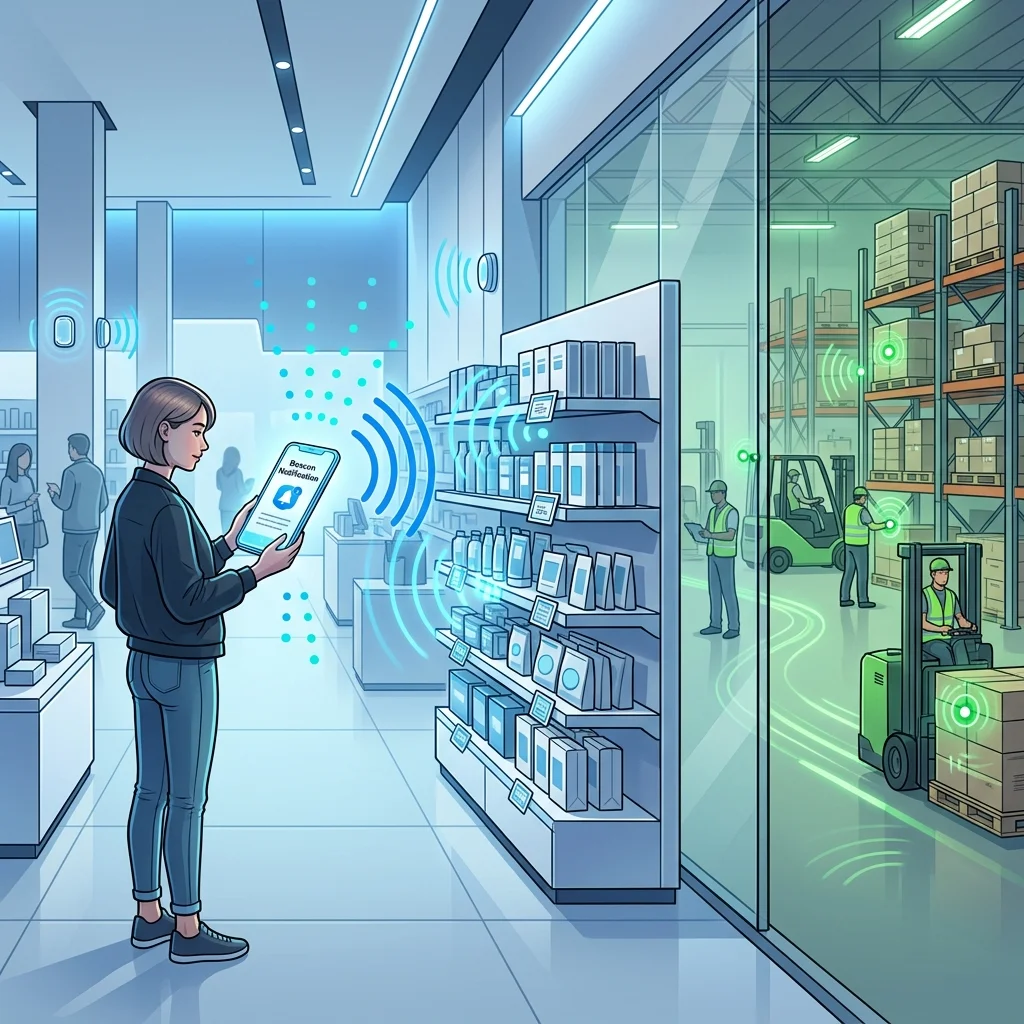
Beacons—small, low-energy Bluetooth transmitters—have evolved from simple tools for pushing coupons to shoppers into critical infrastructure for the Internet of Things (IoT). They now underpin a wide range of location-based services across retail, healthcare, logistics, and smart buildings. The economic logic behind this expansion is driven by three converging forces: the demand for hyper-personalized customer experiences, the need for operational efficiency in asset tracking, and the integration of proximity services with 5G and edge computing.
[IMAGE: Infographic showing the market growth curve from 2024 to 2035 with key milestone years and sector annotations.]
As organizations move beyond pilot projects toward enterprisewide deployments, the beacon ecosystem is maturing. Hardware costs have dropped, battery life has improved, and software platforms now offer seamless integration with existing enterprise resource planning and customer relationship management systems. This article provides a deep industry audit for businesses seeking to leverage beacon technology for competitive advantage, examining sector-specific adoption patterns, regional dynamics, technological convergence, and the strategic landscape of key players.
Retail Leads, but Healthcare and Logistics Are Catching Up
Retail: The Incumbent Giant
Retail remains the largest adopting sector for beacon technology, accounting for more than 40% of total market revenue in 2024. Major US retailers have embedded beacons in store layouts to deliver in-store navigation, personalized offers, and contactless checkout experiences. For instance, department stores use footfall analytics powered by BLE beacons to understand customer dwell times and optimize shelf placement. The proximity marketing trends that emerged a decade ago—triggering discount alerts when a shopper passes a specific aisle—have matured into sophisticated location-based campaigns that integrate with loyalty apps and real-time inventory systems.
Yet the retail use case is expanding. Beacons now support omnichannel fulfillment: when a customer orders online for in-store pickup, beacons can alert staff to prepare the order as the customer approaches the store. This small operational improvement yields measurable reductions in wait times and increases in conversion rates.
[IMAGE: Split graphic: left side showing a retail store with beacon-triggered promotions; right side showing a hospital corridor with beacons guiding patients and tracking wheelchairs.]
Healthcare: Post-Pandemic Efficiency Driver
Healthcare is the fastest-growing vertical for beacon adoption, driven by post-pandemic pressures to improve operational efficiency and patient experience. Hospitals deploy beacons for patient tracking—monitoring location and wait times in emergency departments—as well as asset tracking of expensive medical equipment like infusion pumps and ventilators. One major academic medical center reported a 15% reduction in equipment loss and a 20% improvement in staff response times after installing a beacon-based real-time location system (RTLS).
Beyond internal logistics, beacons enhance wayfinding for visitors. Large hospital campuses are notoriously confusing, and beacon-powered smartphone apps guide patients and families to the correct department, reducing stress and late arrivals. The healthcare beacon tracking segment is projected to grow at a CAGR exceeding 20% through 2030, as regulations like the EU Medical Device Regulation and the US FDA’s guidance on RTLS push for standardized asset visibility.
Logistics and Transportation: Real-Time Visibility
Logistics and transportation represent a third pillar of beacon adoption. Warehouses and distribution centers use BLE beacons affixed to pallets, forklifts, and individual high-value items to provide real-time location data. This enables precise inventory management, reduces search times, and improves supply chain visibility from dock to delivery. A leading third-party logistics provider reported a 30% reduction in mis-shipments after deploying beacons across its North American hubs.
The convergence of beacons with ultra-wideband (UWB) technology is unlocking even more precise indoor positioning—down to centimeter-level accuracy—which is critical for manufacturing floors and autonomous vehicle navigation in logistics yards. This technology convergence is creating new use cases that were previously impractical with Bluetooth alone.
Regional Dynamics: North America’s Maturity vs. Asia-Pacific’s Acceleration
North America: First-Mover Advantage
North America holds the largest market share in the beacon technology landscape, driven by early adoption from tech giants like Apple (which integrated iBeacon into iOS in 2013), Google (Eddystone), and Cisco (network-based location services). The region’s mature retail ecosystem, high smartphone penetration (above 85%), and robust venture capital funding for IoT startups have created a fertile ground for beacon deployments.
However, North America is now entering a consolidation phase. The market is shifting from pure-play beacon hardware vendors to platform providers that combine hardware with analytics software and cloud services. Privacy regulations such as the California Consumer Privacy Act (CCPA) have forced companies to redesign opt-in mechanisms, but they have also legitimized the technology by granting consumers control over data collection. The result is a more sustainable, trust-based adoption model.
Asia-Pacific: The Fastest-Growing Region
Asia-Pacific is the fastest-growing region, with a projected CAGR of approximately 22% through 2035. Several factors drive this acceleration: rapid urbanization, ambitious smart city initiatives in China and India, and the explosive growth of e-commerce logistics.
In China, beacons are embedded in public transportation hubs, museums, and shopping malls as part of government-funded smart city projects. Major Chinese retailers use beacons in conjunction with facial recognition and payment systems to create seamless, cashierless stores. India’s logistics sector—powered by startups like Delhivery and Ecom Express—relies on beacons for last-mile delivery tracking and warehouse automation.
The Asia-Pacific IoT location services market benefits from lower hardware costs due to local manufacturing and a younger, tech-savvy population that is more willing to opt into location-based services. However, fragmentation remains a challenge: standards vary across countries, and privacy frameworks are still evolving.
Europe and Rest of the World
Europe holds a moderate share of the beacon market, with strong adoption in Germany’s manufacturing sector (Industry 4.0) and the UK’s retail and hospitality industries. The General Data Protection Regulation (GDPR) has imposed strict opt-in requirements, but it has also created a “privacy-first” ecosystem where compliant vendors gain a competitive edge. The Middle East and Latin America are emerging markets, driven by large-scale infrastructure projects like NEOM in Saudi Arabia and smart city pilots in Brazil.
Technology Convergence: 5G, UWB, and Edge Computing
The beacon technology market is increasingly defined by its integration with adjacent technologies. The widespread rollout of 5G networks enables higher data throughput and lower latency, allowing beacons to communicate with cloud platforms in near-real time. This is especially valuable for dynamic price updates in retail or real-time patient monitoring in hospitals.
Ultra-wideband (UWB) technology, popularized by Apple’s AirTag and the U1 chip, offers centimeter-level accuracy compared to the meter-level precision of BLE beacons. By combining BLE beacons (for general proximity) with UWB anchors (for precise positioning), enterprises can achieve sub-meter location tracking at scale. This hybrid approach is gaining traction in logistics, where knowing the exact position of a pallet within a warehouse row reduces picking errors.
Edge computing further enhances the ecosystem. By processing beacon signals locally on gateways or edge servers—rather than sending all data to the cloud—companies can reduce latency, cut bandwidth costs, and comply with data localization regulations. Major IoT platform providers like Microsoft Azure and AWS now offer prebuilt beacon integration frameworks that include edge analytics capabilities.
[IMAGE: Diagram showing BLE beacon, UWB anchor, 5G base station, and edge server working together in a warehouse setting.]
Privacy Regulations Reshaping the Landscape
No discussion of the beacon technology market is complete without addressing the impact of privacy regulations. The GDPR in Europe, CCPA in California, and similar laws in Brazil, Japan, and South Korea have fundamentally changed how beacons can be used. The era of “passive” data collection—where beacons detected any smartphone in range without explicit consent—is over.
Today, beacon deployments must implement two-step consent: first, the user must enable Bluetooth and location services at the OS level; second, the app must request permission to receive beacon-triggered content. This regulatory pressure has paradoxically strengthened the market by weeding out bad actors and forcing vendors to build privacy-by-design architectures. Leading beacon platforms now offer anonymized data aggregation options, on-device processing to avoid sharing raw location data, and transparent opt-out mechanisms.
For businesses, navigating these regulations is both a compliance requirement and a competitive differentiator. Companies that can demonstrate robust privacy practices—such as Apple’s privacy labels or Google’s Play Store data safety section—are more likely to earn consumer trust and achieve higher opt-in rates.
Key Players and Strategic Positioning
The competitive landscape of the beacon technology market includes a mix of established hardware manufacturers, software platform providers, and system integrators.
Estimote remains one of the most recognized names in the BLE beacon space, offering a full stack of hardware, software, and analytics. The company has pivoted toward enterprise-grade solutions for retail and healthcare, with a focus on easy deployment via cloud-based management consoles.
Apple and Google continue to shape the ecosystem through their operating system standards (iBeacon and Eddystone). Apple’s Find My network, which leverages hundreds of millions of iPhones as anonymous nodes, has extended the reach of beacon-like tracking beyond traditional applications. While Apple does not sell beacons directly, its platform dominance means any beacon deployment must be compatible with iOS.
Cisco and Hewlett Packard Enterprise compete in the enterprise networking space, integrating beacon capabilities into their Wi-Fi access points and switching infrastructure. This approach—often called “converged infrastructure”—eliminates the need for separate beacon hardware by using existing network gear to transmit location signals.
Other notable players include Kontakt.io (European leader in healthcare beacon solutions), Bluvision (part of HID Global, focusing on asset tracking), and Sensorberg (now part of the BlueCats group, specializing in retail analytics). The market is also seeing consolidation: larger IoT platform companies are acquiring beacon startups to round out their indoor positioning portfolios.
Emerging Use Cases Beyond Retail
While retail, healthcare, and logistics dominate current deployments, several emerging use cases are worth watching.
Smart Buildings and Facilities Management
Commercial real estate owners are equipping offices, conference rooms, and common areas with beacons to monitor space utilization. This data informs decisions about floor plan redesign, energy efficiency, and cleaning schedules. In a post-pandemic world, beacons can also help enforce occupancy limits and alert employees about crowded spaces.
Sports and Entertainment Venues
Stadiums and arenas use beacons for ticketing (tap-to-enter), food and beverage ordering (beacon-driven mobile ordering to a seat location), and interactive fan experiences. The Super Bowl and major soccer tournaments have piloted beacon-based navigation to help fans find restrooms and exits.
Education and Museums
Universities deploy beacons on campus for attendance tracking, library resource location, and emergency alerts. Museums use beacons to deliver context-aware audio guides—when a visitor stands near a painting, the app automatically plays the corresponding commentary.
[IMAGE: Illustration showing a museum visitor receiving artwork information on a smartphone triggered by a beacon near the exhibit.]
The Hidden Economic Logic: ROI Beyond Marketing
The most overlooked driver of beacon technology growth is its return on investment (ROI) in operational efficiency, rather than marketing alone. In logistics, a 1% reduction in inventory shrinkage can save millions of dollars annually for a large warehouse operator. In healthcare, reducing the time nurses spend searching for equipment by 10 minutes per shift adds up to thousands of hours of reclaimed labor. In retail, footfall analytics that improve store layout yield a 5-15% increase in average transaction value.
These operational benefits are less flashy than proximity marketing campaigns, but they create a stronger business case that withstands economic downturns. As CFOs scrutinize technology spending, the ability to demonstrate measurable efficiency gains is driving sustained investment in beacon infrastructure.
Outlook to 2035
The beacon technology market is on a trajectory to become a ubiquitous layer of IoT infrastructure, much like Wi-Fi and cellular connectivity are today. By 2035, the distinction between “beacon” and “sensor” may blur, as next-generation devices integrate BLE, UWB, 5G-NR, and environmental sensing in a single chip. The industrial sector—factories, warehouses, and construction sites—will likely overtake retail as the largest market segment, driven by the need for precise, low-cost location data.
Regional dynamics will shift as Asia-Pacific continues its rapid urbanization and North America focuses on platform consolidation. Privacy regulations will remain a double-edged sword, but they are ultimately beneficial for the market’s long-term health.
For businesses evaluating beacon technology today, the key takeaway is simple: start with a narrow, high-ROI use case—asset tracking, wayfinding, or footfall analytics—and build out from there. The cost of entry is low, the technology is mature, and the potential for competitive advantage is significant. The beacon boom is not a hype cycle; it is the quiet infrastructure of the intelligent physical world.
Sources: Market Research Future, industry interviews, company filings, and published case studies.
(All rights reserved by Global Beacon Chronicle. Unauthorized reproduction is prohibited.)
Editorial Board / Editorial Board
Collective pseudonym for the Global Beacon Chronicle editors.