From Tools to Service: How Anthropic''s Pivot to Managed AI Agents Reveals
Anthropic's strategic shift from a developer-centric, build-it-yourself AI

From Tools to Service: How Anthropic's Pivot to Managed AI Agents Reveals the Next Enterprise Battleground
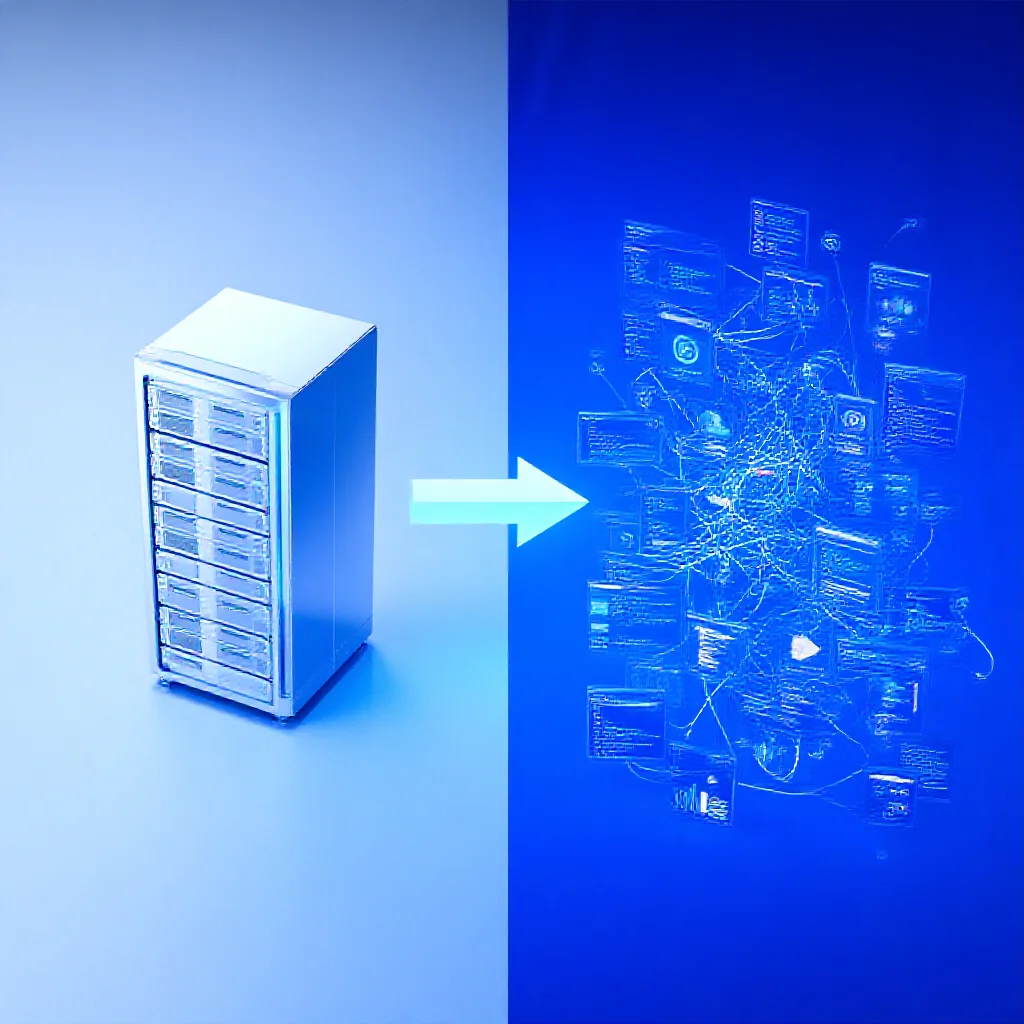
Anthropic has announced a fundamental shift in its strategy for AI agents, moving from a developer-centric, build-it-yourself model to a managed service offering. The company’s “Agentic AI Managed Service” is scheduled for launch in the second half of 2026 (Source 1: [Timeline]). This pivot is a direct response to market feedback highlighting the significant operational complexity of deploying and maintaining AI agents at scale (Source 1: [Facts]). While Anthropic will continue to offer its existing toolkit for developers, the strategic focus has decisively turned toward providing a fully managed solution that handles infrastructure, scaling, and maintenance (Source 1: [Facts]). This transition signals more than a product update; it indicates a maturation point in the enterprise AI market where competitive advantage is shifting from raw model capability to operational reliability.
The Strategic Pivot: Decoding Anthropic's Move from Developer Tools to Managed Service
The initial model for AI agents presented enterprises with a toolbox. The promise was flexibility: organizations could use Anthropic’s models and frameworks to construct custom agentic workflows tailored to specific needs. The newly announced “Agentic AI Managed Service” represents a stark contrast, offering a pre-integrated, operational package. The stated catalyst for this shift is clear: enterprises found the hidden costs of operationalization—integrating systems, ensuring reliability, managing scaling events, and maintaining security—to be prohibitive (Source 1: [Key Points]).
The 2026 launch window is not merely a development timeline but a strategic marker. It reflects the time required for enterprise readiness cycles, internal procurement evaluations, and, critically, for Anthropic to build out the robust, global infrastructure necessary to deliver a service-level agreement-backed offering. This two-year runway positions the launch to coincide with when many early-adopter enterprises will be seeking to move their AI agent proofs-of-concept into full production.
Beyond Convenience: The Hidden Economic Logic of the AI Managed Layer
The pivot underscores a core economic thesis emerging in enterprise AI: the greatest bottleneck and cost is not the foundational model, but the “last mile” of deployment and sustained operation. While model APIs commoditize intelligence, the managed service layer commoditizes complexity. This shifts the enterprise value proposition from capital expenditure—significant investments in developer time, specialized talent, and infrastructure setup—to operational expenditure, represented by a predictable subscription fee.
For AI companies like Anthropic, this creates a more defensible and potentially higher-margin business model. Revenue becomes tied to continuous value delivery (uptime, performance, updates) rather than mere consumption of computational tokens. It builds deeper, stickier relationships with clients by assuming responsibility for the most challenging part of the technology stack. The managed layer, therefore, is positioned to capture a larger portion of the total AI value chain than the underlying model or tooling layers alone.
The Ripple Effect: Reshaping the AI Competitive Landscape and Supply Chain
This strategic move redefines the axis of competition. The primary differentiator is evolving from “best model” to “most reliable and scalable service.” This new axis favors companies with robust infrastructure and operations DNA, potentially challenging pure-play model developers. It necessitates excellence in systems engineering, observability, security, and global networking—disciplines traditionally associated with cloud hyperscalers.
The ecosystem impact is significant. A successful managed AI service layer could disintermediate the direct use of cloud providers’ vanilla compute and orchestration services, as the AI company becomes the integrator. Conversely, it may forge new, deeper partnerships with those same cloud providers and specialized hardware vendors for optimized infrastructure. The long-term implication is a potential market bifurcation: a handful of full-stack managed service providers offering turnkey solutions, coexisting with a long tail of niche model and tool vendors catering to specialists willing to bear the operational burden.
The Enterprise Calculus: Why Managed AI Services Will Redefine Procurement
For enterprise procurement teams, the rise of managed AI services will introduce new and stringent buying criteria. Evaluation will extend beyond benchmark scores to include service-level agreements for latency and availability, detailed security and compliance certifications (like SOC 2, HIPAA), transparent cost structures, and vendor disaster recovery capabilities. The total cost of ownership analysis will fundamentally change, weighing the managed subscription against the fully loaded cost of internal platform teams.
This shift will accelerate adoption by lowering the barrier to entry for less technically mature organizations while enabling advanced enterprises to redirect precious AI talent from infrastructure plumbing to domain-specific innovation. The vendor selection process will increasingly resemble the procurement of critical enterprise software or cloud services, prioritizing operational trust and partnership over experimental potential.
Conclusion: The Inevitable Service Layer and the Future of AI Value Capture
Anthropic’s strategic pivot is a leading indicator of a broader market correction. As AI transitions from a novel capability to a core operational technology, the market demand shifts from tools to guaranteed outcomes. The announcement of a managed service launching in late 2026 (Source 1: [Facts]) is a recognition that sustainable enterprise value lies in the service wrapper—the integration, reliability, security, and support that transform a powerful model into a dependable business process.
The next battleground in enterprise AI is therefore not in the training run, but in the data center and the network operations center. Companies that master the delivery of intelligence as a hardened, scalable service will likely capture the most lucrative and defensible position in the evolving AI value chain, setting the commercial architecture for the technology’s next decade.
(All rights reserved by Global Beacon Chronicle. Unauthorized reproduction is prohibited.)
Editorial Board / Editorial Board
Collective pseudonym for the Global Beacon Chronicle editors.